
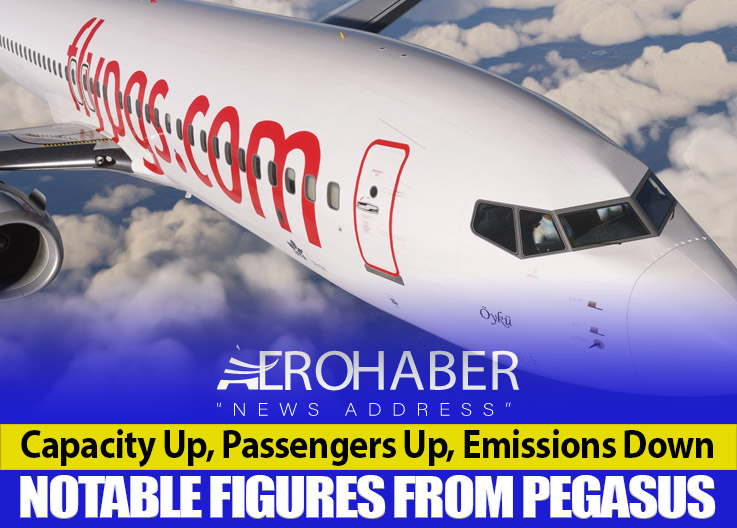


Pegasus Airlines announced its January 2026 traffic results. Total passenger numbers increased by 11% to reach 3.55 million. The load factor rose to 87.1%, with double-digit growth recorded on international routes.
Pegasus Airlines Released January 2026 Traffic Data
Pegasus shared its traffic results for January 2026 with the public. According to the announced data, passenger numbers, capacity, and load factor all increased.
Pegasus’s Total, Domestic, and International Operations
- Total Traffic Results (January 2026)
- Passengers: 3.55 million (2025: 3.19 million) → +11%
- Landings: 19,426 (2025: 17,853) → +9%
- Seats: 4.08 million (2025: 3.74 million) → +9%
- Load Factor: 87.1% (2025: 85.3%) → +1.8 points
- ASK: 6,364 million km (2025: 5,710 million km) → +11%
- Passengers per Landing: 183 (2025: 179) → +2%
Domestic Performance
- Passengers: 1.33 million → +10%
- Landings: 6,886 → +7%
- Seats: 1.44 million → +8%
- Load Factor: 92.3% → +2.3 points
- ASK: 1,125 million km → +10%
- Passengers per Landing: 193 → +3%
The load factor on domestic routes rose above 92%.
International Performance (Including Charter)
- Passengers: 2.22 million → +12%
- Landings: 12,540 → +10%
- Seats: 2.64 million → +10%
- Load Factor: 84.2% → +1.6 points
- ASK: 5,239 million km → +12%
- Passengers per Landing: 177 → +2%
International operations saw double-digit passenger growth.
Carbon Emission Data
Monthly CO₂ (grams/RPK)
- January 2026: 57.2
- January 2025: 58.2
Annual CO₂ (grams/RPK)
- 2019: 65.1
- 2020: 71.3
- 2021: 71.0
- 2022: 62.1
- 2023: 61.3
- 2024: 58.3
- 2025: 56.9
Pegasus Airlines continues to maintain a long-term declining trend in carbon intensity.
Technical Definitions
- Available Seat Kilometres (ASK): Number of seats offered × average flight distance
- Load Factor: Number of ticketed passengers / total seats
- RPK (Revenue Passenger Kilometres): Paying passenger kilometres
January 2026 data shows that Pegasus managed capacity growth in line with demand growth and continues to improve operational efficiency.