
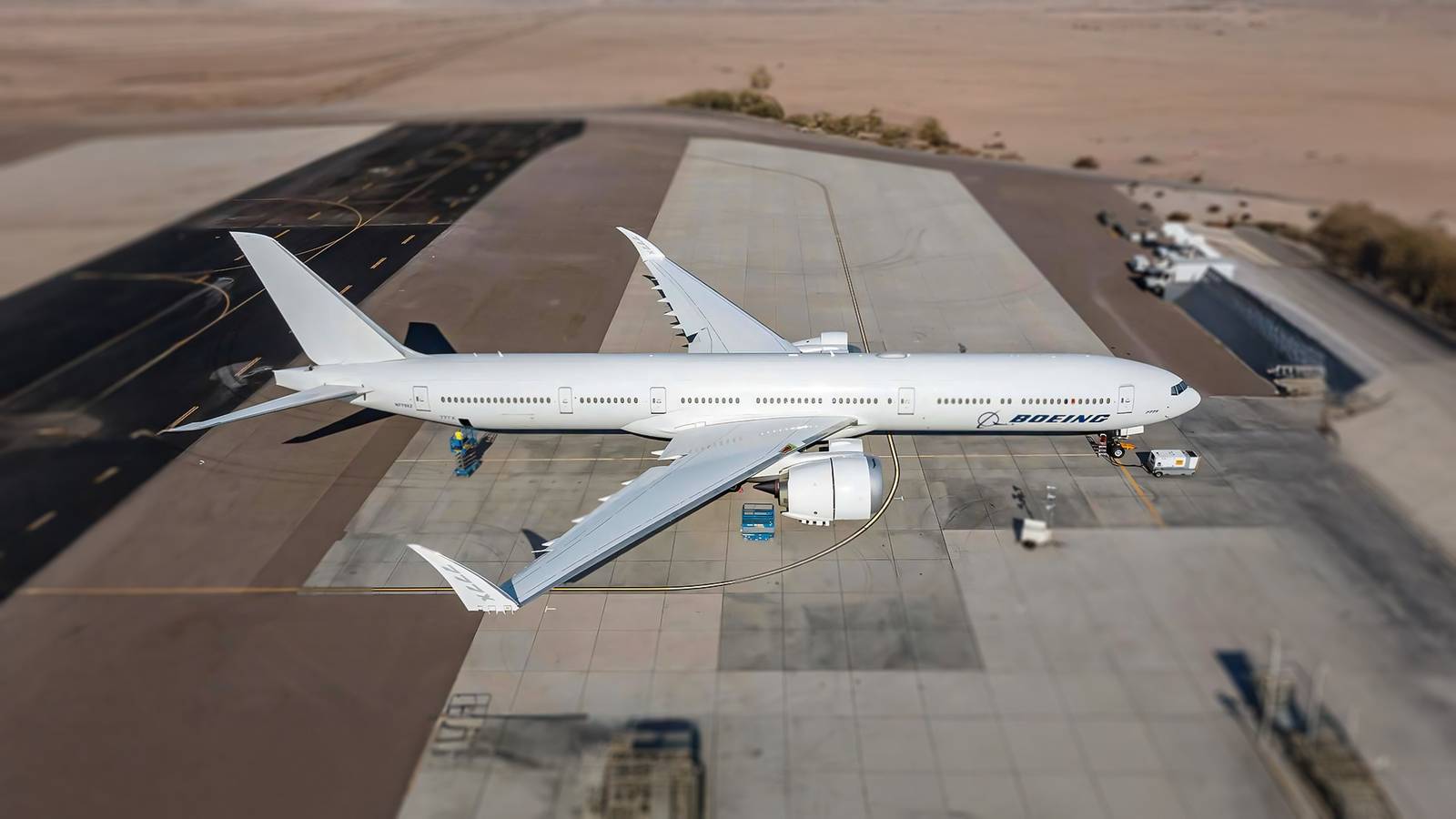


Emirates, the largest single customer of the Boeing 777X has rejected the delivery of the first ten airframes due to ‘extensive rework’ that would be needed to bring them up to current standards. These planes have been parked for many years, leading to the Middle Eastern carrier standing its ground. This has led to US carrier United Airlines considering scooping them up, as suggested by DJ’s Aviation.
United is yet to order the 777Xand follows all other US carriers who are yet to commit to the new Boeing airframe. The 777X has been plagued with several delivery delays; however, it may be that UA decides to take on the responsibility of these orphaned airframes from Emirates.
Regulatory Changes Have Forced Reworks To The Earlier Models
The type’s delivery has been plagued by several reworks that have been required for the game-changing aircraft. There have been several 777-9 aircraft that were built in advance, hoping for certification; however, these were before the 737 MAX crisis, which otherwise put the 777X development into a snail’s pace.
It was hoped that the 777X would enter service as early as 2020, meaning that the largest customer, Emirates, would already have these delivered and be part of its global network. The 777X, alongside the 787 and A350 are widely tipped to be the gradual replacement for Emirates’ A380 fleet.
Due to the 737 MAX crisis, intense scrutiny was put on Boeing by the Federal Aviation Administration ( FAA), and through findings, the 777X and other aircraft’s Maneuvering Characteristics Augmentation System (MCAS) was put into question. Following these developments, the 777X has faced repeated delays, and the launch date continues to be postponed.
The first of many frames built for Emirates has been rejected by the carrier’s President Tim Clark. He noted that these planes are already at their half-life for the Dubai-based airline, and the carrier maintains strict standards for aircraft before they are allowed to enter service. The number of modifications that would be required to make these planes certifiable would deem them ‘no use to anybody,’ claimed Clark. He compared the planes to that of a can of baked beans.
This has led United to sniff around the orphaned aircraft. While United is yet to order the type, the US carrier may be considering the first of these 20 early-build 777-9 variants as an opportunity to expand its widebody fleet, and potentially pounce on Boeing with a bargain offer. United’s existing widebody fleet is currently made up of the aircraft below, as per data from ch-aviation:
Deliveries for the airline’s widebody Airbus debut are also delayed as a $175 million legal dispute with the engine Rolls-Royce continues.
Emirates’ Frustration Grows as Boeing Delays 777X Deliveries Yet Again
With Emirates confirming it will not accept the first 11 777X builds, it will mean that United could acquire the first batch of 777X. This would see United become the US launch customer for the type, and since the planes are already built, it could mean that the planes are put into service rather quickly.
US carriers realistically have not shown much of an interest in the type due to the dimensions and capacity size exceeding the demand of the Big Three’s existing hub-and-spoke network. These planes are the successor to the 747 and A380, which no US carrier currently operates (and the A380 has never been operated by a US carrier for that matter).
While United is yet to confirm whether it will purchase these initial airframes, it could mark a strategic shift for the Chicago-based airline, and a way to bargain with Boeing, which will be desperate to move these aircraft on. Where United could fly these aircraft is another question.
Orijinal Haberi Görüntüle