


The landing gear on a commercial aircraft normally follows a remarkably predictable sequence after take-off – the aircraft becomes airborne, the pilots confirm a positive rate of climb, the landing gear lever is moved to UP, the doors open, and the gear disappears into the fuselage. On the Boeing 787-9 and 787-10 Dreamliner, however, that sequence contains a small but important twist. The main landing gear doors can begin opening before the pilots have even touched the gear lever, making the 787’s procedure unusually different from the conventional arrangement.
The feature, known as the early doors function, is less about automation for its own sake than about saving a few seconds at one of the most demanding moments of flight. By opening the main gear doors automatically shortly after take-off while leaving actual gear retraction under crew control, Boeing created a system that reduces drag sooner without taking the pilot’s command of the landing gear away. It is a subtle engineering solution, but its importance becomes clearest when an engine fails immediately after take-off. Let’s take a closer look…
The Unusual Sequence Begins Immediately After Take-Off
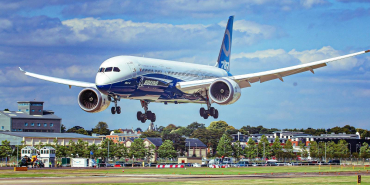
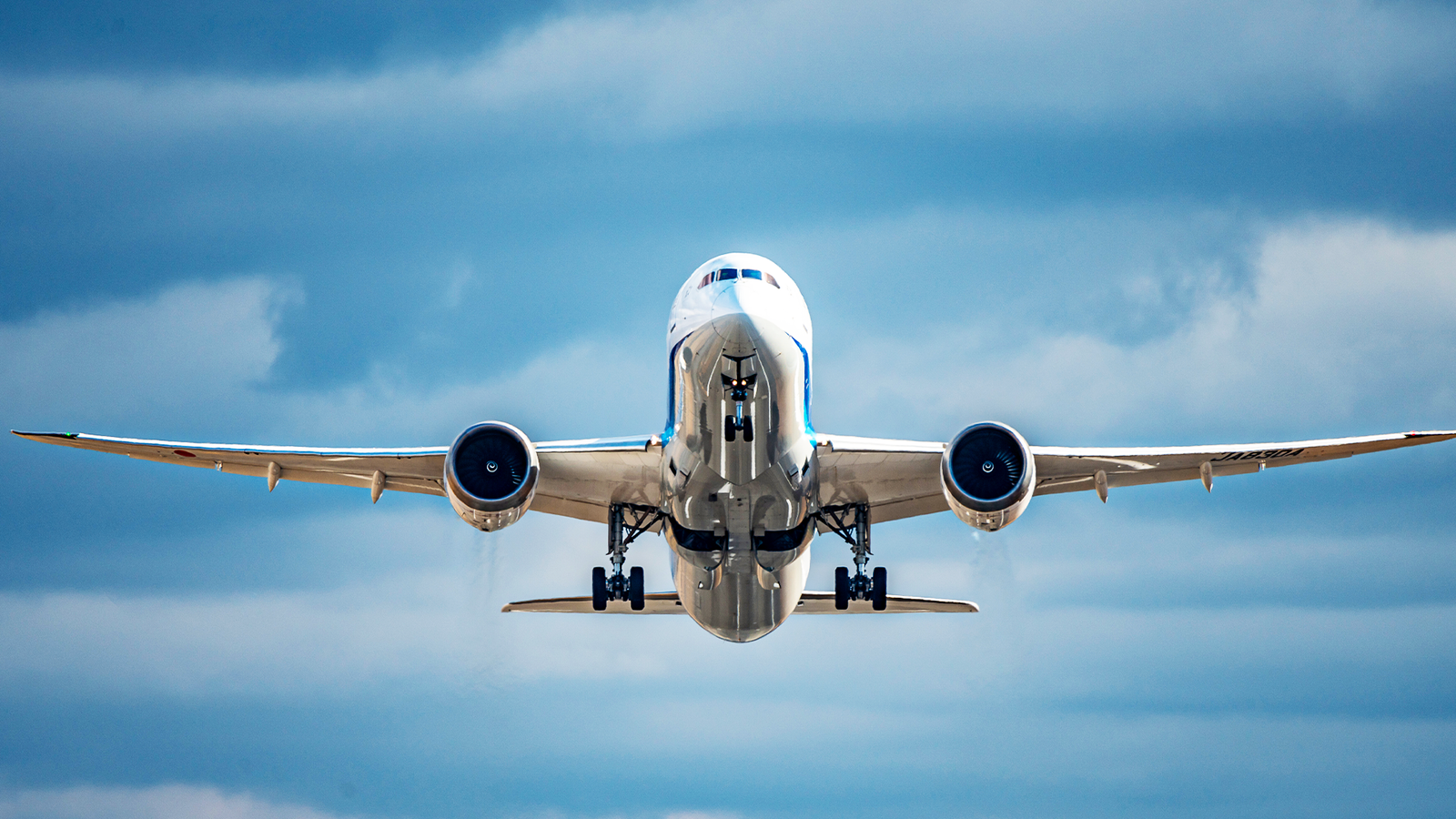
On the Boeing 787-9 and 787-10, the early doors function is triggered approximately one second after take-off, when the aircraft’s air-ground sensing system recognizes that the main landing gear struts have extended as the airplane leaves the runway. At that point, the landing gear itself remains down, but the main landing gear body doors begin their opening sequence automatically.
That means the pilots do not have to move the landing gear lever before the doors start moving, which is the detail that makes the system so distinctive. The gear lever can remain in the DOWN position while the doors open, because the aircraft knows it is airborne but does not interpret that condition as a command to retract the landing gear. Only when the crew selects UP does the next part of the sequence begin. In other words, Boeing automated preparation for retraction rather than retraction itself, preserving a clear division between aircraft logic and pilot command.
The distinction is important because the system is not simply an automatic landing gear retraction device. If the crew leaves the gear lever down, the doors do not remain open indefinitely, with the aircraft flying around in an unnecessarily draggy configuration. Instead, if the lever is not moved to UP within roughly 30 seconds, the system commands the main gear doors to close again. That behavior gives the aircraft the benefit of an early start without permanently changing the normal relationship between the pilots and the landing gear.
Three Seconds Can Make A Meaningful Difference
The reason for opening the doors early becomes easier to understand when the timing of a conventional retraction sequence is considered. Landing gear doors do not move instantaneously, and the cited engineering analysis places the travel time from closed to open at approximately three seconds. Meanwhile, crews conventionally initiate gear retraction after confirming a positive rate of climb, a point that can occur around three seconds after take-off. With a conventional sequence, therefore, roughly six seconds or more can pass before the landing gear has even begun moving toward the fuselage.
During those initial seconds, the aircraft is climbing while carrying a large amount of aerodynamic drag from the extended landing gear and its associated doors. That drag is particularly undesirable immediately after take-off, when the aircraft is close to the ground and has relatively little excess performance available. Opening the doors about one second after take-off effectively starts part of the retraction process ahead of the crew’s gear-up command, allowing the subsequent movement of the gear to begin sooner once that command arrives.
The improvement is therefore measured in seconds rather than minutes, but those seconds occur during a disproportionately important part of the flight. The engineering principle is straightforward: if the doors have already completed their movement by the time the pilots select UP, the gear does not have to wait for the doors to travel before beginning its own retraction. The result is a shorter period in which the aircraft carries the full aerodynamic penalty of its landing gear during the initial climb, which can translate into a small but useful performance advantage.
A visually striking feature, the folding wingtips on the 777X are critical to its operation.
Engine Failure Is Where The System Really Matters
The early doors function becomes particularly valuable in the event of an engine failure shortly after take-off, because this is precisely when climb performance is most precious. A twin-engine aircraft that loses an engine immediately after becoming airborne suddenly has substantially less thrust available while still carrying the drag associated with its landing gear. If the gear doors have already opened, selecting the gear up allows the gear itself to start retracting without waiting for another door-opening sequence. That removes a delay from a situation in which every increment of climb performance matters.
This is closely related to the certification concept known as second-segment climb performance, which deals with the demanding portion of an engine failure after the aircraft has become airborne. The aircraft must demonstrate that it can maintain the required climb performance with one engine inoperative while operating within prescribed conditions.
The clever part is that Boeing did not need to automate the entire operation to achieve this benefit. The system prepares the aircraft for the pilot’s command, but the crew still decides when the landing gear should retract. That avoids turning a performance optimization into an unnecessary loss of control authority during a critical phase of flight. The result is a compromise between automation and conventional crew procedure – the aircraft gets the doors moving early, while the pilots retain the decisive action that actually sends the landing gear into its bay.
The Boeing 787-8 Tells An Important Part Of The Story
The feature is not found across every variant of the 787, which makes the family itself useful for understanding why the arrangement exists. Training material describing the landing gear differences states that the 787-9 and 787-10 variants have the early doors configuration, while the smaller 787-8 follows the more conventional sequence in which the main landing gear doors do not begin opening until the landing gear lever has been selected UP.
Interestingly, the idea of automating more of the retraction sequence was considered earlier in the Boeing 787 program. Discussions of the 787-8 describe an original automatic gear retraction function that was intended to improve second-segment climb performance by allowing the gear to retract promptly after take-off. During development and certification, however, that level of automation was found to be unnecessary for the final 787-8 configuration. The later solution on the -9 and -10 was more restrained, automating the door opening while leaving the actual retraction command with the flight crew. The latest data from ch-aviation shows that United Airlines is currently the world’s largest operator of the 787, followed by All Nippon Airways (ANA).
That evolution helps explain why Boeing’s early doors system is more interesting than it first appears. The US manufacturer was not simply adding a novelty to a later 787 variant; it was refining an idea that had already been considered during development of the family. The final arrangement reflects a more targeted solution, in which the part of the sequence that costs valuable time is automated while the action that matters operationally remains in the hands of the pilots.
An increased maximum takeoff weight allowance is key for Boeing.
The System Has Safeguards Built Into Its Logic
Opening a landing gear door while the aircraft is only a second removed from the runway naturally raises the question of how the system knows that the aircraft is really airborne. The answer lies in the aircraft’s air-ground sensing and landing gear logic, which monitors the condition of the main gear struts. The sequence begins when the air-ground strut compression sensors indicate take-off, after which the landing gear actuation and nose wheel steering control functions command the main gear doors to open.
The doors also do not simply swing open and leave the rest of the mechanism to sort itself out. The landing gear system contains multiple position and sequencing inputs, including indications for the gear being down, the gear being up, the trucks being stowed, and the doors being open. Once the gear lever is moved to UP and the required conditions are satisfied, the system can proceed with retraction. The sequencing is therefore tightly controlled, rather than being a simple timer that opens a door and assumes everything else will follow.
There is also a practical reason for keeping the gear itself down until the pilot commands otherwise. Immediately after take-off, the crew may need to manage an abnormal situation, and the landing gear is not something the aircraft should retract merely because it has detected that the wheels have left the runway. The early doors function provides preparation without committing the airplane to full retraction. If the crew does not select UP, the doors eventually close after about 30 seconds, restoring the normal aerodynamic configuration while leaving the landing gear extended.
From outside the aircraft, there is little to distinguish the Boeing 787’s early doors operation from an ordinary landing gear retraction, because passengers and observers generally see only the gear disappearing beneath the fuselage shortly after departure. The important difference happens in the seconds before that familiar action. On the 787-9 and 787-10, the doors have already begun moving, meaning the aircraft has effectively completed one stage of the retraction sequence before the crew’s gear-up command initiates the next.
That makes the system unusual because it separates two actions that are normally linked together. On most commercial aircraft, selecting the landing gear UP starts the sequence that opens the doors and subsequently retracts the gear. On these two Boeing 787 variants, the airplane can open the doors automatically based on its airborne state, while the pilots continue to control when the landing gear itself retracts. The difference is small enough to be almost invisible in normal operation, yet carefully engineered around the aircraft’s performance requirements.
The early doors function is therefore a good example of how modern aircraft design can extract useful performance from seemingly minor changes in timing. Boeing did not need to redesign the landing gear or remove the pilot from the loop; it simply moved one step of the sequence forward by a few seconds. With door movement taking around three seconds and conventional retraction beginning only after a positive climb has been established, those saved seconds reduce drag sooner and, most importantly, give the aircraft a faster path to clean configuration if an engine failure occurs immediately after takeoff.
Found an error? Send it info@simpleflying.com so it can be corrected.
Orijinal Haberi Görüntüle