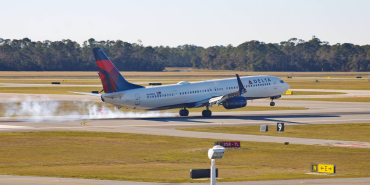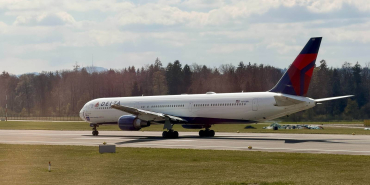



Delta Air Lines is making a highly targeted bet on Orlando this Christmas, scheduling four point-to-point routes to the Florida leisure gateway for just 16 days. From December 19 through January 3, 2027, Delta Connection will link Orlando International Airport (MCO) with Indianapolis International Airport (IND), Kansas City International Airport (MCI), Nashville International Airport (BNA) and Pittsburgh International Airport (PIT). Notably, none of these markets are a Delta hub.
The four routes will operate five times weekly and are part of a wider Florida holiday surge. Over the same period, Delta will triple flights from Raleigh–Durham International Airport (RDU) to Fort Lauderdale-Hollywood International Airport (FLL) while doubling flights from its North Carolina focus city to Miami International Airport (MIA). It is also doubling flights from Cincinnati to Tampa.
But Orlando is the particularly interesting case because Delta experimented with seven similar non-hub routes to Central Florida last winter, and four are returning. This suggests that Delta is becoming increasingly comfortable with point-to-point flying when the destinations and timing make sense.
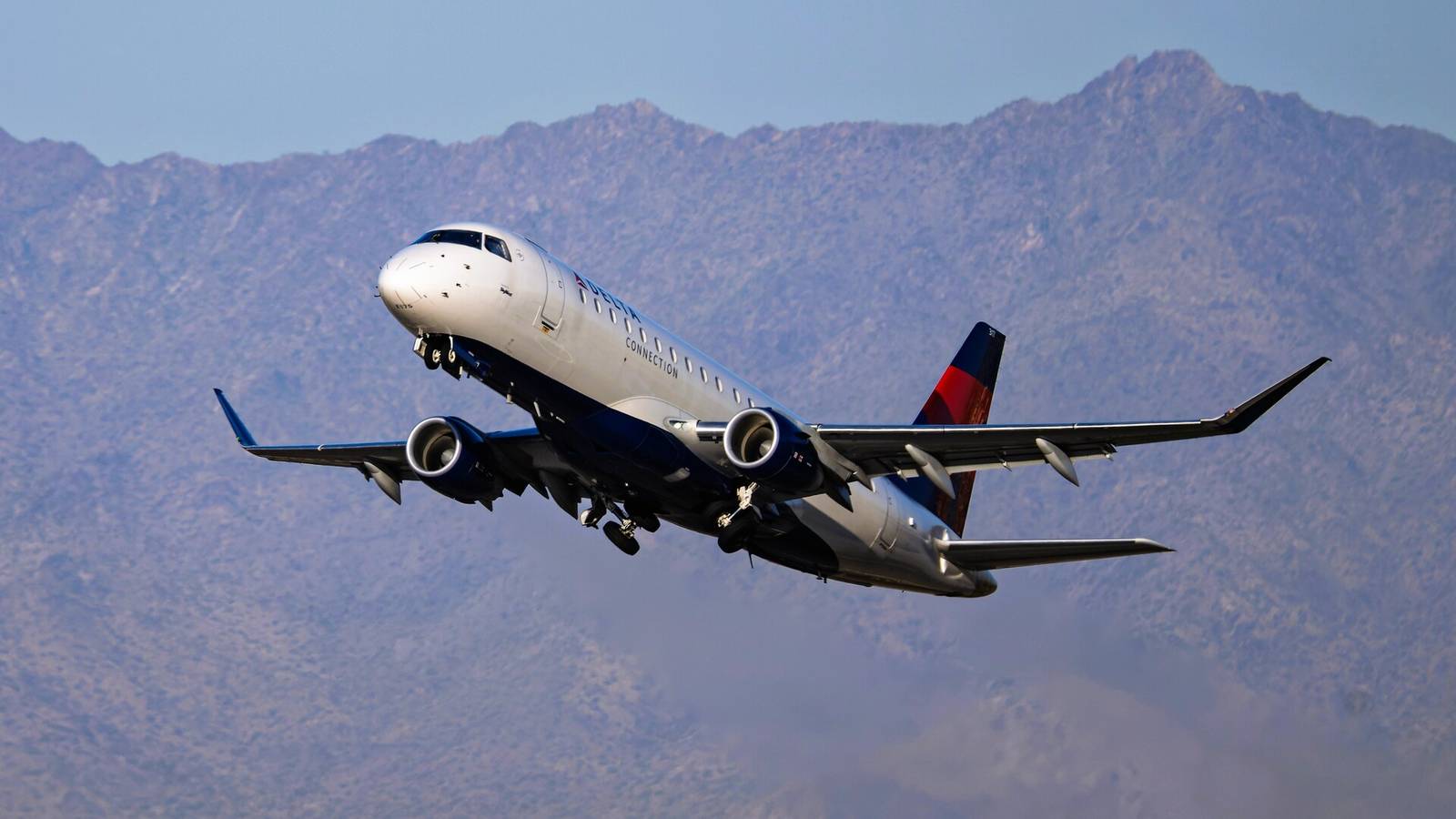
All four Orlando routes will use Republic Airways’ 76-seat Embraer E175s, which Delta configures with 12 First Class, 20 Delta Comfort and 44 Main Cabin seats. That is a relatively modest amount of capacity with which to test a leisure market, while still offering the premium cabin Delta increasingly emphasizes. The routes are notable for bypassing Hartsfield-Jackson Atlanta International Airport (ATL): an Indianapolis passenger heading to Orlando, for example, can fly straight there rather than connecting through Delta’s enormous Georgia hub.
The route schedules have not been fully confirmed yet, but will focus on morning departures for Orlando. This is particularly attractive to families and leisure travelers, letting them reach Central Florida with much of the day still ahead.
Orlando handles more than 3 million passengers over the Christmas and New Year travel period, with January 3 alone forecast to handle more than 200,000. Delta is therefore inserting capacity when family and leisure demand is exceptionally concentrated, rather than asking these routes to work through quieter weeks of the year.
Nor is Delta entering empty markets. Southwest Airlines and Frontier Airlines compete nonstop on all four city pairs, including Frontier’s newly announced four-weekly Kansas City-Orlando service beginning November 20. Delta does not need to match the low-cost carriers’ year-round schedules; five E175 frequencies during the most lucrative portion of the winter holidays will likely be enough to capture Delta loyalists who would otherwise connect or choose a rival nonstop.
This is not the first time we have seen holiday point-to-point flying from Delta, which went considerably broader during winter 2025-26. It announced Saturday service between Orlando and seven cities, including the four returning this year as well as Columbus, Grand Rapids, and Louisville. Simple Flying highlighted the seven-route expansion at the time as an unusual group of regional services outside Delta’s traditional hubs.
Delta subsequently made the Christmas experiment even larger. Delta boosted all seven routes to daily service from December 19 through January 5, then reverted to their weekly Saturday pattern. That makes this year’s schedule more surgical than last year’s: only four of the seven routes return, they operate five rather than seven times weekly during the peak, and there is currently no continuation through the remainder of the winter, although that is subject to change.
All seven services ended in April 2026, and a Simple Flying analysis in June identified them among 14 Florida routes Delta had removed; Columbus was the weakest of the seven by load factor, filling 67.3% of its seats. Yet the return of four markets only months later shows that “cut” does not necessarily mean abandoned. Delta appears willing to turn a route on and off according to the demand calendar rather than judge it solely as a conventional year-round service.
That flexibility also makes good use of regional aircraft during a period when business travel traditionally softens. The E175s normally funnel passengers from smaller markets into Delta hubs, but over the holiday period those aircraft can instead be pointed directly toward one of America’s biggest vacation destinations. Orlando’s own data showed Delta serving 21 destinations in December 2025, up 31% year-on-year, even though its average daily seats were almost unchanged – evidence that regional flying broadened the network without requiring a huge capacity increase.
13 are domestic and one is international. See them all here!
Could Delta Take Point-To-Point Flying Further?
Orlando is far from Delta’s only experiment. In winter 2025-26, it launched Saturday flights to Cancun International Airport (CUN) from Nashville, Indianapolis and Kansas City — not coincidentally, three of the four cities returning to Orlando this Christmas. The common origins suggest Delta sees particular value in giving customers in sizable non-hub markets direct access to major leisure destinations when seasonal demand is sufficient, particularly if many of those customers might connect via ATL anyway.
Palm Springs provides another example. Delta launched seasonal Saturday Austin-Palm Springs flights in November 2025, opening up direct flights to a popular winter destination. Later, for summer 2026, Delta expanded the idea again from Austin, adding Saturday nonstops to Bozeman, Kalispell, and Destin-Fort Walton Beach, mountain and national-park traffic in two markets and beach demand in the third.
Indianapolis/Kansas City/Nashville/Pittsburgh — Orlando
Delta will go shorter still when an event creates enough demand. Its 2026 college-football schedule includes special Friday/Sunday nonstops on unusual routes such as Greenville/Spartanburg-Baton Rouge, Birmingham-Lexington and Oklahoma City-Detroit, part of more than 40 added flights positioned specifically around games. Delta and its rivals are also increasingly adding bespoke NFL football flying, demonstrating that a route no longer needs to justify months of operation if an airline knows precisely when passengers want it.
That leaves plenty of other theoretical point-to-point candidates. Other large Midwest markets such as Cleveland or Milwaukee could potentially support point-to-point Orlando flights during Christmas or spring break. Delta could also extend its Cancún model to additional cities, replicating it with other winter sun destinations.
To be clear, Delta is not turning into Southwest circa 1980 — hubs remain fundamental to its network. But Orlando shows that the carrier is increasingly willing to overlay that system with temporary point-to-point routes whenever the destination, season or event creates concentrated enough demand.
Orijinal Haberi Görüntüle