
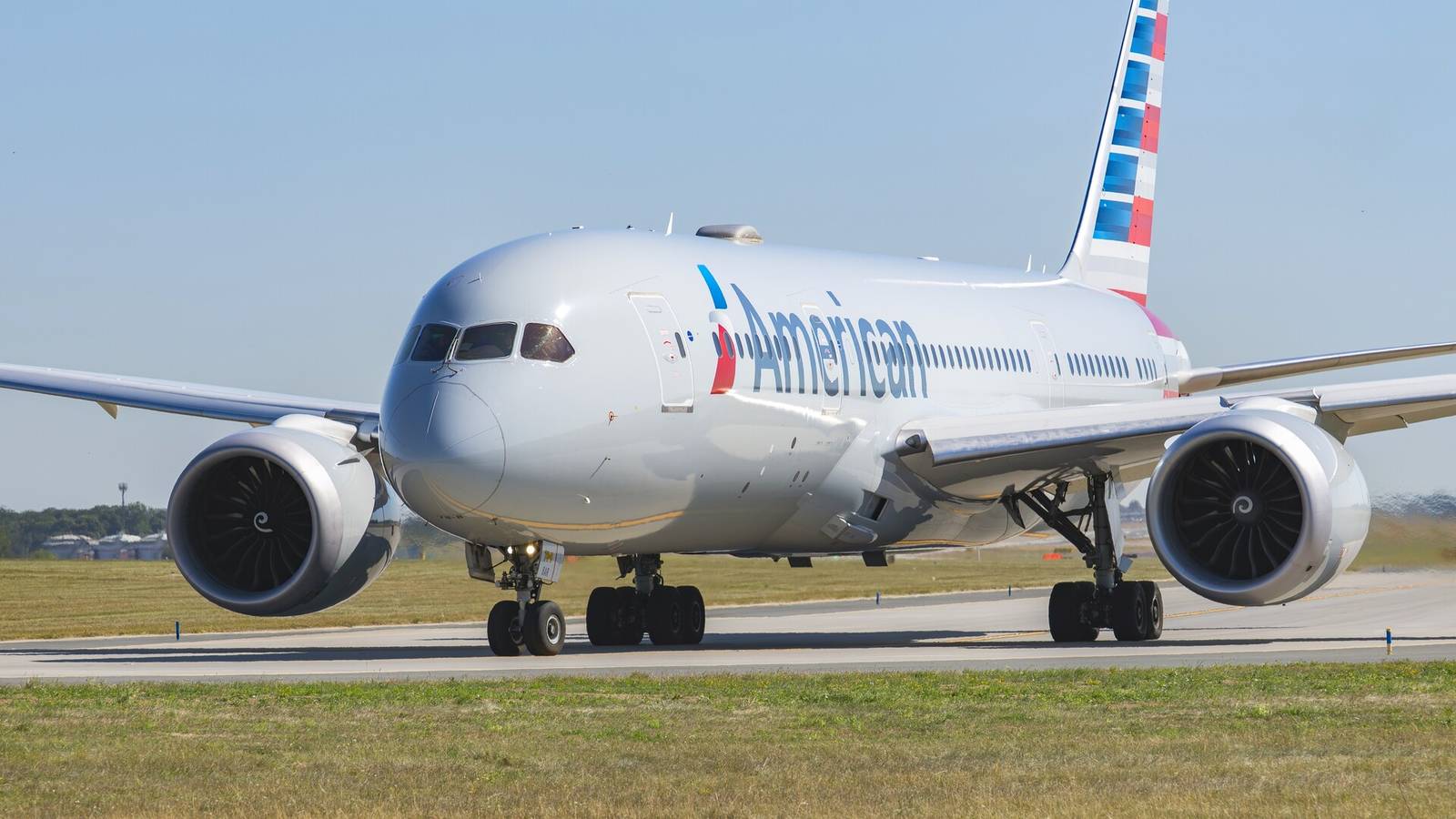


American Airlines has overtaken arch-rival United Airlines as the largest US carrier by international flight count. Schedule data from Cirium shows that American operated 138,848 international flights in the first half of 2026, against United’s 128,064. That is a dramatic reversal from H2 2025, when United led by 135,270 flights to 131,102. While some of the change is due to seasonality, what is also clear is that American’s renewed international expansion is starting to have an impact.
There is an important qualification. The ranking measures flights, rather than passengers, seats, or miles flown. United operates a substantially more long-haul-heavy international network and, as Bureau of Transportation Statistics (BTS) data demonstrate, puts more seats and passengers on each international departure, on average. Nevertheless, American’s takeover is not merely a statistical quirk: the airline has genuinely been adding international flying, while several factors have temporarily constrained United’s growth.
The turnaround is striking. United operated 4,168 more international flights than American during 2H 2025. During the following six months, American operated 10,784 more than United — a 14,952-flight swing in their relative positions. The change comes as American enters its centennial year with what it describes as its largest-ever summer schedule.
Most of American’s advantage was created during the winter season. American had a 14.7% advantage over United, reflecting the size and importance of winter sun markets across Mexico, the Caribbean, and Latin America to its international network. By Q2, however, the two airlines were already converging, and American’s lead had shrunk to just 2.9% as the summer schedule took over and United’s long-haul flying increased. That makes seasonality an important part of the story: United’s international operation becomes much stronger as its enormous summer transatlantic schedule reaches full strength.
However, the net result was still a massive 11% swing from United to American when comparing the second half of 2025 with the first half of this year. And seasonality is only part of the reason for the shift.
American’s international expansion has been highly targeted. It has added only six new international routes year over year, yet its overall flight count is rising quickly because of increased capacity on existing routes. Particularly notable is additional capacity added to its Canadian, Mexican, and Caribbean markets, creating a “longer tail” of higher-frequency routes compared to United’s skew towards long-haul flying.
However, while still dwarfed by United, American is also expanding its long-haul flying. Its summer 2026 additions include from Philadelphia International Airport (PHL) to Budapest and Prague, Dallas/Fort Worth International Airport (DFW) to Athens and Zurich, Miami International Airport (MIA) to Milan, while New York JFK Airport (JFK) to Edinburgh also joined the network. American says its European schedule has now reached up to 70 daily US departures, and it is operating a record 18 daily flights to Italy and Greece.
United, meanwhile, has made a tactical retreat after the surge in fuel prices earlier this year. CEO Scott Kirby told employees in March that the airline would cut around 5% of planned Q2 and Q3 capacity, primarily by removing temporarily unprofitable midweek, Saturday and overnight flying. United also trimmed Chicago service and kept some Middle East flights suspended, with Kirby arguing there was little value in operating flights that could not absorb higher fuel costs.
“To be clear, nothing changes about our longer-term plans for aircraft deliveries or total capacity for 2027 and beyond, but there’s no point in burning cash in the near term on flying that just can’t absorb these fuel costs.”
However, that should not be confused with a strategic withdrawal from international flying. United simultaneously launched new summer routes to Split, Bari, Glasgow and Santiago de Compostela, while Reuters reported that it expected to restore its fuller schedule in the Fall and continue taking new aircraft. American’s takeover is therefore best explained by a combination of real expansion, favorable winter seasonality, and a temporary United capacity pullback.
Can the largest US airline by number of flights return to the top when it comes to profitability?
United Catches Up, But American Still Wins 2026
The second half of this year demonstrates just how seasonal the contest is. As summer travel heats up, United is scheduled for 68,598 international flights versus American’s 65,882, a 4.0% lead, and the only quarter where it flies more internationally than its rival. But as the winter schedule takes hold in Q4, American retakes the advantage as US travelers turn their attention to destinations in Mexico, Central America and the Caribbean.
However, Kirby and team will draw comfort from the fact that United still carries considerably more passengers on its international flights. BTS T-100 data for H1 2026 shows United carried approximately 18.9 million international passengers, compared with 17.4 million for American. Therefore, even as American flew 8% more international flights, United carried 9% more fare-paying passengers as it continues to deploy larger aircraft and carry more people per flight.
Nevertheless, American is on course to surpass 270,000 international flights in 2026, or an average of 740 per day. It’s a massive scale, albeit still far behind the likes of Ryanair, which carries out nearly a million international flights a year. But in the hyper-competitive US market, bragging rights matter, and American Airlines is currently positioned to finish the year as America’s No.1 international airline by flight count.
Orijinal Haberi Görüntüle