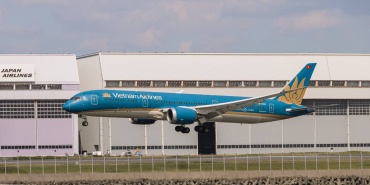

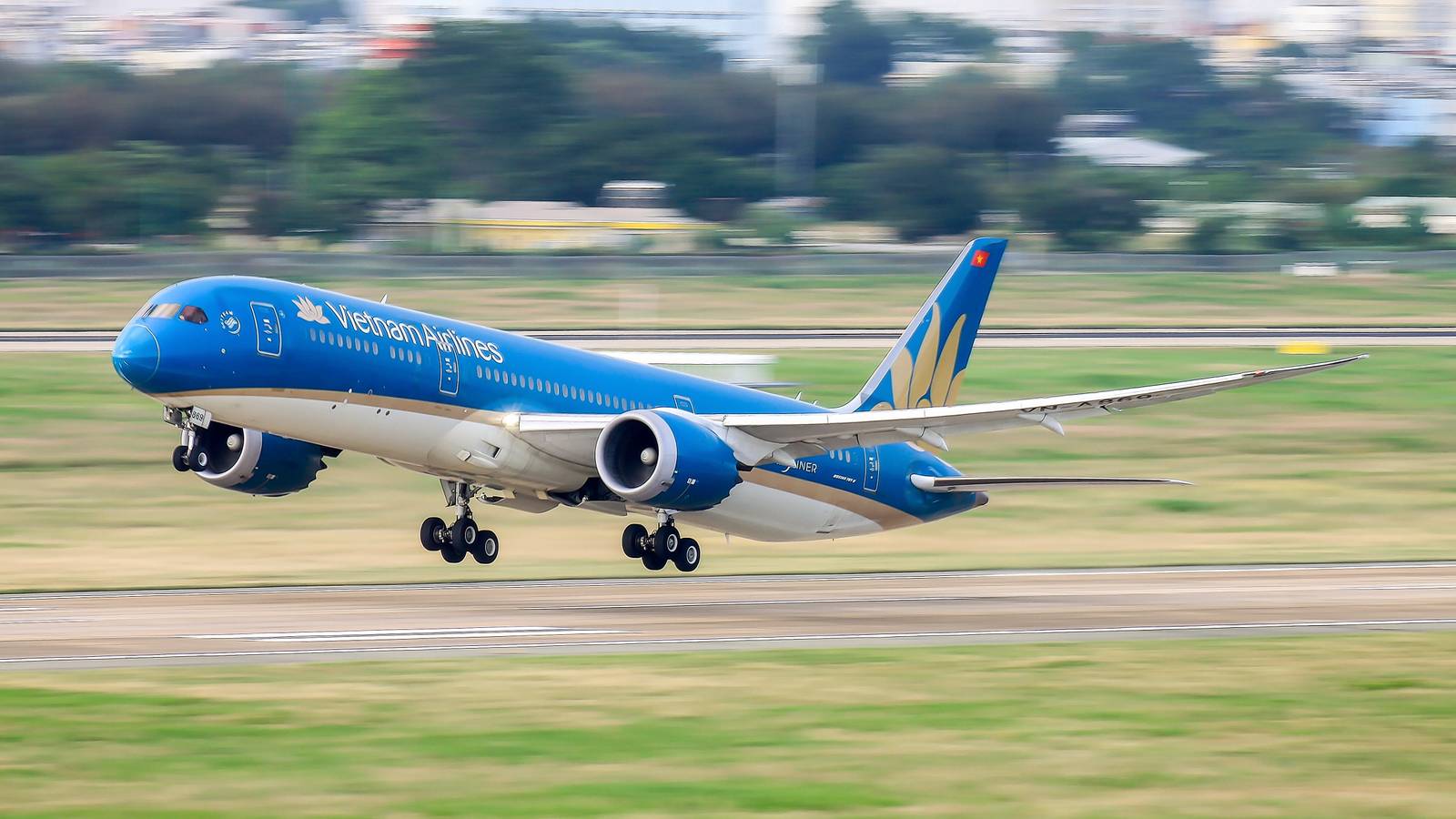


A preliminary report from Vietnam’s aviation authority has provided the clearest account yet of why a Vietnam AirlinesBoeing 787-9 came perilously close to catastrophe at Munich Airport (MUC) as it struck the ground at the end of the runway during takeoff on August 15. The crew reported that the aircraft’s acceleration briefly stopped halfway through the takeoff roll, before its speed later decreased again after reaching V1, the calculated decision speed for continuing or rejecting the takeoff.
The Boeing 787-9, registered VN-A867 and operating Flight VN34 from Munich to Hanoi, eventually became airborne with only about 300 feet of runway remaining. The aircraft then generated warnings consistent with a tail strike and abnormal tire pressure before returning to Munich approximately two hours later. All 271 passengers and 16 crew members survived without injury.
According to the crew’s account cited in the preliminary findings, the aircraft was approximately halfway along Munich’s 13,123-foot (4,000 meters) Runway 26L when its speed stopped increasing for around two seconds. The 787 subsequently resumed accelerating and reached V1, but the pilots then observed another decrease in speed.
The aircraft had a takeoff weight below the 787-9’s maximum takeoff weight of 571,500 pounds (259,200 kg). Weather conditions were also reported to be good, meaning investigators will need to establish why the aircraft’s acceleration did not follow the expected profile. The new information changes the picture from a simple late rotation to a more puzzling situation. The crew noticed an abnormality during the takeoff roll before the aircraft reached the end of the runway.
The report also offers an explanation for the pilots’ decision to continue the departure. Once the aircraft had passed V1 and its speed subsequently began falling, the crew determined that insufficient runway remained to safely reject the takeoff. They therefore selected maximum thrust and continued accelerating toward the runway end. With approximately 300 feet (91 meters) of pavement remaining, the pilot flying raised the nose and the 787 became airborne. The aircraft nevertheless suffered a tail strike during the late rotation, with the rear fuselage contacting the runway surface.
The speed at which takeoff can no longer be aborted. No matter what happens after V1, the pilot will try to get airborne.
Takeoff safety speed. The speed at which the aircraft may safely climb with one engine inoperative.
Rotation speed. At VR, the pilot will begin to apply inputs to the controls to lift the plane off the ground.
Source: Code of Federal Regulations: Title 14: Chapter 1
This sequence will likely be central to the investigation because the crucial question is not simply why the aircraft rotated late. Investigators must determine what caused the loss of acceleration and whether that condition was related to the aircraft, its systems, the takeoff configuration or another factor. No official cause has yet been established. Speculation about braking, thrust or performance calculations should therefore not be treated as a finding.
A critical performance miscalculation on a heavily-loaded LATAM 777 led to an abnormal takeoff.
After becoming airborne, VN34 generated warnings indicating a possible tail strike and abnormal tire pressure. The crew informed air traffic control and elected to return to Munich rather than continue the long-haul flight to Hanoi. Because the aircraft still carried a substantial quantity of fuel, the crew reduced its weight before landing. The 787 also made low approaches that allowed controllers and ground personnel to visually assess the landing gear before the crew committed to the return. It eventually landed on Runway 26R at approximately 3:57 PM local time, around two hours after departure.
Post-landing inspections found four burst main landing-gear tires, along with scrape marks on the underside of the rear fuselage and damage to sections of the aircraft skin. The aircraft remains grounded in Munich for further technical examination. The investigation is now being conducted with cooperation between Vietnamese and German authorities, while Vietnam Airlines has been instructed to work with Boeing and other relevant parties. Investigators will need to reconstruct the takeoff using flight-data recordings, cockpit information and the physical evidence from the damaged aircraft.
The preliminary findings do not establish a final cause. Instead, they narrow the mystery to a critical period during the takeoff roll, when the 787’s acceleration unexpectedly changed and the crew had to make a high-speed decision with diminishing runway remaining. Further analysis should reveal whether the event originated from a technical malfunction, an unexpected performance issue or another contributing factor.
Orijinal Haberi Görüntüle