


The vast expanse between South America and Oceania has some of the world’s loneliest airspace. Even in an age of supremely reliable aircraft and incredibly long Extended-range Twin-engine Operational Performance Standards (ETOPS) certification, it would not be safe to fly this expanse without a fallback option. This comes from Easter Island’s Mataveri International Airport (IPC), which serves as the only potential diversion for aircraft making the trip.
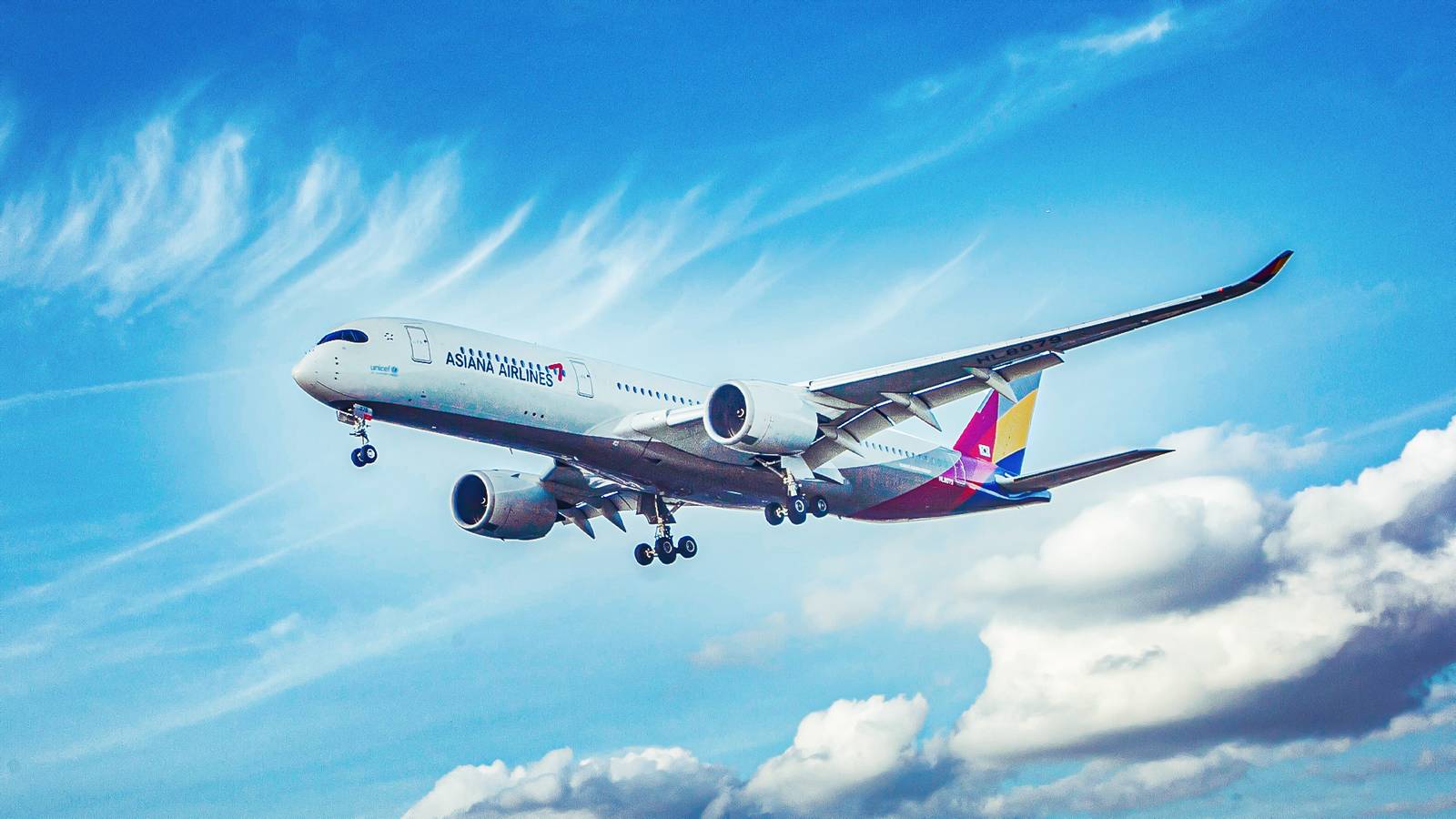
The opportunity presented by Mataveri coincides with the arrival of long-haul and reliable twin jets. The Airbus A350-900 has the world’s longest ETOPS rating at 370 minutes. The routes using Mataveri currently are Boeing 787 using trans-South Pacific flights. Flying in this airspace remains reliant on IPC remaining operational. Many services could not operate otherwise.
Easter Island: The Speck Of Land That Saves Trans-South Pacific Aviation
Easter Island is a Pacific island located around halfway between Santiago and Tahiti. It measures 63.2 square miles (163.2 square km). It is one of the world’s most isolated places. The closest piece of land is Salas y Gómez, 258 miles (415 km) to the east. This islet is uninhabited. The nearest inhabited island is Pitcairn Island, which is 1,289 miles (2,075 km) to the north-west. It is most famous for the almost 1,000 moai head statues built by the early Rapa Nui people. These unusual artifacts have earned Easter Island UNESCO World Heritage Site status.
European explorers first encountered Easter Island in 1722 on Easter Sunday. Jacob Roggeveen led the expedition, and his violent visit led to the deaths of about a dozen islanders. The next European visit was in 1770 when two Spanish ships arrived, with the Spaniards amazed by the moai. James Cook visited four years later. He discovered that the moai, many of which had fallen by the time he arrived, commemorated former chiefs. It wasn’t until 1786 that a detailed map of the island and the surrounding waters was made.
The island has been owned by Chile since it was annexed in 1888. The Rapa Nui people now have Chilean citizenship, and the island has been considered a “special territory” since 2007. In 2017, a Chilean census found that 7,750 people live on the small island, 45% of whom identify as Rapa Nui.
Mataveri is the world’s most remote airport at 1,617 miles (2,602 km) east of Totegegie Airport in French Polynesia. The airport is not busy, only regularly operating scheduled flights to Arturo Merino Benítez International Airport (SCL) in Santiago. The carrier is LATAM Chile. Bizarrely, the airport is known to some because of G. Harry Stine’s 1980 novel Shuttle Down, which gives a fictional account of a space shuttle landing.
The novel is partly rooted in reality, because the airport was once designed as an abort site for the US Space Shuttle during planning for polar orbital flights from Vandenberg Air Force Base. That explains the presence of a 10,800 feet (3,300 meters) runway, capable of dealing with widebody aircraft in emergency situations and scheduled services. It was completed in 1987 and has significantly boosted tourism to the island ever since.
Services in the airspace surrounding Mataveri have been severely restricted by Chilean aviation authorities due to its isolated location and lack of alternative diversion airports between Tahiti and South America. They only allow one aircraft to be in the vicinity at any time. Once a jet passes the halfway point between South America and Easter Island, no other planes can enter the airspace. This measure is because an incident at Mataveri would mean a complete absence of suitable diversion points.
The facility is located more than 2,500 kilometers from the next closest commercial airport.
The Trans-South Pacific Route That Needs Easter Island
The best-known routes that rely upon Easter Island are those between Australia and Chile, such as the Qantas route from Sydney to Santiago. This South Pacific flight travels just south of New Zealand’s coast before striding out across the isolated waters of the South Pacific, skating along north of the Antarctic continent. This route had previously been flown by the Boeing 747-400 and had been canceled in March 2020. However, Qantas revived it for the 2022/2023 flying season.
The revived flights began on October 31, 2022, and used the 787-9. The flights took off from Sydney at 12:35 PM. With a flight time of 13 hours and 30 minutes, the flight landed in Santiago at 11:05 AM. Initial frequency was three times a week. Once in Santiago, the flight had a relatively short turnaround, departing Santiago on the same day at 1:30 PM. Arrival would be the next day at 5:50 PM.
Premium passengers onboard could enjoy 28 seats of premium economy or 42 seats of business class. This was the main differentiator with LATAM, which also flies from Santiago to Sydney. LATAM had premium seats available, but to a much lower standard than that offered by Qantas.
The Airline Flying Scheduled Services To Mataveri
As Simple Flying’s Jake Hardiman observes, “Easter Island is a bucket list travel destination”. This desirability is due to its remote location and the iconic moai figures. However, the only airline that flies scheduled services to the airport is LATAM Chile, and this carrier only operates one route. In 2025, there were 1,094 flights from Arturo Merino Benítez International in Santiago, almost the same as the pre-pandemic period. This averages 10.5 rotations each week. Across the year, LATAM Chile made 296,496 seats available, for a total of almost 700 million available seat miles.
The table below shows the full LATAM Chile fleet according to Planespotters.net:
These flights are operated by 787-8s and 787-9s. The 787-8 is slightly more common, representing 62.16% of the Easter Island services. This smaller variant has 272 seats available, with 20 business class flatbeds in a 1-2-1 configuration and 252 economy class seats in a 3-3-3 configuration. A less dense layout is also available with 30 Zodiac Aura Lite business class flatbeds, with the economy cabin reduced to just 217 seats.
Some of the world’s most remote airports see a surprisingly high number of commercial flights.
The inherent vulnerability of relying on such an isolated airport came into sharp focus with the grounding of one of LATAM’s 787s on Easter Island this June. The incident was caused when one of its doors was sheared off by an airstairs truck on May 29, the first incident suffered by the 13-year-old jet. It sparked a substantial logistical challenge of how to repair the aircraft and get it off the island and back into regular service. Aircraft passenger doors cannot simply be patched up, so a replacement had to be sourced, likely requiring a cargo aircraft to be chartered with the replacement door and specialized tooling.
A challenge arises with this field maintenance because Mataveri Airport has no hangars large enough to house widebody aircraft like the 787. Difficult repair processes are normally carried out in highly controlled environments. Yet, the LATAM repair team would have to deal with Pacific winds, dust, humidity, sea spray, and more.
The goal was to get the aircraft back into ferry-flyable condition rather than have passengers onboard for the return flight. It would likely have flown back to Santiago at a low altitude, preventing the need for cabin pressurization. This practice is common for structurally compromised aircraft during ferry flights.
The World Has Plenty Of Other Remote Airports
Mataveri is the world’s most isolated airport, but it is far from the world’s only airport considered extremely remote. The world’s northernmost airport is Svalbard Airport (LYR), located on Norway’s Svalbard archipelago. Only domestic routes can be flown to Svalbard, limiting services to Oslo (OSL) and Tromsø (TOS). The trips are operated by Scandinavian Airlines and Norwegian Air Shuttle. They use a combination of Airbus A320neos and Boeing 737 Next Generation and MAX.
Some remote airports are among the most challenging to operate from. An example is Paro International Airport (PBH) in Bhutan. Airlines can only operate there during daylight hours because of the surrounding mountains that can reach 18,000 feet (5,486 meters). That gives Bhutan’s only airport one of the world’s most challenging approaches. PBH is operated by Bhutan Airlines and Drukair to an impressive range of seasonal and year-round destinations.
The weather poses the main challenge at Tibet’s Linzhi Milin Airport (LZY) in Tibet. Conditions limit services to an average of 100 days per year. Commercial operations at LZY began in August 2006 with Air China’s 757. Several other airlines operate there, including Sichuan Airlines, Tibet Airlines, and West Air.
Finally, Russia’s Far East is served by Elizovo Airport (PKC). It is home to many commercial services along with a substantial Russian military base. The airport dates back to the 1940s. However, a runway extension in 2012 allowed it to accommodate widebody aircraft.
Orijinal Haberi Görüntüle