




The solid-state ornithopter developed at Rutgers University can fly using piezoelectric technology without motors or mechanical components. The new system could revolutionize drone technology.
Traditional Motors May Become Obsolete
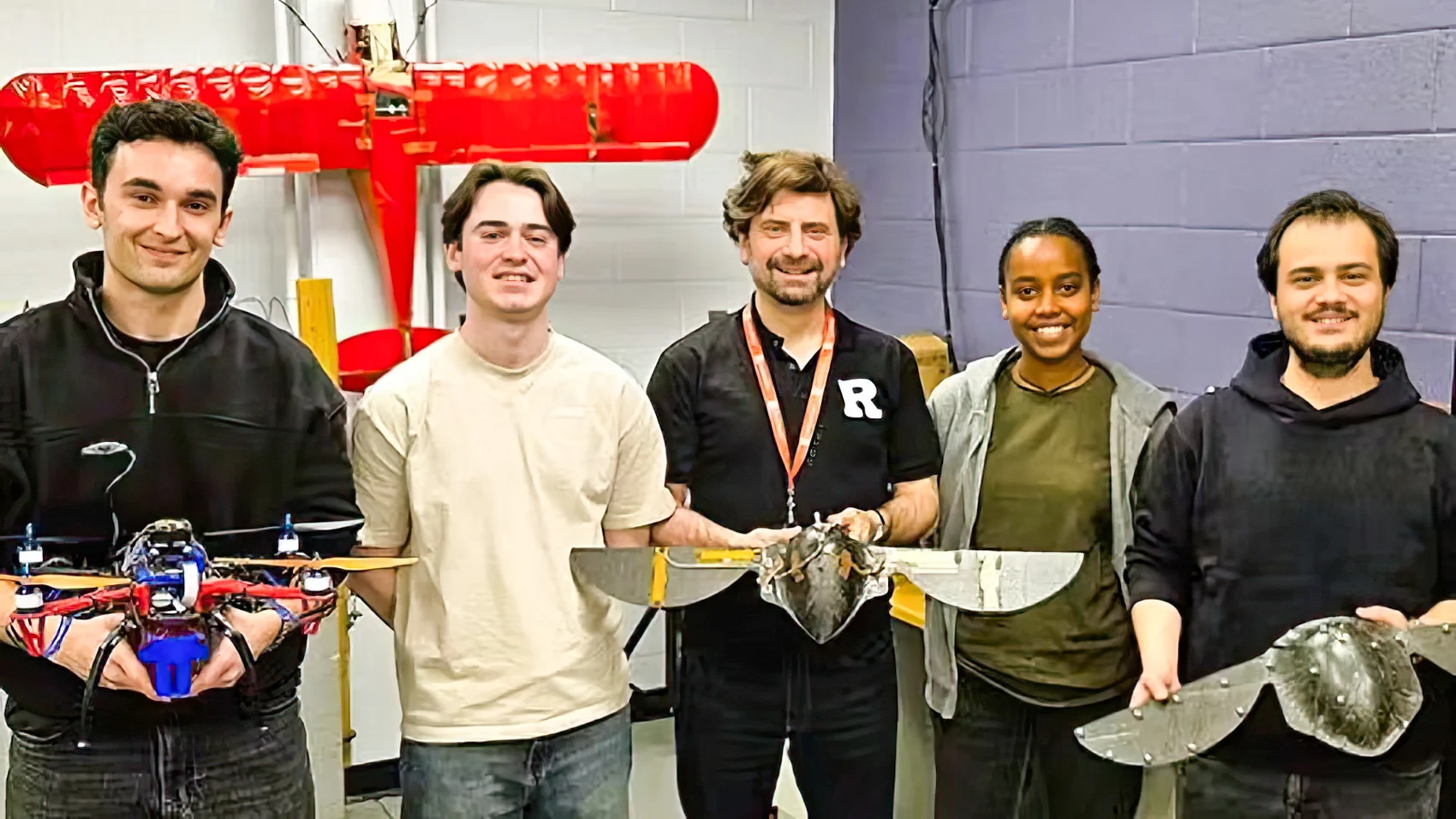
Engineers at Rutgers University in the United States have developed a new generation unmanned aerial vehicle based on the flight mechanism of birds.
In the study conducted by Xin Shan and Onur Bilgen, electrically driven smart materials were used instead of conventional electromagnetic motors.
The research was published in the journal Aerospace Science and Technology.
What Is a “Solid-State Ornithopter”?
The developed system is based on the bird-like flight principle known in the literature as an “ornithopter.” However, unlike existing examples, this model:
Operates without
- Motors
- Gear systems
- Mechanical linkages
- For this reason, researchers define the system as a “solid-state ornithopter.”
Wing Flapping with the Piezoelectric Effect
The system is based on the piezoelectric effect.
Thanks to special materials that change shape when electricity is applied, the wings are moved directly.
Bilgen explained the system as follows:
“When we apply electricity, the piezoelectric materials directly actuate the surface without the need for additional mechanical components. The wing structure consists of a combination of a piezoelectric layer and carbon fiber.”
A Simpler, More Durable System
In the new design, Macro Fiber Composites (MFC) integrated into flexible wings are used instead of complex muscle- and bone-like mechanisms.
Thanks to this structure:
- Fewer parts → lower failure risk
- Lighter system → higher efficiency
- Mechanism-free structure → longer lifespan
- Critical Advantage: Safe and Flexible Flight
The wing-flapping motion provides significant advantages, especially in narrow and complex environments.
According to the research, such drones can be effectively used in areas such as:
- Search and rescue operations
- Environmental monitoring
- Inspection of hard-to-reach areas
- Urban delivery missions
It is also stated that the flapping motion causes less damage to both the device and the surroundings in the event of a collision.
Rapid Development with Virtual Modeling
The research team also developed an advanced simulation model capable of analyzing all physical processes related to flight simultaneously.
Thanks to this system:
- Designs are tested before physical production
- Time and cost savings are achieved
- The development process is accelerated
Bilgen said, “We can demonstrate the feasibility of designs that are not yet physically possible.”
Biggest Challenge: Material Performance
The biggest challenge facing the project is the performance of current piezoelectric materials.
According to Bilgen, today’s technology does not yet allow this system to reach its full potential. However, the developed model shows that this barrier can be overcome in the future.
Inspired by Nature, Aiming Beyond
Although the research is inspired by birds and insects, the team is not content with merely imitating nature.
Bilgen summarizes this approach as follows:
“Our goal is not to copy nature, but to go beyond it.”
Potential Applications in the Energy Sector
The potential applications of piezoelectric technology are not limited to drones.
Researchers believe that by applying the same principle to wind turbines, blade aerodynamics could be optimized in real time, enabling more efficient energy production.