


Russia’s Su-57 Falls Behind in Exports: The US, China and Turkey Take the Lead in the Order Race
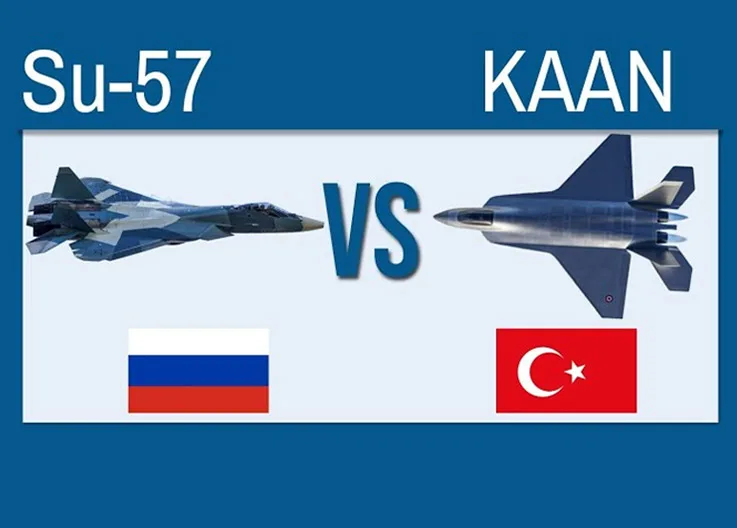
As global demand for fifth-generation fighter jets grows, Russia’s Su-57 is failing to attract the expected interest in international markets. Alongside the US and China, Turkey is also stepping forward in the global order race with its next-generation fighter jets.
US and China Collecting Orders
According to Eurasian Times, Lockheed Martin has received more than 1,000 orders from 19 countries for its F-35 Lightning II. China’s J-35A model is also on the radar of many countries, particularly Pakistan. Turkey has already received its first orders for the domestically developed KAAN.
Su-57 Active in the Field but Lagging in the Market
Russia has tested the operational capabilities of the Su-57 Felon during the wars in Syria and Ukraine. Equipped with long-range R-37M missiles and hypersonic munitions, the aircraft can be deployed for multi-role missions, from air superiority to ground strikes. However, despite these advantages, the Su-57 has so far only reportedly received an unofficial order from Algeria.
Why Can’t It Find Buyers?
Experts point to two critical disadvantages of the Su-57:
-
Low stealth features: Weaker radar invisibility compared to the American F-35 and F-22.
-
Production issues: Post-Ukraine war sanctions have restricted Russia’s production capacity. As of August 2025, only 25–32 operational Su-57s are in service.
To overcome this deadlock, Russia is offering technology transfer and joint production options through the Su-57E export model. Countries like India are evaluating these offers, but no firm agreements have been concluded yet.
A New Balance in Global Competition
The strong order portfolios of the US and China, along with Turkey’s progress in the KAAN project, are weakening the Su-57’s competitive edge in the global air forces balance. Despite decades of aircraft production experience, Russia has been unable to achieve the export success it anticipated in the fifth-generation race.