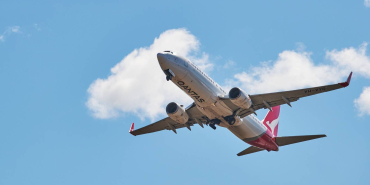

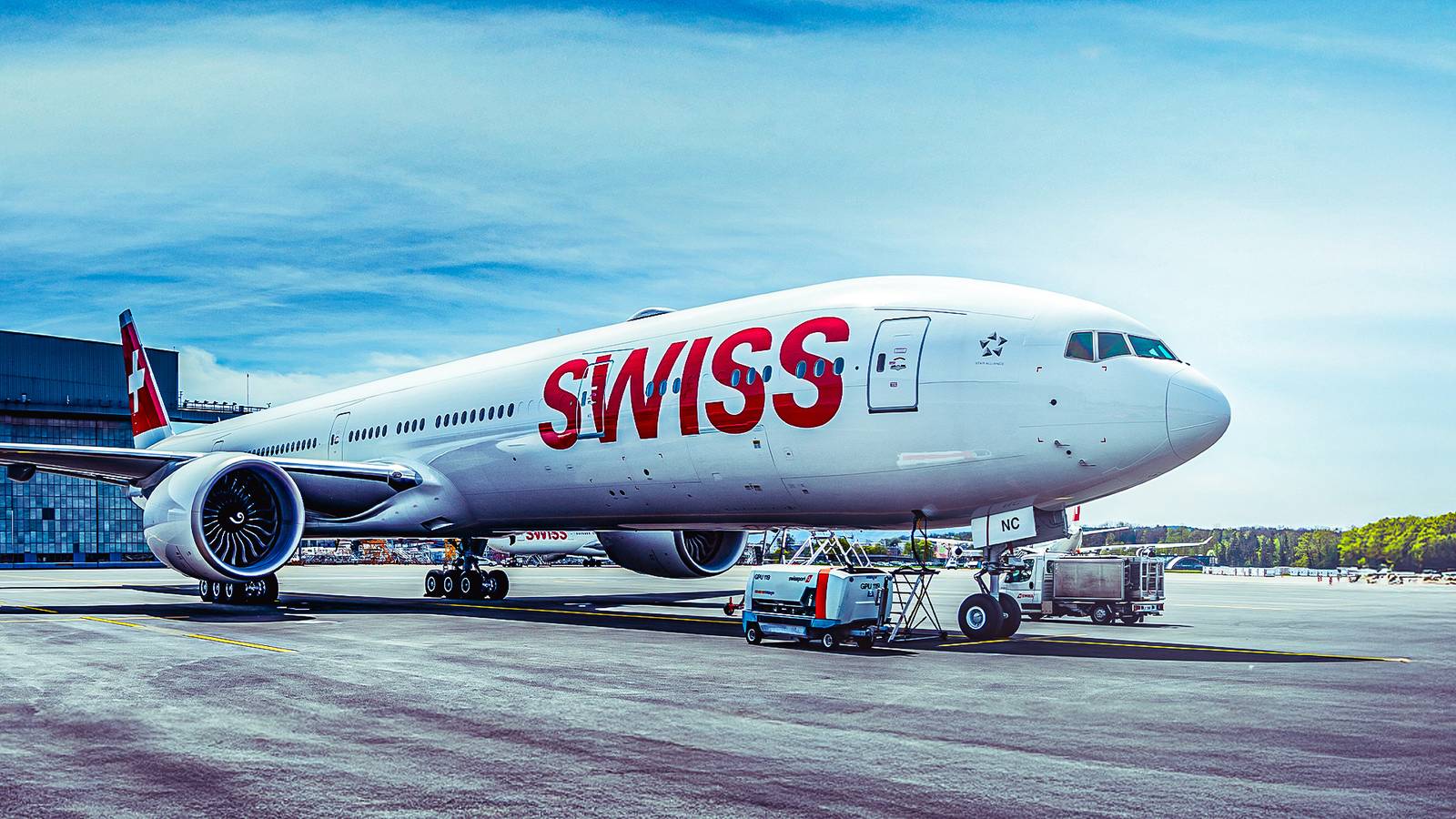


Overnight, a SWISS Boeing 777-300ER flying from Chicago O’Hare International Airport (ORD) in the US state of Illinois to Zurich (ZRH) in Switzerland had to make an unplanned stopover in the middle of the North Atlantic Ocean. The Triple-Seven ended up diverting to Lajes Airport (TER) on the island of Terceira in the Azores, a Portuguese archipelago that is the only solid land for many miles around.
The reason for the diversion was said to be an onboard odor, with some passengers and crew requiring medical attention upon arrival in Lajes this morning due to various symptoms. With the odor yet to be identified, SWISS has opted to send a replacement aircraft from Zurich out to Lajes to pick up the stranded passengers and get them to where they need to be, albeit with a big delay under their belts.
SWISS flight LX9 is a regularly scheduled transatlantic commercial passenger service from Chicago to Zurich. Per Flightradar24, it operates on a daily basis using Boeing 777-300ER widebody twinjets: its scheduled time of departure is 7:05 PM. With a block time of eight hours and 45 minutes, its arrival into Zurich is timed for 10:50 AM the next day. However, yesterday’s iteration did not go to plan.
Found an error? Send it info@simpleflying.com so it can be corrected.
Indeed, according to the Aviation Herald, having left slightly behind schedule at 7:34 PM, the flight diverted to Lajes overnight due to a strong but unidentifiable odor arising in the economy cabin. In a statement on its website, SWISS confirmed that the aircraft, a 777 that bears the registration HB-JNF, had 222 passengers and 16 crew members on board, and touched down at 6:30 AM today. It added that:
“Around five passengers and one crew member underwent precautionary medical examinations after landing, having briefly experienced symptoms such as eye irritation, nausea, or headaches.”
SWISS went on to confirm that “none of those affected required any further medical attention,” with all of them “able to leave the aircraft normally.” What remains uncertain, however, is the source of the pungent odor that was enough of a concern to force the flight to declare an emergency and divert to Lajes. On this note, SWISS has said that it will refrain from speculation while its experts inspect the jet.
Given that this will not necessarily be the quickest or easiest of jobs, the airline has opted to take HB-JNF out of service, leaving its crew and passengers temporarily stranded in the Azores. However, it was able to quickly pivot and deploy a replacement 777, HB-JNK, which left Zurich at 1:58 PM as LX5008. It is currently estimated that it will reach Lajes at around 4:00 PM local time to take the flyers back.
SWISS’s Boeing 777-300ER Layout (Per aeroLOPA)
At the time of its earlier statement, SWISS said that the subsequent return flight would arrive back in Zurich at around 10:15 PM local time tonight. However, that was based on the replacement jet leaving Zurich at around 1:00 PM. As such, the rescue flight will likely arrive back in Switzerland around an hour later than planned. Even so, SWISS’s quick response and rescue flight deployment are commendable.
The Azores Glider was one of the most dramatic moments in aviation history and the longest glide of its kind.
With that being said, that isn’t to say that the diversion and subsequent deployment of the replacement aircraft have had no material impact on SWISS’s operations today. Indeed, HB-JNK was not sitting around as a standby aircraft waiting to plug a gap when needed: rather, it was originally rostered to operate SWISS flight LX8 to Chicago this afternoon, as well as the subsequent return flight, LX9.
As such, its redeployment to rescue the stranded passengers from last night’s iteration of SWISS flight LX9 from Chicago to Zurich has meant that these flights have had to be canceled today. On this front, SWISS says that it “sincerely [regrets] the inconvenience this causes [its] passengers and [is] arranging alternative travel options for those affected.” As always, aviation is an industry where safety comes first.
Orijinal Haberi Görüntüle