


BEIRUT — The recently signed trilateral defense pact between Saudi Arabia, Turkey and Pakistan is expected to boost arms sales from Ankara to Riyadh specifically, but will more broadly bring the defense industries of all three nations into a tighter “ecosystem,” analysts told Breaking Defense.
“The Mecca Pact should not be viewed simply as an arms-export agreement. It is much broader,” said Ali Bakir, defense analyst and an assistant professor at Qatar University. “It aims to facilitate joint investment in defense industries, major defense projects, technology transfer, local production, research and development, training, and the integration of complementary capabilities. Over time, this could transform the relationship from a buyer-seller model into a genuine defense-industrial partnership.”
The so-called Mecca pact was signed on Aug. 7 and aims “to strengthen collective deterrence against any act of aggression, and stipulates that any armed attack against any one of the three states shall be regarded as an attack against them all. It further provides for the enhancement of all aspects of defense cooperation among the three states.”
While the practical consequences of the collective defense portion of the agreement — likened to NATO’s Article V — could be shortly tested as Saudi Arabia has been in Iran’s crosshairs in recent months, analysts said the defense industrial cooperation aspect will have lasting consequences, especially for Riyadh and Ankara.
“Saudi Arabia does not simply want to import finished platforms,” Serhat Süha Çubukçuoğlu, director of the Turkey program at TRENDS Research & Advisory, said. “Rather, it wants to build domestic manufacturing, maintenance, and engineering capacity under Vision 2030. Turkey is particularly well placed to support that goal because it can offer capable, combat-tested systems with fewer political restrictions and more flexible localization arrangements than many traditional Western suppliers (especially the United States).”
Çubukçuoğlu noted that the Turkish parliament will have to ratify the accord for Turkey to officially join the pact, but that it was unlikely to be blocked.
Albert Vidal, a research analyst for the London-based thinktank The International Institute for Strategic Studies, said that for Turkey, “the pact could provide a nudge for companies trying to penetrate the Saudi market. Turkish firms have been working on this for several years but with few major successes beyond the Akinci deal.” (In 2023, Turkish drone-maker Baykar signed its “largest contract” to export Akinci unmanned combat aerial vehicle to Saudi Arabia’s navy and air force.)
MQ-9B and Gambit Series: Advancing European Defense Capabilities
GA-ASI will build Gambit aircraft in Europe, partnered with European-based companies, with airframes available for international procurement starting in 2027.
Vidal said that Pakistan, meanwhile, brings “significant aerospace and manufacturing expertise” — a potent ingredient for the scope of potential trilateral projects.
Bakir noted that if “Türkiye, Saudi Arabia, and Pakistan combine their respective financial resources, industrial capabilities, technological expertise, military experience, and human capital, they could create a much deeper and more institutionalized defense ecosystem. That would not only increase defense trade but also strengthen their collective strategic autonomy and deterrence.”
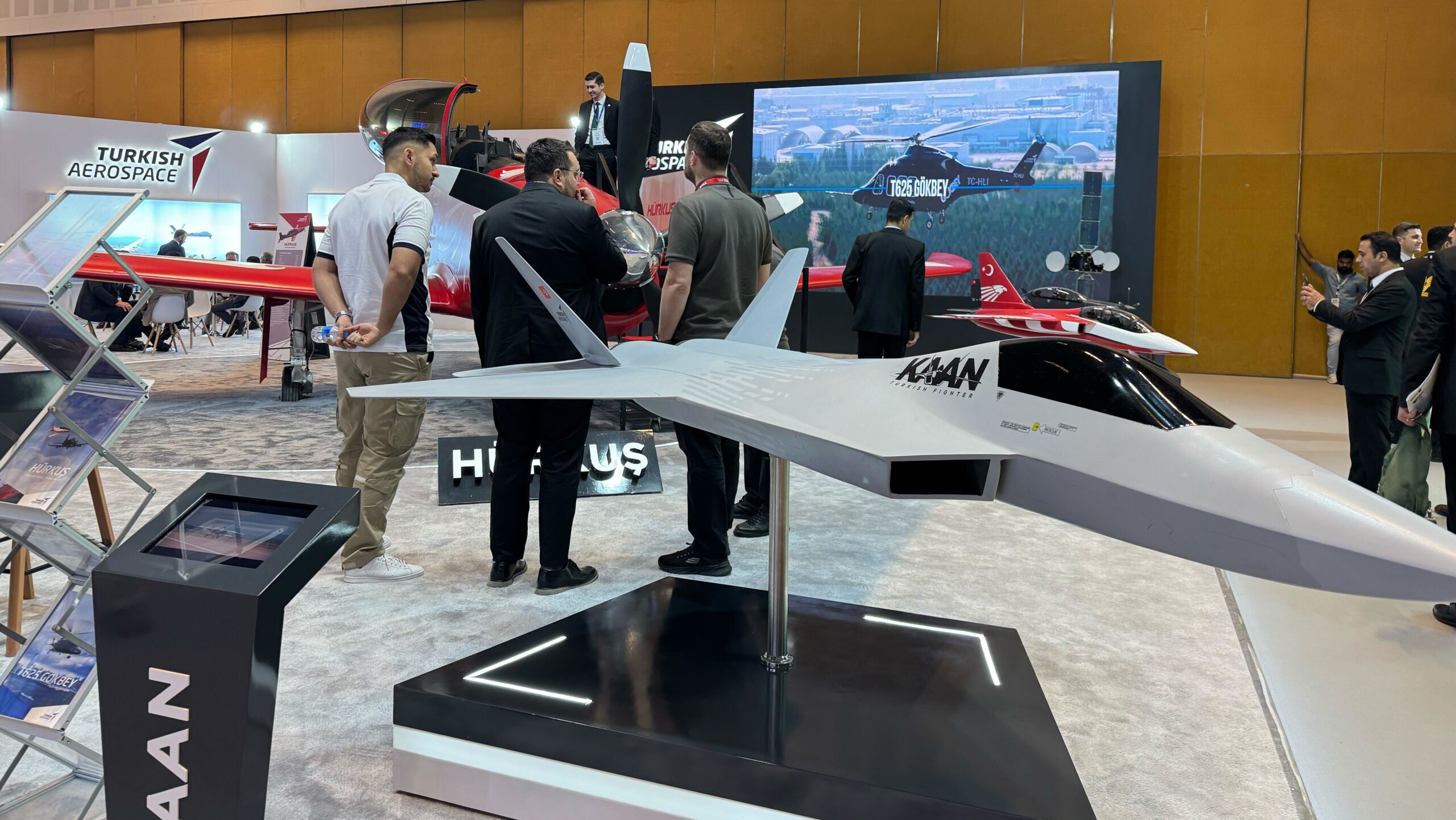
As for specific systems that are more likely to change hands due to the pact, the experts pointed especially to Turkish offerings from air defense systems to the nation’s indigenous in-development, fifth-generation KAAN fighter jet.
“Riyadh is increasingly interested in diversifying its suppliers and building greater redundancy in its air-defense architecture, particularly after years of exposure to missile and drone attacks. Turkish systems could have a role here, especially in the lower and middle layers: HİSAR-O could provide a medium-range option, while systems such as KORKUT and GÜRZ could address short-range and counter-UAV requirements,” gulf defense analyst Leonardo Jacopo Maria Mazzucco said.
In February, Turkish Aerospace CEO Mehmet Demiroglu told Breaking Defense that they are in the final stages of reaching an agreement for exporting KAAN to Saudi Arabia, though no further developments have been publicized. Bakir told Breaking Defense that the pact could push a deal for the KAAN closer.
In response to questions about any potential exports, Turkish Aerospace said that the firm “will continue to provide solutions to the needs of Türkiye, as well as those of friendly and allied nations, through the advanced technologies and products it develops and manufactures.”
Gokhan Tekin, director of international business development for vehicle-producer FNSS, said that his firm expects that the pact will have a positive impact.
“Relations between governments and institutions will grow even closer, and joint working groups will be established. Standardizing the systems used in military vehicles will also come onto the agenda. Products that work compatibly with each other under the same standards will need may likely be used. In this sense, the most advanced product and design capability can easily be provided by Turkish companies, FNSS foremost among them. We can expect the formation of joint programs and coproduction of specified systems,” he told Breaking Defense.
Several other Turkish defense firms declined to comment for this report or did not respond by press time.
Orijinal Haberi Görüntüle