
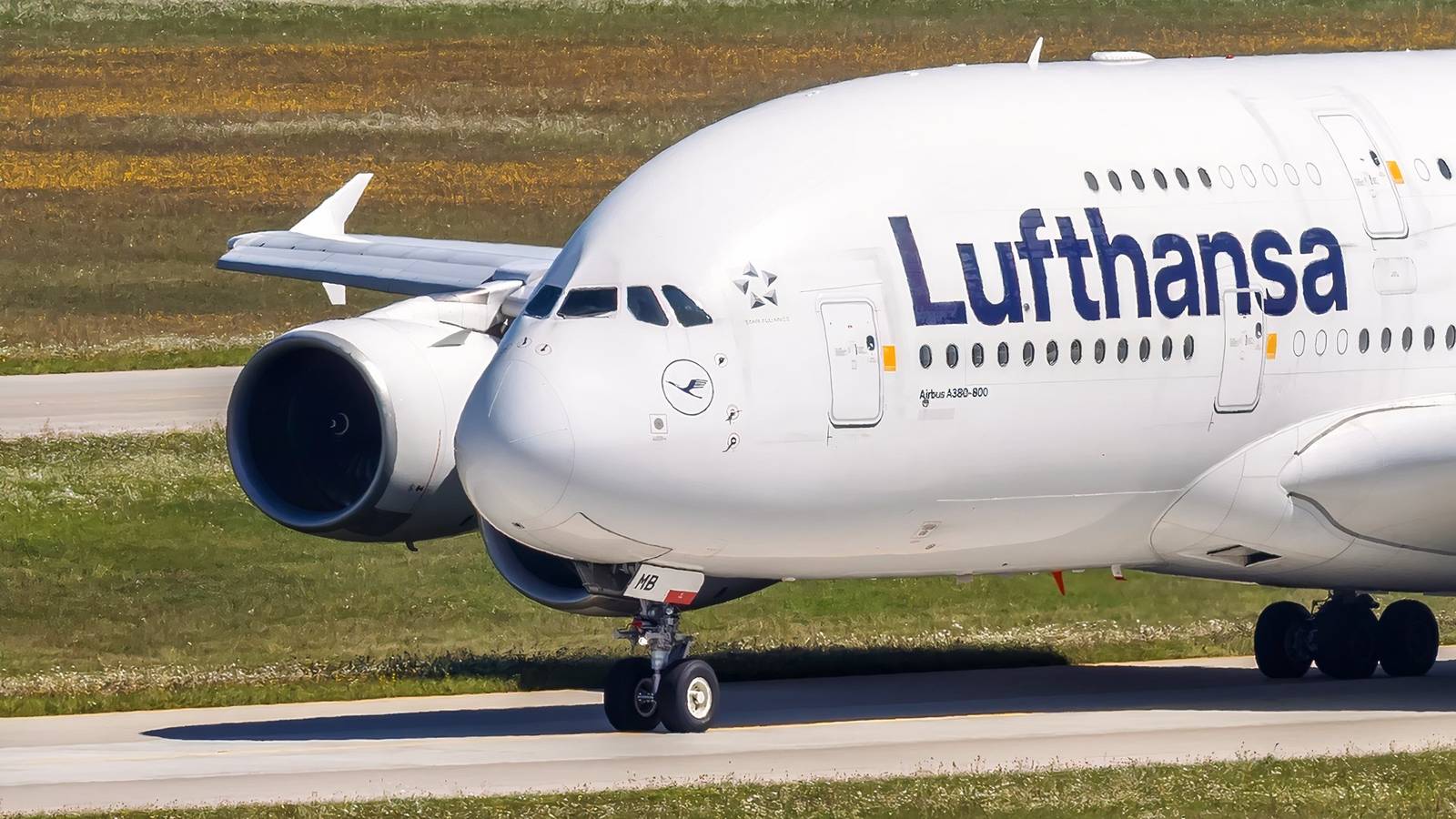


A LufthansaAirbus A380 landed short of the runway threshold at Munich Airport (MUC) on August 17, damaging runway lighting near the threshold in a second serious runway incident at the German hub within days. The aircraft, operating Flight LH459 from San Francisco, had 351 passengers aboard, all of whom were able to leave the aircraft safely and without reported injuries.
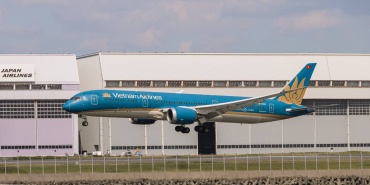
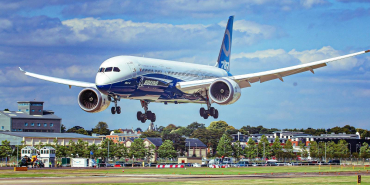
The incident occurred just two days after a Vietnam Airlines Boeing 787-9 experienced a dramatic takeoff incident at the same airport. That aircraft struggled to accelerate during its departure from Munich before becoming airborne with very little runway remaining. The close timing has drawn attention to the two events, although there is currently no evidence linking their causes.
The Lufthansa A380, registered D-AIML, arrived from San Francisco after an approximately 11-hour flight. During its landing on Munich’s Runway 26L, the aircraft touched down short of the designated runway threshold. The early touchdown resulted in contact with runway lighting in the threshold area. Lufthansa confirmed that the lighting installation was damaged during the landing, while the aircraft subsequently taxied to its assigned position rather than requiring an emergency evacuation.
The A380’s size makes the event particularly significant from an operational perspective. The aircraft is the world’s largest passenger airliner, with a wingspan and landing footprint requiring carefully controlled runway operations. Nevertheless, the available reports do not indicate that the aircraft left the paved surface or suffered major structural damage. The absence of reported injuries dampened the severity of the incident but does not mitigate its potential consequences. The aircraft completed its landing and passengers were able to disembark normally.
Germany’s Federal Bureau of Aircraft Accident Investigation, known as the BFU, has opened an investigation into the event. Investigators have secured the aircraft’s flight recorder as they work to establish why the A380 touched down before the runway threshold. A preliminary account does not establish whether the early touchdown resulted from an approach below the intended glide path, a visual misjudgment, environmental conditions, or another factor. Those possibilities require examination of the aircraft’s recorded flight data, cockpit procedures and conditions during the approach.
The runway lighting damage will also provide investigators with physical evidence showing where the aircraft first contacted airport infrastructure. That evidence can be compared with recorded aircraft position, altitude and speed to reconstruct the final portion of the approach. It is therefore too early to characterize the incident as a runway excursion or a failure of the aircraft itself. The confirmed fact is that the A380 touched down short of the runway threshold and damaged lighting infrastructure in the process.
The aircraft landed back at Munich two hours after departure.
The timing has made the Lufthansa incident particularly notable. On August 15, a Vietnam Airlines 787-9 operating from Munich to Hanoi encountered an acceleration problem during its takeoff roll on Runway 26L. The aircraft eventually became airborne with only 300 feet (91 meters) of runway remaining and later returned after warnings associated with a tail strike and abnormal tire pressure. The Vietnam Airlines aircraft also damaged runway lighting during its incident. That event resulted in an investigation involving German and Vietnamese authorities, while the aircraft remained in Munich for further examination.
There is currently no indication that one event caused or contributed to the other. The repeated damage to runway infrastructure nevertheless means Munich Airport operators and investigators will have to examine the circumstances carefully. Runway 26L is one of Munich’s two 4,000-meter (13,123 feet) runways, giving the airport substantial capacity for long-haul aircraft.
For Lufthansa, the immediate priority is determining whether D-AIML sustained any damage requiring maintenance before returning to service. For investigators, the more important question is what caused the aircraft to cross the threshold at an unusually low point.
With the flight recorder secured and the BFU investigation underway, additional findings should clarify whether the event resulted from crew performance, approach conditions, aircraft systems or another factor. Until that work is complete, the proximity of the two Munich incidents is notable, but it should not be treated as evidence of a common underlying problem.
Orijinal Haberi Görüntüle