



WASHINGTON — The Pentagon wants more transparency from defense primes and their supply chains on the cost of building weapons and is considering the use of software that would pull data directly from companies’ financial systems to get it, according to memo reviewed by Breaking Defense.
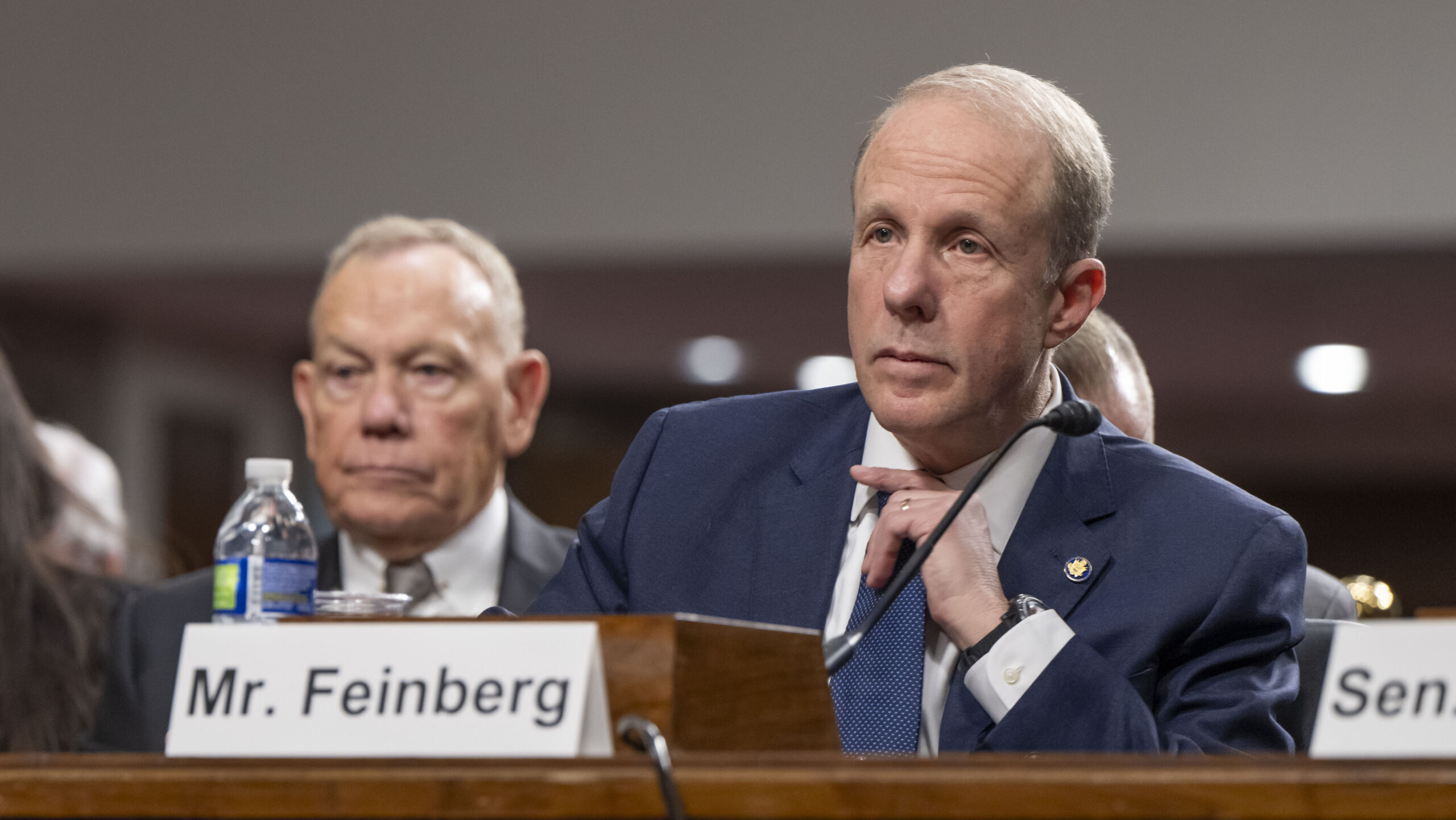
The memo, signed off by Deputy Defense Secretary Steve Feinberg on Tuesday, is meant to “reset” the Pentagon’s expectations for supplier cost and pricing information, with the department seeking to use that data to ensure that contractors’ profit margins don’t get out of control.
“Full transparency throughout all tiers of the supply chain applies to all contractors and subcontractors,” Feinberg stated in the memo, which was addressed to senior Pentagon leaders and the directors of defense agencies and department field activities. “This requirement supports negotiations for products and services valued at $10 million or more, regardless of whether cost and pricing data requires certification.”
“Additionally, I have directed the Under Secretary of War for Acquisition and Sustainment (USW(A&S)) to establish fair and reasonable contract profit margins by applying commercial best practices tailored to each product or service line,” he said.
Key among the changes proposed by the memo is a software tool that would give the Defense Department direct, machine-to-machine access to defense companies’ financial systems.
“To reduce industry’s regulatory burden and compliance costs, USW(A&S) will explore an automated solution consistent with commercial best practices,” Feinberg states. “This approach will establish Application Programming Interfaces to pull cost information directly from contractors’ enterprise resource planning or other financial systems.”
Despite the professed mission of lessening the “regulatory burden,” the tech solution could frustrate defense companies, which have long complained that the department’s pursuit of cost and pricing information is overly burdensome and has the adverse effect of requiring companies to maintain administrative systems and personnel purely to keep up with the department’s demands.
Industry associations like the Aerospace Industries Association have also contended that these requirements impede commercial businesses and nontraditional firms from doing business with the Pentagon. In a statement today, an AIA spokesperson said that industry is already “moving faster, building more, and innovating rapidly,” and that the new requirements under consideration “would be a move in the opposite direction.”
“This approach risks adding years to acquisition timelines, creating new barriers to delivering critical capabilities to our troops, and undermining Congress’ recent modernization efforts,” the spokesperson said.
The memo does not lay out a plan for implementing or financing this “automated solution,” and it is not clear whether its adoption would result in additional cost to industry. The Pentagon did not immediately respond to a request for comment about the memo or how it would implement the directive.
In recent years, Congress has made changes to cost and pricing data requirements in the hopes of lightening the burden on industry. The 2026 defense authorization act changed the threshold for contractors to submit certified cost and pricing data to $10 million for all contracts awarded after June 2026. Before that, the threshold was $2.5 million.
In the new memo, Feinberg states that the department “does not intend to limit profitability when contractors realize efficiencies after negotiating a fair and reasonable price based on a realistic baseline” and that the directive seeks to ensure transparency and that contracts are negotiated fairly.
While industry might initially be concerned about the Pentagon’s proposed use of a software that would access company financial systems, that doesn’t necessarily mean that tool would be capable of scraping out every single piece of data collected by the company, said John Ferrari, a retired Army major general and a senior nonresident fellow at the American Enterprise Institute.
Instead, Ferrari said the software would likely be used to standardize and streamline how the Pentagon gets cost information from companies, with artificial intelligence potentially being used to help comb through data.
“This does not necessarily say the Pentagon’s going to reach in through the machine and pull it out,” he said. “The way I look at it is, it says the companies need to pass this data to the Pentagon in an automated fashion, kind of like you would file your taxes. You get [your tax information] up and you then send it to the IRS electronically.”
The directive also implores program managers and contracting personnel to ensure that industry submits mandatory Cost and Software Data Reporting (CSDR) information on time. CSDR is the Pentagon’s system for capturing data on the costs incurred by contractors on a given program.
“Thousands of these cost reports are currently delinquent across our acquisition portfolio,” Feinberg stated. “The data deficit impairs our ability to assess which programs are providing the most value for the Department and which programs require adjustments to remain on track and on budget.”
The memo tasks the department’s acquisition wing with ensuring delinquent reports are submitted in 30 days and that CSDR data is used to assess the quality of sole-source contracts over time.
Cost and pricing information is only gathered for cost-plus contracts where the government is on the financial hook for programs that go over budget due to technical difficulties or other challenges. Having additional insight into contractors’ costs would allow the Pentagon to ensure its getting a fair price for the products it buys, said Ferrari.
But with that influx of data, the department might also have to invest in hiring financial experts who can untangle what all that cost information means.
“That’s not a common skill set,” Ferrari said. “I think AI can help a lot, but again, if you don’t know what you’re looking at and you don’t know how to make inferences from it, AI can give you the exactly wrong answers.”
UPDATED 8/20/2026 at 4:35pm ET to include AIA comment.
Orijinal Haberi Görüntüle