


An Airbus A350-900 belonging to China Eastern Airlines collided with a passenger boarding bridge during a parking manoeuvre at Shanghai Hongqiao Airport. While a mechanical failure was cited, all passengers were safely evacuated.
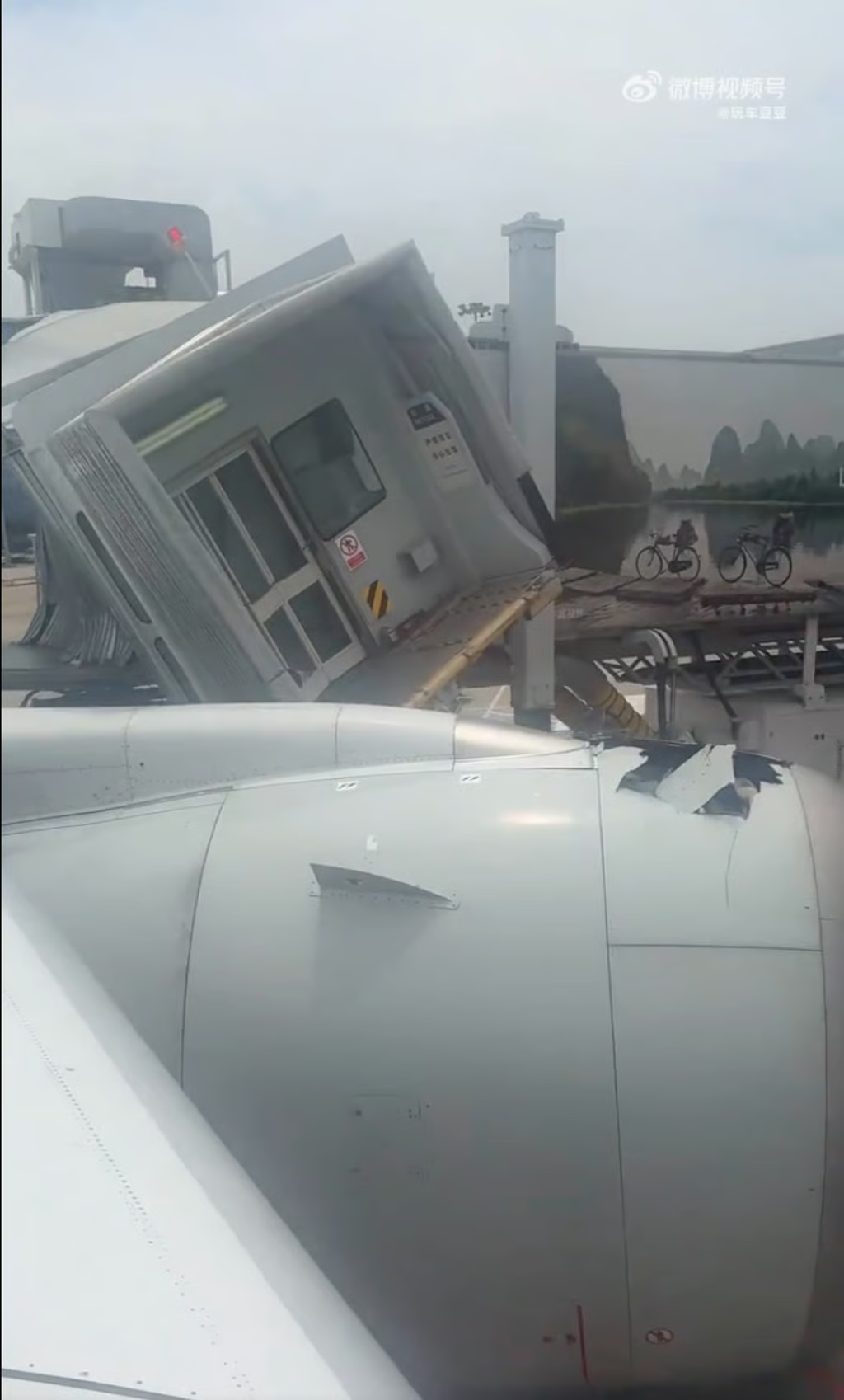
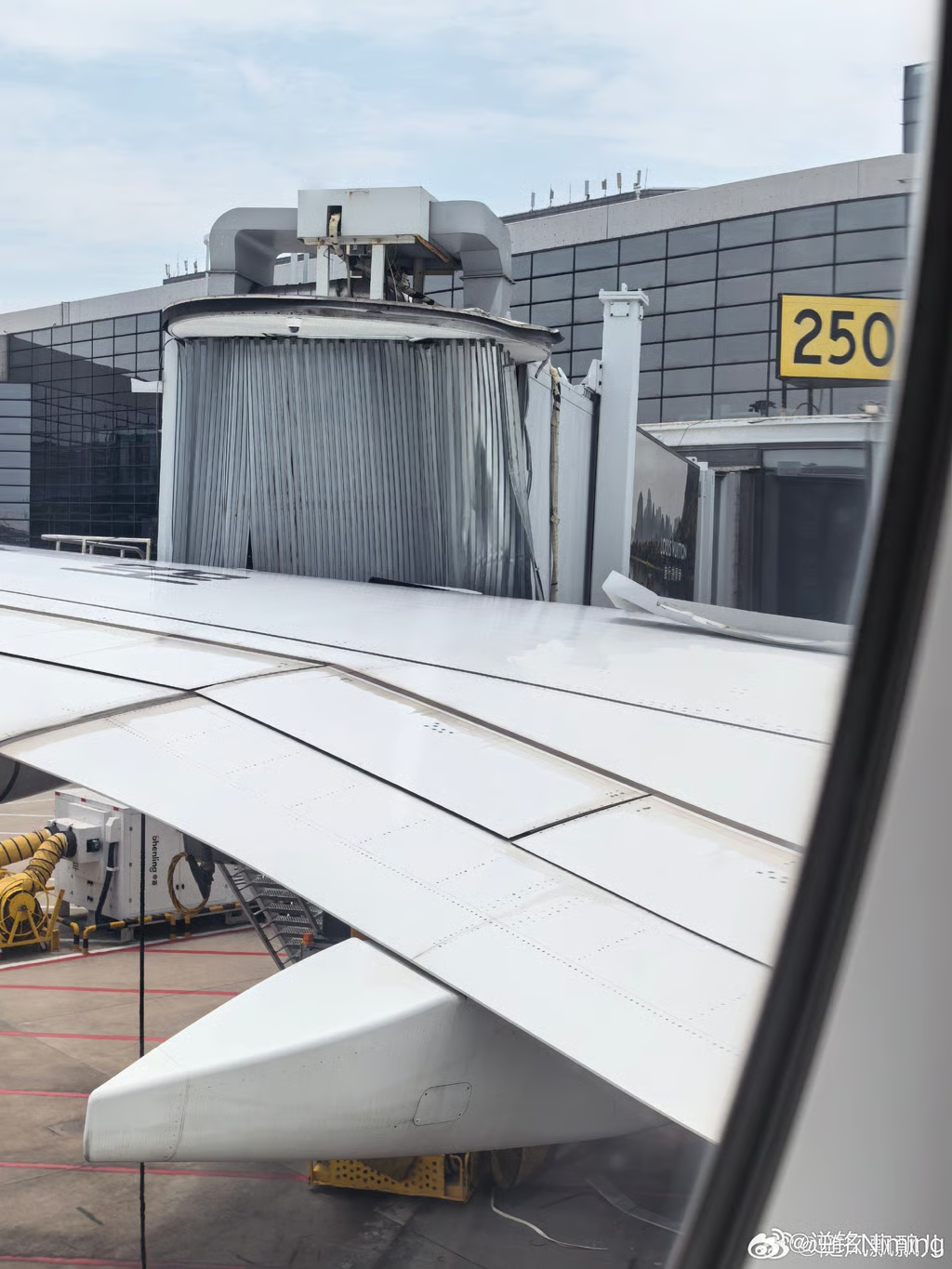
An Airbus A350-900 operated by China Eastern Airlines, one of China’s largest carriers, collided with a passenger boarding bridge while taxiing to its parking position after landing at Shanghai Hongqiao International Airport. In a statement released after the incident, the airline said the accident was caused by a mechanical failure and confirmed that all passengers on board were safely evacuated.
The incident occurred on a flight from Chengdu to Shanghai and has once again brought aviation safety and ground operations processes into focus during China’s May 1 “Golden Week” holiday period, when millions of people travel.
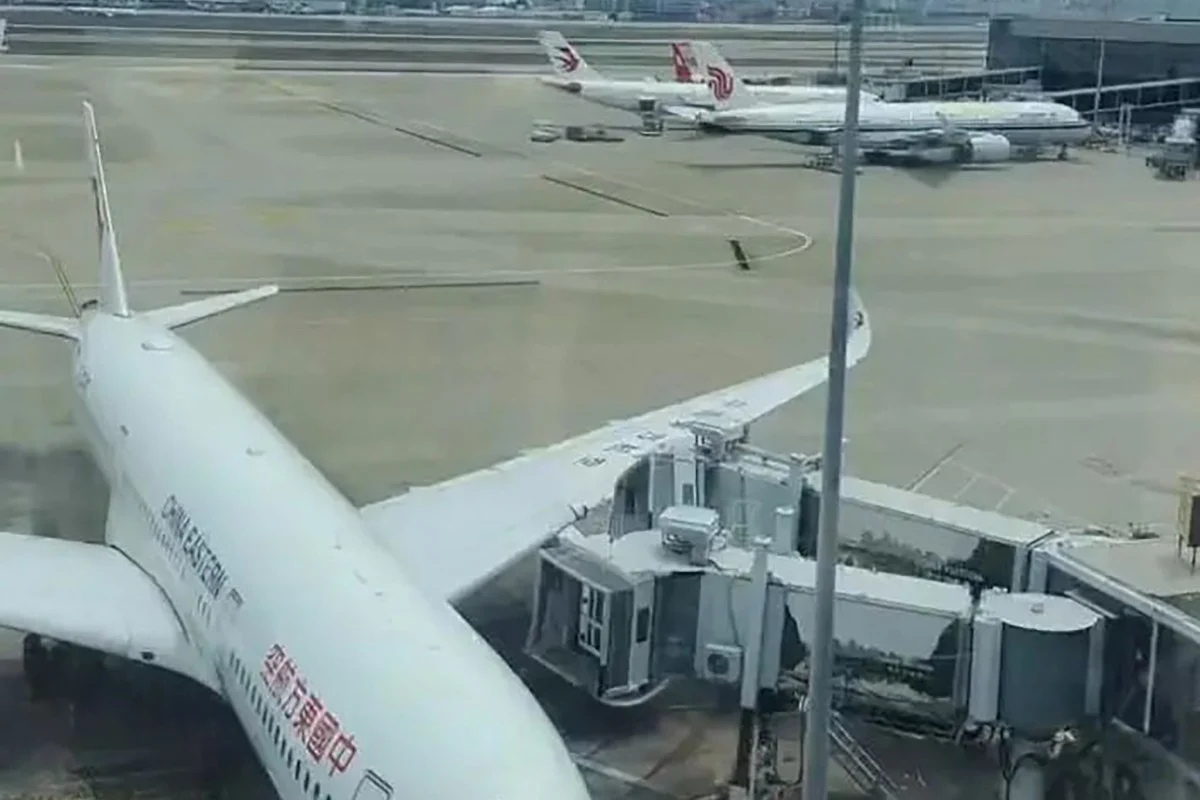
Collision occurred while approaching parking stand
According to an official statement from China Eastern, the aircraft experienced a technical issue while taxiing at low speed toward the parking stand after landing at Shanghai Hongqiao Airport. During this process, the aircraft made contact with the passenger boarding bridge.
The airline stated that the collision was limited in impact, that the cabin crew quickly implemented standard safety procedures, and that passengers were disembarked in a controlled manner.
Passengers speaking to local media described the sound at the time of the incident as “similar to light turbulence,” while some reported seeing damage on the wing and hearing loud noise from the engine after disembarking.
Incident involving a modern Airbus A350 raises questions
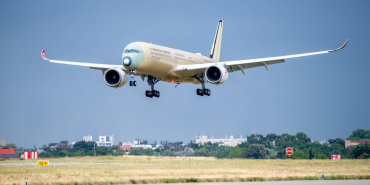
According to flight tracking data, the aircraft involved was a four-year-and-three-month-old Airbus A350-900. The ground incident involving this model—known for long-haul operations and advanced flight systems—has raised not only the possibility of a technical malfunction but also potential scenarios related to ground guidance, braking, or taxi systems.
Parking manoeuvres for modern wide-body aircraft are conducted under highly sensitive procedures. Therefore, while such contact may not pose a direct safety risk, it requires a comprehensive review in terms of operational discipline, maintenance processes, and apron safety.
Compensation provided to passengers
According to local media, passengers were evacuated from the undamaged side of the aircraft after a delay of approximately half an hour. It was reported that China Eastern offered compensation of 300 yuan per passenger.
While such payments are considered a standard response to maintain customer satisfaction in China’s domestic market, disruptions—especially during peak holiday periods—add to the operational pressure on airlines.
Golden Week congestion strains aviation system
The timing of the incident is also significant. During the five-day May 1 holiday period in China, 1.52 billion trips are expected, with approximately 11.75 million of them projected to be by air.
Traffic at this scale increases the burden on airport infrastructure, apron coordination, and maintenance operations. Even the smallest technical disruption at high-density hubs like Shanghai can affect a wide operational chain.
Investigation ongoing
China Eastern announced that the technical investigation into the exact cause of the incident is ongoing. Although the initial assessment points to a mechanical failure, the final report is expected to provide a clearer picture regarding the aircraft’s taxi systems, ground operations coordination, and crew procedures.
In the global aviation industry, safety is shaped not only in the air but also by the precision of every movement on the ground.