
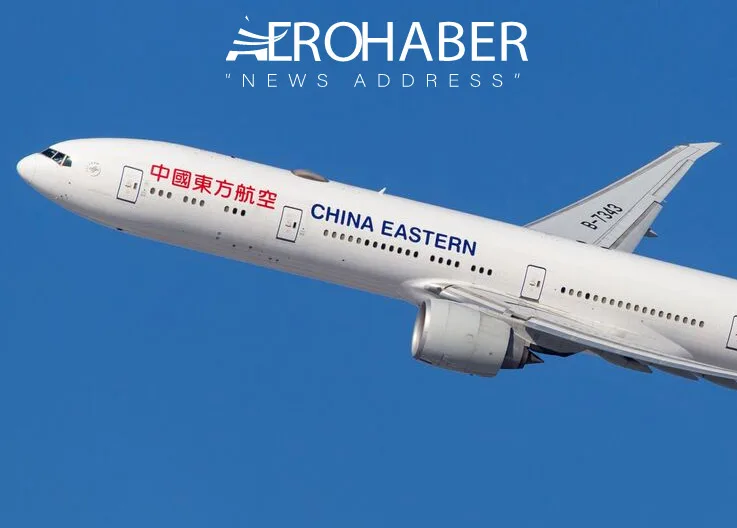


China Eastern Airlines made aviation history with its new Shanghai–Buenos Aires service launched as of 4 December. The flight, which lasted approximately 29 hours and covered a distance of 19,000 kilometres, has been recorded as the world’s longest commercial service. During the journey, a two-hour stop was made in Auckland, New Zealand, for crew change and refuelling. Special celebrations were held both at departure and arrival.
The new route between the two cities, which are almost on opposite sides of the world, stands out with its average flight duration of 25 hours and 55 minutes on the outbound leg and 29 hours on the return. This long route offers a more comfortable alternative compared with connecting flights that can take up to two days.
In its statement, China Eastern Airlines said: “This new route, which fills the gap of direct flights between Shanghai and major South American cities, opens the ‘southern corridor’ connecting both sides of the Pacific Ocean, reshaping air travel across three continents.”
Competition Heats Up: Which Airline Will Offer the Longest?
With this new service, the previous record held by Singapore Airlines for its 19-hour New York–Singapore flight has been surpassed. Meanwhile, Qantas’s ultra-long-haul route planned for 2027 between Sydney and London, with a flight duration of 22 hours, seems likely to further intensify competition among airlines.
Growing Chinese Community in Argentina Increases Demand for Flights
Argentina has a rapidly expanding Chinese diaspora. Today, around 55,000 China-born individuals live in the country. During the 12-month period up to September 2025, 96,000 passengers travelled between China and Buenos Aires.
Chinese immigration to Argentina has taken place in three waves since the 20th century.
- The first major wave came from coastal towns between 1914 and 1949.
- The second wave occurred in the 1980s from Taiwan.
- In the 1990s and 2000s, a third wave took place due to economic opportunities. This group made significant contributions to the country’s retail sector, particularly by establishing Asian supermarkets.