


With renewed hostilities between US and Iranian forces, questions are certain to be raised about America’s endgame in the conflict.
But as the US Navy helps enforce a blockade on Iranian vessels around the Strait of Hormuz while facilitating a wider joint campaign, there is no question that the Navy’s efforts so far have not been a “failure.”
That was the contention made in these pages by Center for Strategic and International Studies analyst Mark Cancian on July 17. In an op ed, he argued that while US strategists and politicians shared a portion of blame for America’s inability to ensure safe passage through the Strait, the Navy failed to adequately plan for such a mission despite decades of forewarning.
Respectfully, that conclusion is premature and misdirected. The United States may not yet have achieved all strategic goals begun under Operation Epic Fury and follow-on strikes, but that does not make the Navy responsible for failure.
Carrier aviation, AEGIS-equipped warships and emerging unmanned mine warfare systems appear to have performed effectively. The US blockade of Iran is also creating pressure on Iran’s economy and war effort.
There is room to debate the size and composition of the naval force, and whether the broader Joint Force campaign has met operational objectives. But it is wrong to call the effort a naval defeat when no US ship or carrier-based aircraft has been lost in combat operations that are ongoing and not yet complete.
Naval forces are components of larger joint organizations and do not command operations like Epic Fury. As such they cannot be held as “failing” unless they do not achieve specific objectives assigned to them. So far, the navy has done well in blockade enforcement, escort missions when called to do so, mine countermeasures and counter-drone combat.
Blockades rarely produce immediate results. They often require months, sometimes years, to reach full effect. Short-term quarantines of key locations can create faster pressure, and the current US effort against Iran appears to be doing so.
Iran, by contrast, has not truly “closed” the Strait of Hormuz. Islamic Revolutionary Guard Corps forces continue to threaten shipping with missiles, drones and small craft, but traffic still moves through US-guided routes along the strait’s southern rim. The IRGC Navy’s small boat force also appears to have suffered heavy losses when it attempted to attack US warships escorting commercial vessels. Harassment and intermittent attacks are dangerous, but they are not the same as closure.
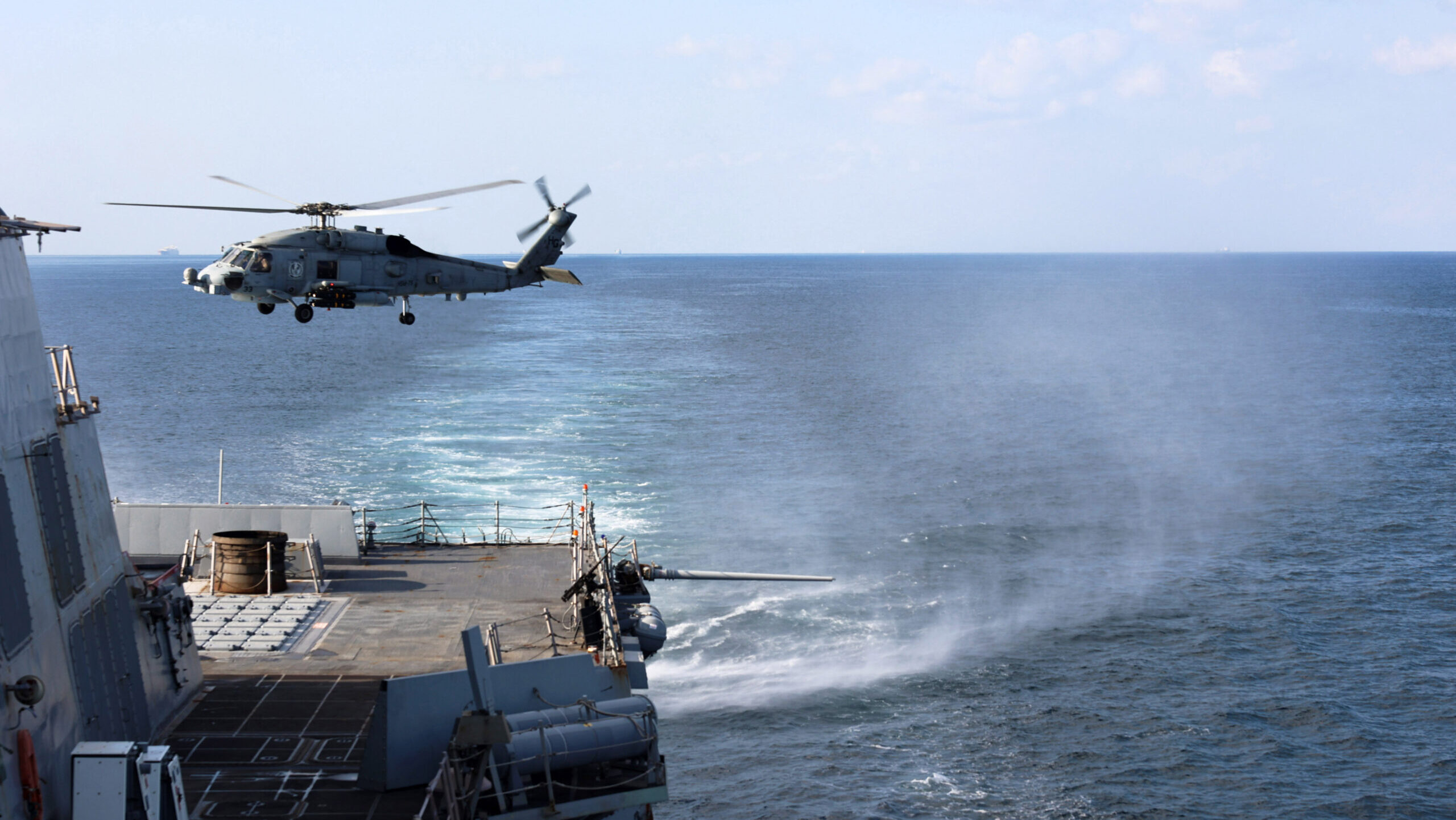
It is not 1945, or even 1988. Advances in US naval technology and US air superiority over the Strait of Hormuz have made close escort “convoy” missions unnecessary in many cases. AEGIS combatants can protect commercial ships at ranges not contemplated during the Tanker War. The renaissance in surface warfare training through the Surface Warfare Tactics Instructor program is making a strong positive difference in the ability of surface warships to fight in tough weapon engagement zones. The Iranian small boat threat has also been repeatedly repelled by armed helicopters, a platform to which small craft are highly vulnerable.
Passage through heavily defended chokepoints—from Vicksburg to the Dardanelles and, more recently, the Red Sea—has always been dangerous and is generally avoided when possible. If the administration chose not to force the strait while seeking a settlement with Iran, that was a political and strategic decision. The Navy cannot be said to have been defeated in a battle it was not ordered to fight.
Little unclassified information has been released on US Navy mine detection and clearance operations, making firm judgments difficult. Given that transits through the Strait of Hormuz continue, and that no ship has been confirmed to have struck a mine, Iranian mines cannot be said to have closed Hormuz.
The current campaign also differs from US operations in 1991 and 2003. There has been no need for a large-scale clearance effort to support an invasion force. In earlier Gulf conflicts, mine clearance was slow and laborious even after major combat ended. The post-1991 clearance of waters near Kuwait City took months.
Widespread mine clearance is normally conducted after the shooting stops, not while combat continues. Much of the current effort also remains classified. The Navy’s mine warfare capability deserves scrutiny, but it deserves a measured assessment before judgment is passed.
Drones attract attention, but their naval combat power is often overstated. Ukrainian drones performed well early against unprepared and aging Russian Black Sea Fleet ships, but their effectiveness declined as Russian force protection improved and suitable surface targets dwindled.
Drones in large numbers complicate integrated air and missile defense, but at sea they remain slower and generally less dangerous than cruise or ballistic missiles. US Navy AEGIS destroyers have destroyed drones repeatedly, including with five-inch guns as a lower-cost counter-drone option. Iranian drones make littoral operations more hazardous, and US ships may need more counter-drone weapons to persist nearer to shore. Still, Iranian drones have not achieved victory over US naval vessels.
A military force can win battles and still lose a war, as the United States learned in Vietnam. That outcome, however, was political and strategic, not a failure assignable to a single service. The US armed forces will draw important lessons from Epic Fury regardless of whether the administration achieves its desired end state. But this is not yet a Dardanelles-style case in which naval forces directly failed to achieve assigned operational objectives. Surface warfare training through the Warfare Tactics Instructor program, along with the performance of naval aviation and the submarine force, has supported sustained combat effectiveness. Sweeping claims of victory or defeat should therefore be avoided, especially while combat operations continue.
Steven Wills currently serves as a Navalist for the Center for Maritime Strategy at the Navy League of the United States. He had a 20-year career as an active-duty Navy officer and served on a variety of small and medium surface combatants, including an assignment as the executive officer of a mine countermeasures ship.
Orijinal Haberi Görüntüle