
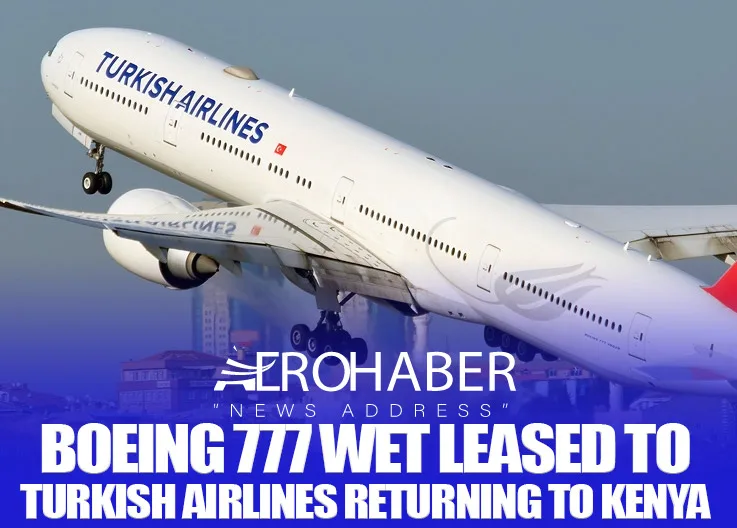


Kenya’s flag carrier Kenya Airways (KQ) plans to reintegrate into its fleet a Boeing 777 aircraft that is currently sub-leased (wet lease) to Turkish Airlines, as part of efforts to increase network capacity and support its recovery strategy.
Speaking to AeroTimes, KQ Acting Group Chief Executive Officer George Kamal said the airline is in advanced discussions to recall its wide-body aircraft, adding that the aircraft in question is intended to be deployed particularly on high-demand long-haul routes such as Nairobi–London.
Growth Move After Return to Profitability
This strategic step comes at a time when Kenya Airways has entered a growth phase following its return to profitability in 2024, when it reported a net profit of 5.4 billion Kenyan shillings after more than a decade of losses.
However, Kamal stressed that global supply chain disruptions continue to negatively affect maintenance cycles, and that aircraft availability remains a significant challenge as part of the Dreamliner (Boeing 787) fleet is grounded.
Boeing 777 to Ease Capacity Constraints
The reintroduction of the Boeing 777 is expected to:
- Alleviate capacity constraints in the short term,
- Enhance operational resilience,
- Enable KQ to serve premium and high-yield markets more effectively.
Kenya Airways is also evaluating the option of leasing an additional wide-body aircraft to support potential expansion into Asian or North American markets.
Plan to Transition to 737s in the Narrow-Body Fleet
Alongside its wide-body fleet strategy, KQ is also reviewing its narrow-body operations. The airline plans to gradually replace Embraer E190 jets with larger Boeing 737 aircraft in order to reduce frequent cargo and baggage limitations on regional routes within Africa.
KES 64 Billion Recovery and Expansion Plan
These fleet changes are being implemented as part of a broader recovery plan aimed at:
- Medium-term fleet growth,
- Launching new routes,
- Increasing cargo capacity.
Within the scope of this plan, Kenya Airways is reportedly aiming to generate approximately 64 billion Kenyan shillings in funding.