


While military aviation news spotlights the latest and greatest next-gen fighters, many of the training planes that prepare aviators to get into the cockpit of these advanced stealth jets are Cold War relics. That is beginning to change in 2026 with the gradual phase-out of antiquated airframes, but many still endure. The reasoning largely comes down to cost and reliability, yet the ever-changing landscape of air warfare is forcing air forces around the world to finally modernize.
The Hunter predates every other aircraft on this list by years, with a lineage dating back to a 1947 design and its first flight in 1951. The plane actually broke the world air speed record in 1953 before entering service in the Royal Air Forceas a day fighter. Unlike most of the few training planes in this review, the Hunter was originally conceived as a frontline interceptor and fighter-bomber. And its training role was always secondary, filled by the two-seat T.7 and similar variants used by the RAF and Royal Navy.
There were almost 2,000 airframes built, with many of them being exports. As a combat platform, the Hunter established an extensive record in service with at least 21 Air Forces. The plane saw notable use in the 1965 and 1971 Indo-Pakistani wars as well as the 1967 Six-Day War. Today, the Hunter has been retired from every active military it served globally but continues to operate through private commercial defense contractors.
Airborne Tactical Advantage Company, Hawker Hunter Aviation, and Lortie Aviation each have small fleets that provide Tactical Training Services to Uniformed military organizations. These companies maintain fleets of upgraded Hunters to provide specialized tactical training, threat simulation, and flight trials.
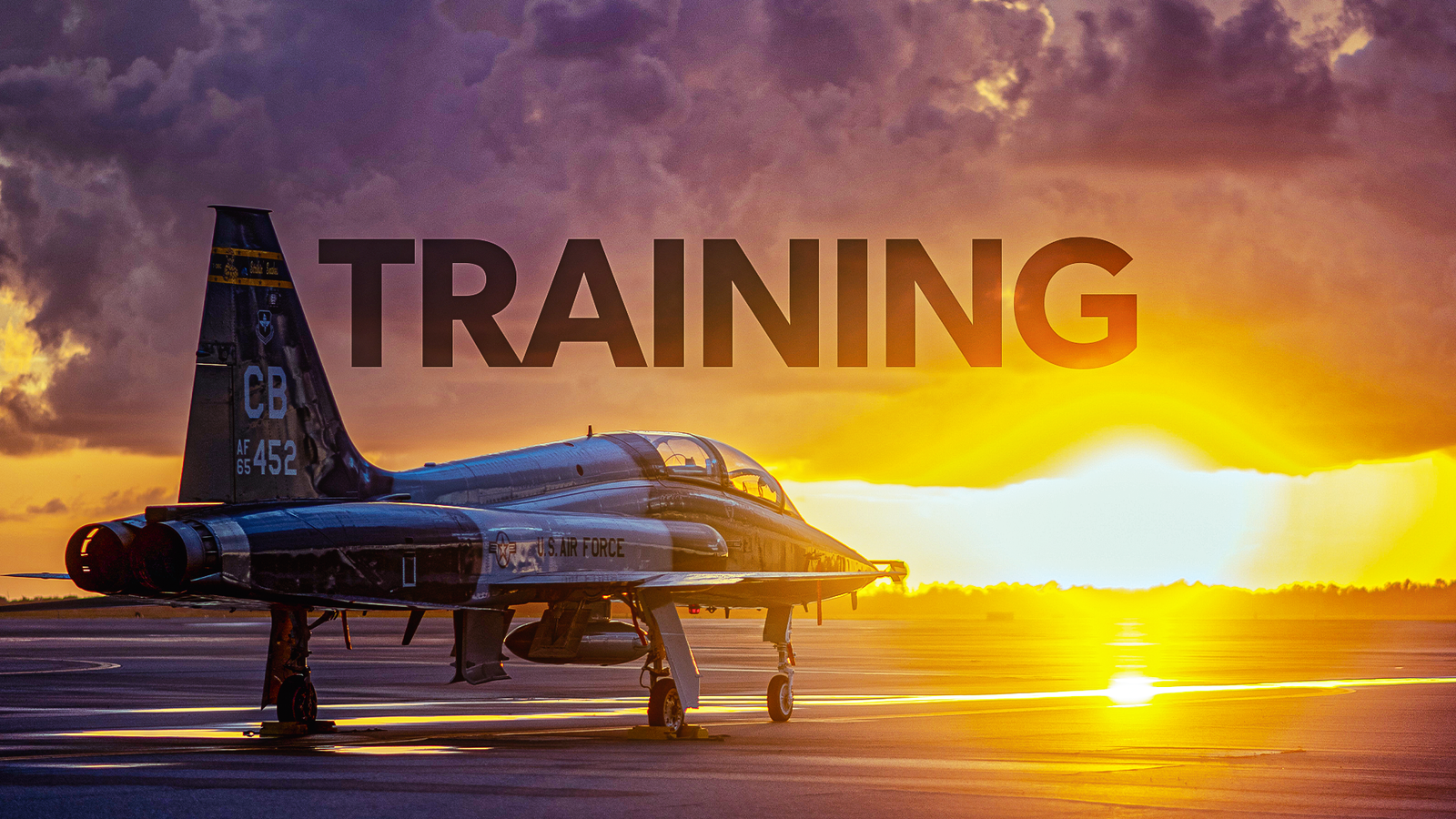
The T-38 joined the USAF Air Training Command in March 1961 as the world’s first purpose-built supersonic jet trainer. The T-38 is a derivative of the same 1950s lightweight fighter-jet development programs that yielded the Northrop F-5 Tiger, which served in combat-facing roles. The prototype flew on 10 April 1959, and the production run reached 1,187 airframes by 1972.
The large T-38 fleet size helped it endure over six decades, as well as its performance and low operating costs compared to other supersonic planes. Its small General Electric J85-5A afterburning turbojets can push the plane to Mach 1.3 and have a service ceiling at 55,000 feet (16,764 meters). It is limited to 7G maneuvers, which is modest for a fighter jet but well suited to training aviators transitioning from lower-performance planes.
The Air Force’s Air Education and Training Command had been quietly studying a T-38 successor when a tragic accident claimed the lives of two aircrews in 2008. Structural fatigue was found to have caused the deadly accident, increasing the urgency to find a replacement, but the Talons were kept in service.
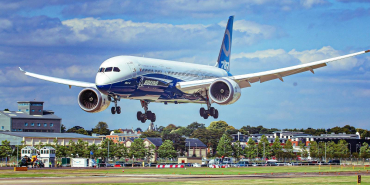
A crash in May of this year forced the Air Force to impose a fleetwide grounding and finally approve the low-rate production of the new Boeing-Saab T-7A Red Hawk. The first instructor pilots were qualified on Redhawks in June as the USAF is finally beginning to phase out the T-38 in favor of a modern successor.
The Tiger II was originally built as a frontline fighter jet, but as technology advanced, it no longer proved a survivable or lethal platform, and it was relegated to home-front duties. It has endured after being repurposed as the aggressor jet of choice for the US Air Force, Navy, and Marines. This is thanks to its high performance and low flying costs, but also because the F-5’s compact dimensions and maneuverability characteristics happened to closely resemble those of the Soviet MiG-21 Fishbed.
From the 1970s onward, the USAF’s aggressor squadrons adopted the type specifically to mimic enemy fighter tactics for training purposes. The aircraft has proven remarkably resistant to full retirement even as surplus Boeing F/A-18 Hornets have started to take their place on some flightlines. The Navy’s stated plan as recently as 2022 was to keep flying F-5s in the aggressor role at least until 2035.
The F-5 today has already been retired by the iconic fighter weapons school, also known as TOPGUN, but not by the ‘Red Air’ Squadron at Naval Station Key West and New Orleans. The USMC also has two squadrons of its own still in service. The Air Force has retired its jets but still contracts private operators to provide dissimilar fighter tactics training, as the War Zone reported.
The latest with Australia’s fighter modernization plans.
The Aero L-39 Albatros is the Warsaw Pact’s most prolific trainer, and its production numbers dwarf every other aircraft in its class by comparison. Designed in 1964, it replaced the first-generation L-29 Delfín. The design philosophy behind the plane was docile, forgiving, and predictable handling. The first flight took place in 1968, and it entered service with the Czechoslovakian Air Force in 1972.
The Albatros is the most widely produced jet trainer in aviation history, with almost 3,000 airframes built, and the assembly line remained open until the late 1990s. In addition to serving as the standardized platform of the Soviet Union and its Allied bloc, it was exported to more than 30 other Air Forces worldwide. Since the end of the Cold War, many of these planes have been sold to the private sector and have quickly become the most commonly owned private jets on Earth.
The L-39 has endured thanks to its simple, rugged, single-engine airframe that is both cheap to produce and maintain. It is still flown today by the Russian Air Force, as well as by collectors, private civilian aviators, defense contractors, and even air racers like the Breitling Jet Team. Armed variants of the plane have even been used on the front line, with Russia equipping some with cannons and air-to-air missiles.
The US Air Force needs a new training aircraft; the Red Hawk is their answer. This aircraft will prepare pilots for the future of air warfare.
BAE’s Hawk is a core training platform for the RAF, RN, and US military. The examples produced under license by McDonnell Douglas are known as the T-45 Goshawk. The aircraft was specifically procured for the US Navy and Marines to train naval aviators for carrier operations. The BAE Hawk had already been flying operational military training missions for 16 years before its American carrier-capable cousin entered service in 1992.
The active service lives of these jets from both sides of the Atlantic overlap to the present day as each continues to train military pilots. Notably, while they look very similar, the mechanical differences are significant due to the extensive amount of reinforcement required for ‘tailhook’ operations on aircraft carriers. Arrested landings and catapult launches demand the addition of a hook on the back but also much stronger landing gear and airframe reinforcements throughout the plane.
In 2026, the USN and the RAF are looking to replace their Hawks with newer airframes, but neither has made its selection yet. The Navy is also expected to drop the Carrier Landing requirement from its Undergraduate Jet Training System and instead leave that to active fleet squadrons once aviators begin training on their combat platforms.
The Navy initially considered the T-7A, but Boeing has since withdrawn, leaving just the Textron-Learjet M-36N or the Freedom Trainer in development under a consortium led by the Sierra Nevada Corporation. A down-select is expected next spring. Meanwhile, the RAF is only in the early stages of investigating, but the T-7A and M-346 are already being considered.
Discover six aircraft redefining modern air warfare, from stealth fighters to missile trucks, shaping the balance of air power in 2026 and beyond.
Built as a joint venture between juggernauts of the French and German aerospace industries, the Alpha Jet solved a critical capability gap for Western European air forces during the Cold War. The French Air Force was seeking a trainer jet to replace its aging Lockheed T-33 and Fouga Magister training planes. Meanwhile, the German Luftwaffe faced major difficulties using the Lockheed F-104 Starfighter in a close air support role.
The joint venture produced a rugged, low-maintenance, and relatively inexpensive airplane that was a suitable trainer and an agile light attack platform. This gave the French aviators a modernized airframe to train new pilots and helped the Luftwaffe reduce its mishap rate with the notoriously difficult-handling Starfighter. At the same time, it helped bolster the domestic aerospace industries in both nations, which were losing market share to American manufacturers.
The Alpha Jet’s wings were attached to the top of the fuselage. This kept the engines high off the ground, preventing them from sucking in rocks and debris when operating from rough, improvised, or bombed-out wartime runways in Germany. Using a dual-engine configuration gave student pilots a backup in the event of a malfunction and German combat pilots greater survivability under fire.
Sharing the cost of developing the Alpha Jet greatly reduced the drain on both the French and German defense budgets. This partnership laid the industrial groundwork for future pan-European defense projects, such as the Tornado and Eurofighter. This pattern has continued until today, with the European Union and the North Atlantic Treaty Organization pivoting away from overreliance on American platforms to invest in European sovereignty.
Found an error? Send it info@simpleflying.com so it can be corrected.
Orijinal Haberi Görüntüle