
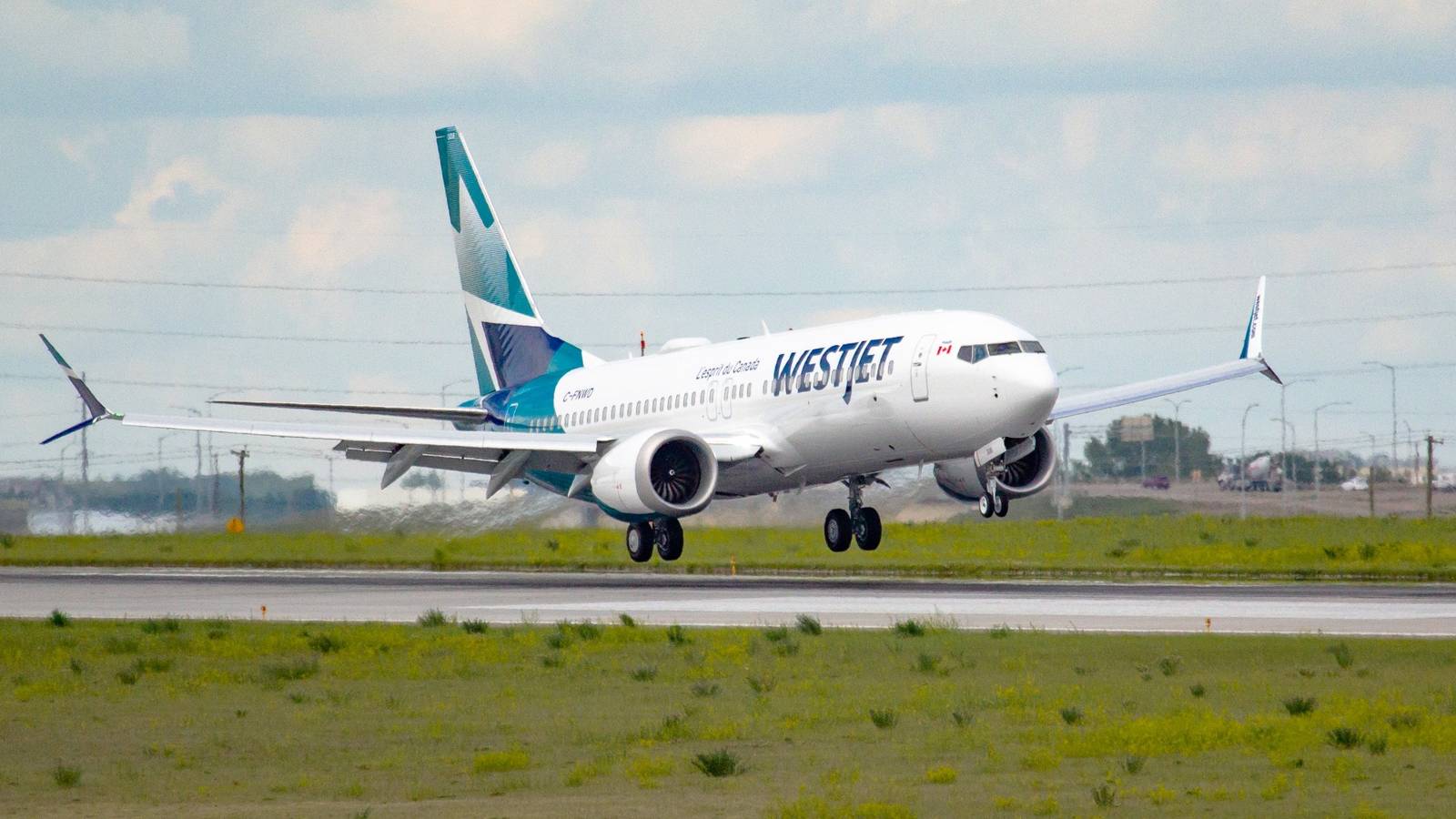


WestJet flight attendants have officially gone on strike after last-minute contract negotiations failed, forcing Canada’s second-largest airline to cancel all scheduled Boeing 737 and Boeing 787 operations. The strike began on Sunday, August 2, at the height of the country’s busy summer holiday period, immediately disrupting travel plans for tens of thousands of passengers across Canada and on international routes. More than 300 flights were canceled before the strike even officially started as the airline attempted to wind down operations in an orderly manner.
The labor dispute involves approximately 4,400 cabin crew members represented by the Canadian Union of Public Employees (CUPE) Local 8125. While WestJet’s mainline Boeing 737 and 787 fleet has been grounded, the airline confirmed that WestJet Encore’s De Havilland Dash 8 Q400 services and flights operated by partner airlines continue to operate normally.
More Than 300 Flights Cancelled As Operations Shut Down
WestJet began canceling flights before the strike officially commenced to avoid leaving aircraft, crews, and passengers stranded across its international network. By Sunday, the airline had canceled more than 300 flights, with nearly all mainline Boeing 737 and Boeing 787 services suspended until further notice. The disruption comes during one of Canada’s busiest travel weekends of the year, significantly amplifying its impact.
The airline said affected customers will be offered refunds or alternative travel arrangements where possible. However, the scale of the disruption means many passengers could face lengthy delays or limited rebooking options as thousands attempt to secure seats on competing carriers. WestJet has encouraged customers to monitor their flight status before traveling to the airport.
Alia Hussain, President of the local union representing WestJet, told reporters at Reuters:
“We are on strike because we believe we deserve better”
Pay For Ground Duties Remains The Central Issue
The primary disagreement centers on compensation for work performed before aircraft departure and after arrival. Like many North American airlines, WestJet has traditionally compensated flight attendants primarily during “block time”, meaning from aircraft door closure before departure until arrival at the destination gate. Therefore, many duties performed during boarding, safety checks, and passenger assistance receive little or no direct pay.
WestJet argues it presented what it describes as an industry-leading proposal that included a new hourly compensation model covering all hours worked, alongside a double-digit wage increase during the agreement’s first year. The union rejected the proposal, maintaining it failed to adequately compensate cabin crew for all required duties and did not sufficiently address broader concerns surrounding working conditions.
The dispute mirrors similar labor negotiations seen elsewhere in North America, where flight attendants have increasingly pushed airlines to eliminate unpaid ground duties. Compensation during boarding has become one of the industry’s most contentious labor issues, particularly following Air Canada’s own flight attendant dispute and strike last year, which also focused heavily on ground-duty pay, as highlighted by the BBC News.
The dispute centers on demands for better working conditions, unpaid work, and higher wages.
Although the strike is underway, both WestJet and CUPE have indicated they remain willing to return to the bargaining table. Canada’s Minister of Jobs Patty Hajdu expressed disappointment that negotiations failed before the strike deadline, as per AP News. But federal mediators continue working with both parties in hopes of reaching an agreement.
WestJet Chief Executive Officer Alexis von Hoensbroech has maintained that the airline remains committed to achieving a negotiated settlement while balancing employee compensation with the company’s long-term competitiveness. The airline had previously emphasized that a strike authorization vote did not necessarily mean a work stoppage would occur, although negotiations ultimately broke down after nearly 11 months of bargaining.
For now, travelers booked on WestJet’s Boeing 737 and 787 flights face ongoing uncertainty. Until a tentative agreement is reached and operations resume, Canada’s domestic and international aviation network is expected to remain significantly disrupted, with the strike affecting one of the country’s largest carriers during the peak summer travel season.
Orijinal Haberi Görüntüle