


Josh is an Aviation Journalist and lifelong aviation enthusiast who’s now turning that passion into a career. From watching planes and playing flight simulators at a young age to now sitting in the cockpit, Josh has always been drawn to the world of flight.
Currently training to become a commercial pilot, Josh aims to make aviation interesting and accessible to everyone, whether you’re in the industry or simply passionate about aviation.
Now actively building a career in Aviation, Josh is focused on telling stories from inside the aviation world, stories shaped by firsthand experience, curiosity, and a genuine love of all things that fly.
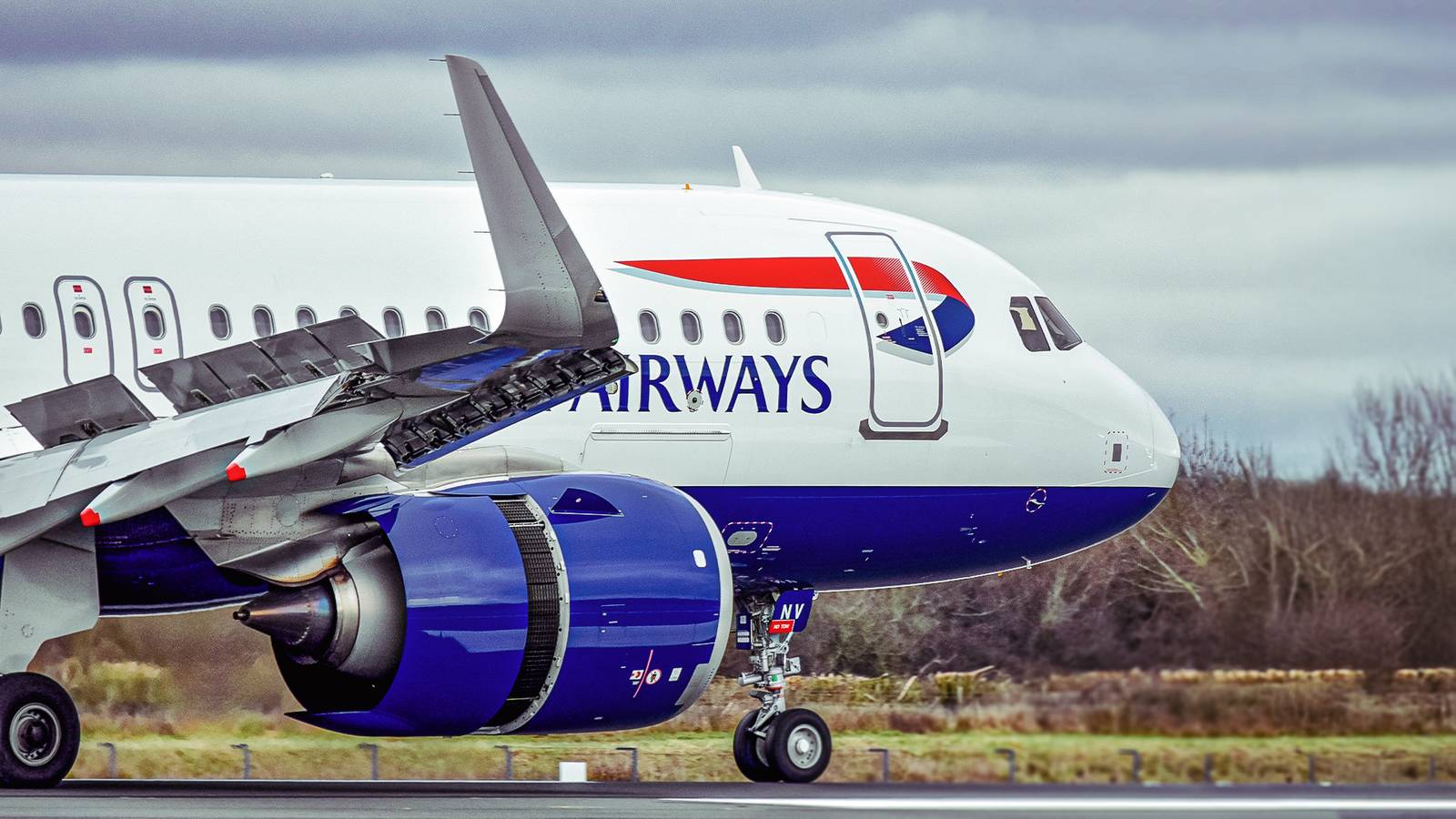
The United Kingdom’s primary flag carrier, British Airways, has selected Pratt & Whitney’s geared turbofan (GTF) engine to power up to 63 Airbus A320neo family aircraft, ending decades of exclusive reliance on CFM International engines for its Airbus narrowbody fleet. While the announcement represents a major commercial win for Pratt & Whitney, it also marks one of the most significant strategic shifts in British Airways’ narrowbody fleet planning in recent memory.
The real story, however, extends beyond Pratt & Whitney securing another customer. British Airways has willingly accepted the additional complexity of operating two different engine types on its A320neo family fleet for the first time. That decision comes as both next-generation engine manufacturers continue implementing durability improvements following well-publicized reliability challenges. Rather than representing a simple victory for one manufacturer over another, the order highlights how airlines are increasingly balancing operational resilience, long-term maintenance support and commercial flexibility alongside fuel efficiency when making multi-billion-dollar fleet decisions.
British Airways Is Breaking A Decades-Old Engine Tradition
The announcement was made on the opening day of the 2026 Farnborough International Airshow. The 63 Airbus A320neo family aircraft expected to feature the new GTF engines comprise 33 firm orders and 30 options. The first aircraft are expected to enter service from 2027, introducing Pratt & Whitney engines into the airline’s modern Airbus narrowbody fleet for the first time.
Alongside the engine selection, British Airways has signed a 12-year EngineWise Comprehensive services agreement. The maintenance package will see Pratt & Whitney provide long-term maintenance, repair and overhaul (MRO) support, giving the airline predictable maintenance costs while allowing the manufacturer to manage engine health throughout their service lives.
The move breaks with a long-standing strategy. British Airways’ existing fleet of 34 A320neos and 20 A321neos is powered exclusively by CFM International LEAP-1A engines. According to Airbus’ June 2026 order backlog, the airline has 64 A320neo-family aircraft on firm order, making this one of the most notable engine selection changes the carrier has made in decades.
Pratt & Whitney Calls The Deal A Vote Of Confidence
Pratt & Whitney described the agreement as a major endorsement of its geared turbofan program following several challenging years. Announcing the order, Rick Deurloo, President of Commercial Engines at Pratt & Whitney, said: “Today marks a pivotal moment and a strong vote of confidence in the GTF engine as the UK’s flagship carrier, British Airways, becomes the newest GTF customer. As the most fuel-efficient choice for the A320neo aircraft, the GTF engine will help British Airways achieve its international fleet expansion goals and enhance the travel experience for passengers.”
The comments are particularly significant given the recent history of the GTF engine. Pratt & Whitney has spent much of the past three years addressing one of industry’s largest commercial engine durability issues after discovering powdered-metal contamination affecting certain engine components manufactured between 2015 and 2021. The issue affected hundreds of Airbus A320neo-family aircraft worldwide, forcing airlines such as Wizz Air, Spirit Airlines, Lufthansa and IndiGo to ground aircraft, reduce schedules and lease replacement capacity while engines underwent inspections and component replacements.
The resulting inspection program forced approximately 600 to 700 premature engine removals between 2023 and 2026. RTX, Pratt & Whitney’s parent company, recorded a pre-tax operating profit charge of roughly $3 billion during 2023 to cover the issue, while airline compensation exceeded $1 billion during the first year alone. Although inspections continue, the program has increasingly shifted from crisis management to executing a long-term recovery plan and restoring fleet availability.
The Pratt & Whitney GTF engine has grounded hundreds of aircraft and exposed vulnerabilities in the global engine maintenance industry.
CFM Says British Airways Remains A Valued LEAP Customer
While British Airways’ latest order introduces a second engine supplier, CFM stressed that its relationship with the airline remains substantial, describing the operator as “a valued customer”. Responding to questions from Simple Flying, a CFM spokesperson declined to comment directly on the carrier’s purchasing decision, stating: “We do not comment publicly on our discussions with our customers.”
CFM highlighted its ongoing investment in improving LEAP performance through new durability upgrades designed to increase engine availability while lowering maintenance costs for operators. “The company is focused on delivering high engine availability through exceptional MRO performance and competitive cost of ownership, with the benefits of aftermarket competition through its open MRO ecosystem.”
The LEAP engine family entered commercial service in 2016 and powers all three variants of the Airbus A320neo family, as well as the Boeing 737 MAX and COMAC C919. Developed by CFM International, a 50:50 joint venture between GE Aerospace and Safran Aircraft Engines, the engine has become one of the world’s most widely used next-generation narrowbody powerplants, with thousands delivered to airlines globally. British Airways has been among its long-standing customers, operating the LEAP-1A across its entire A320neo and A321neo fleet.
Both Engine Manufacturers Have Been Improving Durability
Although Pratt & Whitney’s powdered-metal contamination issue attracted the greatest public attention, both engine manufacturers have spent recent years refining their products after entry into commercial service. While the GTF program has been dominated by accelerated inspections and engine removals, CFM has also introduced a series of engineering upgrades to improve the long-term durability of the LEAP-1A. As a result, both engine families continue to evolve as operational experience from thousands of flights feeds into ongoing product improvements.
For Pratt & Whitney, the priority has been replacing affected components, accelerating inspections and returning grounded aircraft to airline fleets. The issue has progressed from identifying affected engines to executing a long-term recovery program supported by expanded maintenance capacity. Despite the disruption, the geared turbofan retains a strong efficiency proposition, with Pratt & Whitney stating the engine delivers up to 20% lower fuel consumption and a 75% smaller noise footprint than previous-generation powerplants.
Meanwhile, CFM has focused on introducing incremental durability enhancements rather than large-scale inspections. These include an upgraded High-Pressure Turbine (HPT) durability kit and the Reverse Bleed System (RBS), which are designed to improve component longevity, reduce fuel nozzle wear, and extend operating intervals before major overhauls. By late 2025, the manufacturer had reported that the RBS had been installed on nearly half of all LEAP-1A engines in service, with the retrofit continuing across the global fleet.
How do two of the world’s most popular aircraft engines compare?
Why British Airways Likely Accepted Greater Operational Complexity
Operating multiple engine types within the same aircraft family is generally not an airline’s preferred approach. While the aircraft themselves remain largely identical, different engines require separate spare parts inventories, dedicated engineer training, distinct maintenance procedures, and separate long-term support arrangements. Those additional requirements increase operational complexity and cost, which is why many airlines standardize on a single engine option whenever possible. British Airways has historically followed that strategy.
British Airways has not publicly explained why it selected Pratt & Whitney for this latest order, and neither the airline nor parent company IAG has suggested the decision was driven by concerns over the LEAP-1A. Likewise, CFM declined to comment on its discussions with the airline, telling Simple Flying only that British Airways remains “a valued customer with 100+ LEAP engines in its fleet, and more still to be delivered.” As a result, any explanation beyond the commercial announcement itself remains speculative.
What can be said is that airlines typically evaluate engine selections using a broad range of factors rather than a single influence. Purchase price, long-term maintenance agreements, fuel efficiency, engine availability, manufacturer support, delivery schedules, and lifecycle operating costs all play important roles in multi-billion-dollar fleet decisions. Introducing a second engine supplier also reduces reliance on a single manufacturer at a time when the aerospace industry continues to face supply chain constraints and longer maintenance turnaround times, although British Airways has not publicly identified any of these considerations as the reason behind its decision.
The Decision Reflects A Changing Engine Market
The British Airways order illustrates how the competitive landscape has evolved since the A320neo entered service. Airlines are no longer judging engine manufacturers solely on fuel burn or acquisition costs. Long-term maintenance support, engine availability, durability improvements and commercial flexibility have become equally important considerations.
While Pratt & Whitney will understandably celebrate the agreement as an important endorsement of its recovery, the decision should not necessarily be interpreted as a rejection of the LEAP-1A. CFM continues to invest heavily in durability upgrades and maintains that British Airways remains a major LEAP customer, with more than 100 engines already in service or on order across its fleet.
Both Pratt & Whitney and CFM continue to enhance their respective products after early-service durability challenges, and airlines are increasingly choosing flexibility over exclusivity. For one of CFM’s longest-standing narrowbody customers, introducing a second engine supplier for the first time in decades is less a verdict on one engine and more a reflection of how fleet strategy is evolving.
Orijinal Haberi Görüntüle