


A regularly scheduled Swiss International Airlines passenger flight from Zurich Airport (ZRH) to New York JFK Airport (JFK) experienced smoke engulfing the business class cabin on its way to the Big Apple, forcing the Airbus A330-300 to divert to Bangor International Airport (BGR) in the US state of Maine. The flight, operating as LX16, shows the plane had otherwise experienced an uneventful flight until it initiated a descent over Nova Scotia, and then squawked the emergency signal 7700.
An immediate request to divert to the closest capable airport, Bangor, was made by the flight crew. The facilities at Bangor are well suited for diversions on trans-Atlantic flights, due to its US Customs and Border Protection facilities, low congestion, and long runway. At this time, as per AirLive, there have been no reports of injuries onboard, and suggested that there was a fire in the cockpit; however, the airline is yet to confirm this.
Smoke Engulfing The Cabin Of The Swiss Airbus A330
Following the aircraft’s request for an emergency diversion, emergency ground crews were placed on standby to await the arriving aircraft. Runway 33 at Bangor was closed after the aircraft arrived, and a full stop was put in place until the airplane was safely moved. Local fire department attended to the aircraft and found no signs of fire or heat.
208 occupants onboard the aircraft, including passengers and crew, were unharmed, and the airline is currently working to re-accommodate the affected passengers for onward travel to New York. The Federal Aviation Administration, alongside SWISS, has launched its own investigation into the cause of the smoke. The airline shared the below statement to Bangor WABI News:
“We are aware that a diversion prompted by such circumstances can be unsettling for our passengers and cause uncertainty. This makes it all the more important to us to provide them with the best possible care and support them with their onward travel. Our teams in Switzerland and the United States are currently working at full speed to arrange onward travel for our passengers. We are coordinating closely with Bangor International Airport and are doing everything we can to find a suitable solution for everyone affected as quickly as possible.”
Reviewing flight data, the aircraft had departed as LX16 from Zurich on Monday, July 27, with an initial pushback from the gate at 10:26 AM, 26 minutes behind its scheduled departure of 10:00 AM. The airplane quickly rose to its cruising altitude of between 36,000 and 38,000 feet as it headed west across mainland Europe and across the North Atlantic Ocean.
Around five hours into the eight-hour journey to New York, the aircraft appears to have made an initial descent across the Canadian province of Nova Scotia, where, just south of Yarmouth, NS, the aircraft declared an emergency, squawking 7700, and requesting to divert to the closest possible airport. The plane made a sharp turn and headed towards Bangor.
The plane touched down at Bangor six hours after it departed from Zurich, at approximately 11:15 AM local time, where it was met by emergency crews, and passengers were disembarked. At the time of writing, the plane remains on the ground at Bangor.
The flight had to be operated by a replacement aircraft, and reached its destination more than five hours late.
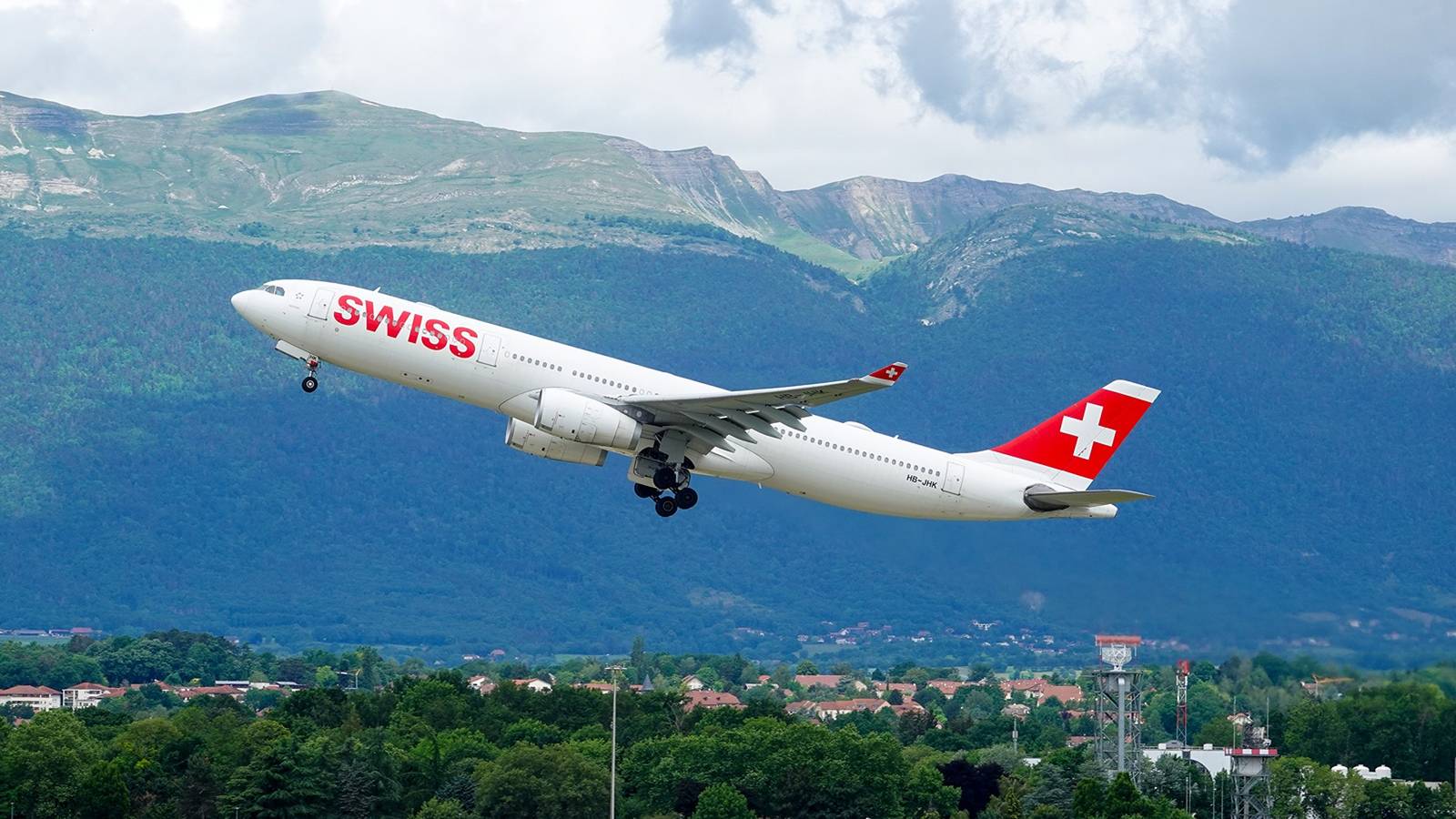
The plane at the centre of the incident is HB-JHK (pictured), which, using data from ch-aviation, shows the plane is a 14.6-year-old A330-300 with the nickname Herisau (named after a municipality and the capital of the canton of Appenzell Ausserrhoden in Switzerland). The plane was first delivered to SWISS in January 2012, and is configured to carry a total of 236 passengers.
HB-JHK took its first test flight back in December 2011 under French Airbus registration F-WWYI, before being delivered to SWISS the following month. The aircraft is powered by two Rolls-Royce Trent 772B-60 engines, and its fuselage sports the standard SWISS aircraft livery. Further characteristics in the table below:
The Swiss pilots onboard LX16 sprang into action when the smoke in the cabin was identified, with the use of universal emergency code Squawk 7700, which alerts air traffic control that the plane is facing a general emergency. The plane was then quickly able to divert to Bangor and land safely with no injuries onboard.
Orijinal Haberi Görüntüle