
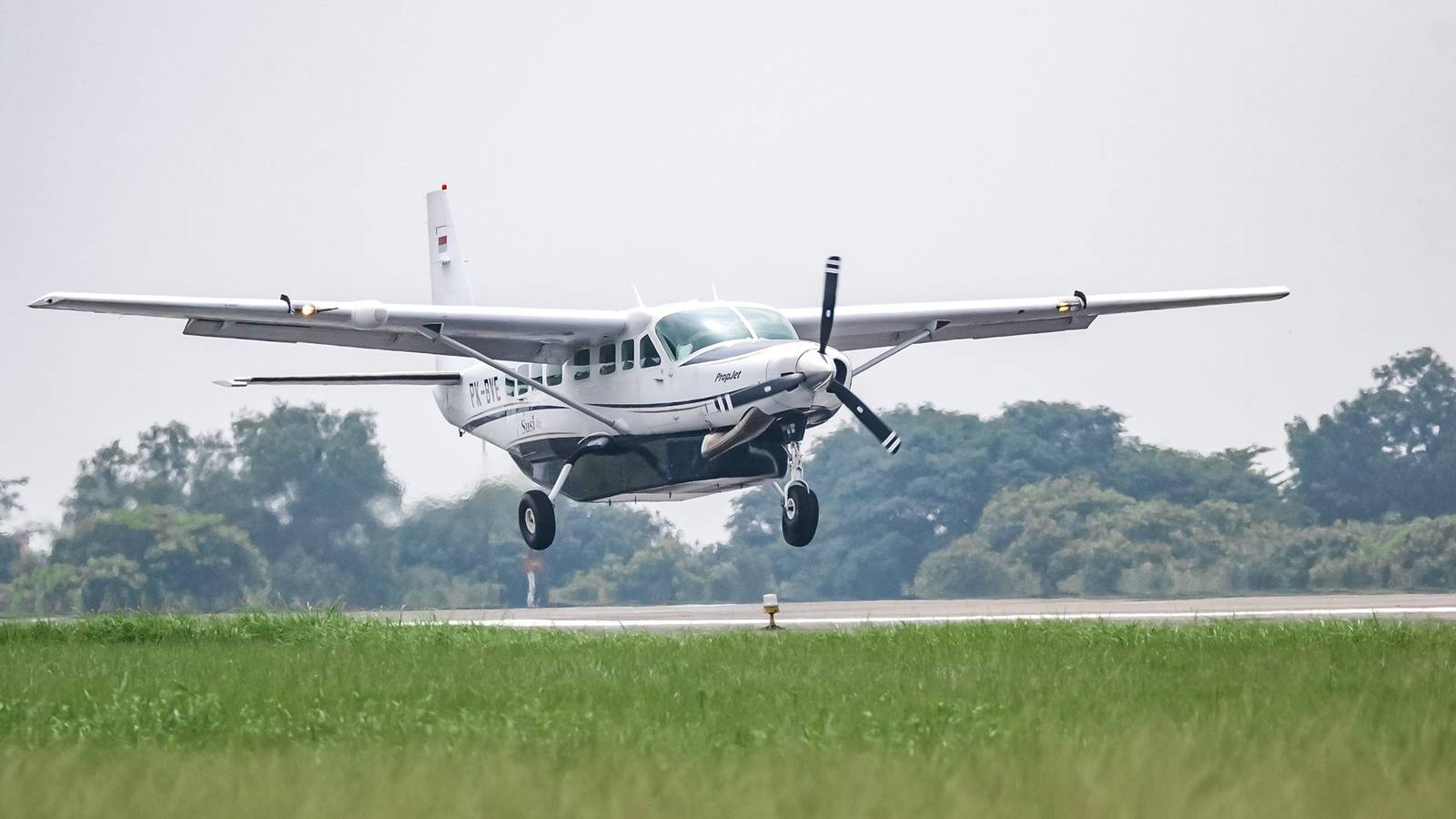


All 13 occupants onboard a sightseeing flight over Peru’s Nazca Lines were killed on Saturday when the aircraft came down in a field in the country’s southern Ica region. The Cessna 208B Grand Caravan, registered as OB-2001, had departed Capitán FAP Renán Elías Olivera Airport (PIO) at 12:10 PM local time for an overflight of the UNESCO World Heritage Site.
After declaring an emergency around 50 minutes later, authorities claim the aircraft crashed at approximately 1:20 PM. Peru’s Ministry of Transport and Communications has since confirmed that 11 foreign tourists, including seven Italians, two Spaniards and two Germans, died, along with two Peruvian pilots.
Several Foreign Tourists Die In Peruvian Scenic Flight Crash
The sightseeing aircraft crashed roughly 4 miles from the city of Nazca and around 12 miles from the Nazca Lines site itself, and was quickly engulfed in flames. The cause of the crash remains unknown, with Peru’s Directorate General of Civil Aviation (DGAC) and its Aviation Accident Investigation Commission actively investigating.
Early reports state that the accident occurred as the plane was initiating its return journey, reporting an emergency at around 1:00 PM while flying above the town of Socos. Regional weather conditions may also form part of the investigation, as scenic flights departing nearby María Reiche Neuman Airport (NZC) had been suspended on Friday because of severe winds.
The 15-year-old aircraft was flown by Aerodiana, which operates three Cessna 208B Grand Caravan turboprops from its base at Pisco and specializes in overflights of the Nazca Lines. The company said it extended its “most sincere condolences and solidarity to the families and loved ones of those who have passed away,” adding that it is cooperating with the investigation.
The victims have been named as pilot Américo Salazar and copilot Irenka Guanilo del Carpio, alongside seven Italians aged between 18 and 54, two 52-year-old Spaniards and two Germans aged 77 and 78. Aerodiana said in a statement:
“Throughout our 18 years of operation, we have maintained an unwavering commitment to the safety of our passengers and crews. For this reason, this incident affects us deeply and reaffirms our willingness to cooperate fully and responsibly with whatever is required by the authorities.”
A History Of Crashes And Incidents Over The Nazca Lines
Sightseeing flights over the Nazca Lines have resulted in multiple fatal crashes since 2008, and Saturday’s is the deadliest to date. Seven people died in an accident in 2022, along with two crashes in 2010, including an accident in February 2010 that led to seven deaths, and four British tourists and two Peruvian pilots later perishing in an October crash. This sequence of crashes led to a crackdown by authorities, as flights were halted and many operators found to be lacking sufficient regulatory compliance.
According to the Aviation Safety Network, Aerodiana was involved in a June 2010 incident when one of its Cessna 208s was hijacked and stolen by suspected drug cartel members using false identities. Although the pilot and copilot were later found alive, the aircraft was never located. The Nazca Lines are one of the country’s biggest tourist draws, with around 100,000 annual visitors giving rise to a sizable overflight market. Other airlines operating sightseeing flights in the region include AirMajoro, Aero Paracas, Aero Nasca, Alas Peruanas and MovilAir.
The plane lost altitude before crashing into a building.
The Cessna 208B Grand Caravan is a single-engine turboprop aircraft that typically carries up to 14 people. The plane is powered by a Pratt & Whitney PT6A engine mounted in the nose, and remains the largest single-engine aircraft Cessna has ever produced. Its cruise speed is around 186 knots, and it can fly with a range of up to 1,070 nautical miles (1,980 km).
The original Caravan model first flew in 1982 and went into production in 1984, and more than 3,000 have been built since. The Grand Caravan model was designed with an additional four feet of length, stretching the fuselage to 41 feet seven inches (12.7 meters), with a wingspan of 52 feet one inch (15.8 meters) and a height of 14 feet ten inches (4.5 meters). The versatile plane is widely used on regional passenger routes, cargo, skydiving and tourist flights.
Orijinal Haberi Görüntüle