
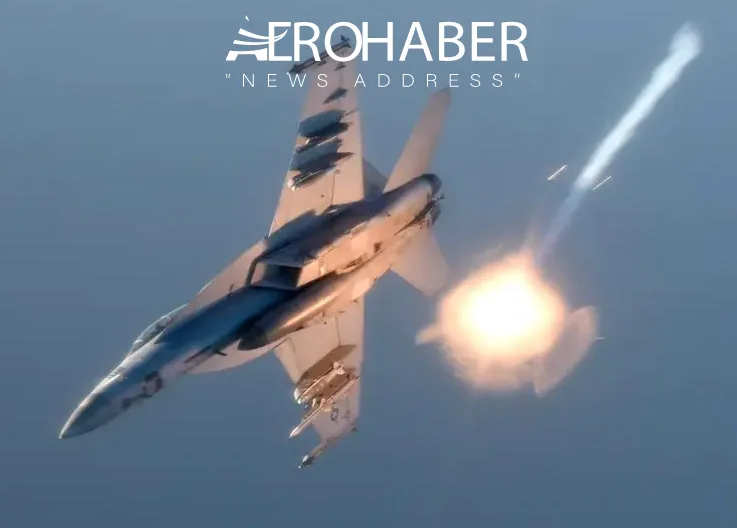


It has been revealed that the USS Gettysburg cruiser belonging to the US Navy targeted two American F/A-18 Super Hornet fighter jets in the Red Sea in December 2024, mistaking them for Houthi cruise missiles. One jet was hit and brought down, while the other narrowly escaped friendly fire. The command investigation into the incident revealed a series of cascading errors and showed that a far greater disaster was narrowly avoided.
“My life flashed before my eyes”
According to the investigation report reviewed by Business Insider, the pilot of the downed F/A-18 said that as the missile rapidly headed towards them, “his life flashed before his eyes like a movie reel.” The pilot and the weapons officer escaped by using their ejection seats just seconds before the missile struck.
3 friendly aircraft were targeted
The investigation revealed that the USS Gettysburg had not only fired a missile at one American jet but had also fired at a second one, and even targeted a third friendly aircraft, although the firing order for the third was not executed.
The second jet made intense manoeuvres to evade the incoming missile. The missile nearly caught the aircraft, but shortly after lost its course and struck the sea, exploding on impact.
A Navy helicopter crew stated that they “saw the missile gleaming in the air” and that no warning had been given before the launch.
Chain of command and systems failures
The investigation found a series of technical malfunctions, communication breakdowns, and a lack of situational awareness at the command level behind the friendly fire crisis:
- Gettysburg experienced serious degradation in network management, surveillance, identification, and weapons coordination early in the deployment.
- It was noted that the crew were fatigued and that there was confusion in threat assessment.
- It was stated that the firing order issued by the ship’s commander was “incorrect in light of the information he had.”
At the time of the incident, the ship was conducting active defensive operations against attacks by Iranian-backed Houthi forces in Yemen.
The most serious friendly fire incident in the Red Sea
The December 2024 incident was recorded as the most severe friendly fire case during operations in the Red Sea. Previously, in February 2024, a German warship had mistakenly targeted a US MQ-9 Reaper drone, but the missile could not be fired due to a radar malfunction.
During the deployment of the Truman carrier strike group, four major incidents were also reported:
- A collision between the aircraft carrier and a cargo ship in February,
- The loss of two F/A-18 aircraft in accidents in April and May.
“The Navy will learn from these mistakes”
Vice Chief of Naval Operations Admiral Jim Kilby stated following the investigation:
“The Navy is committed to being a learning organisation. These incidents show that we must continue investing in our people and enhancing readiness for combat.”