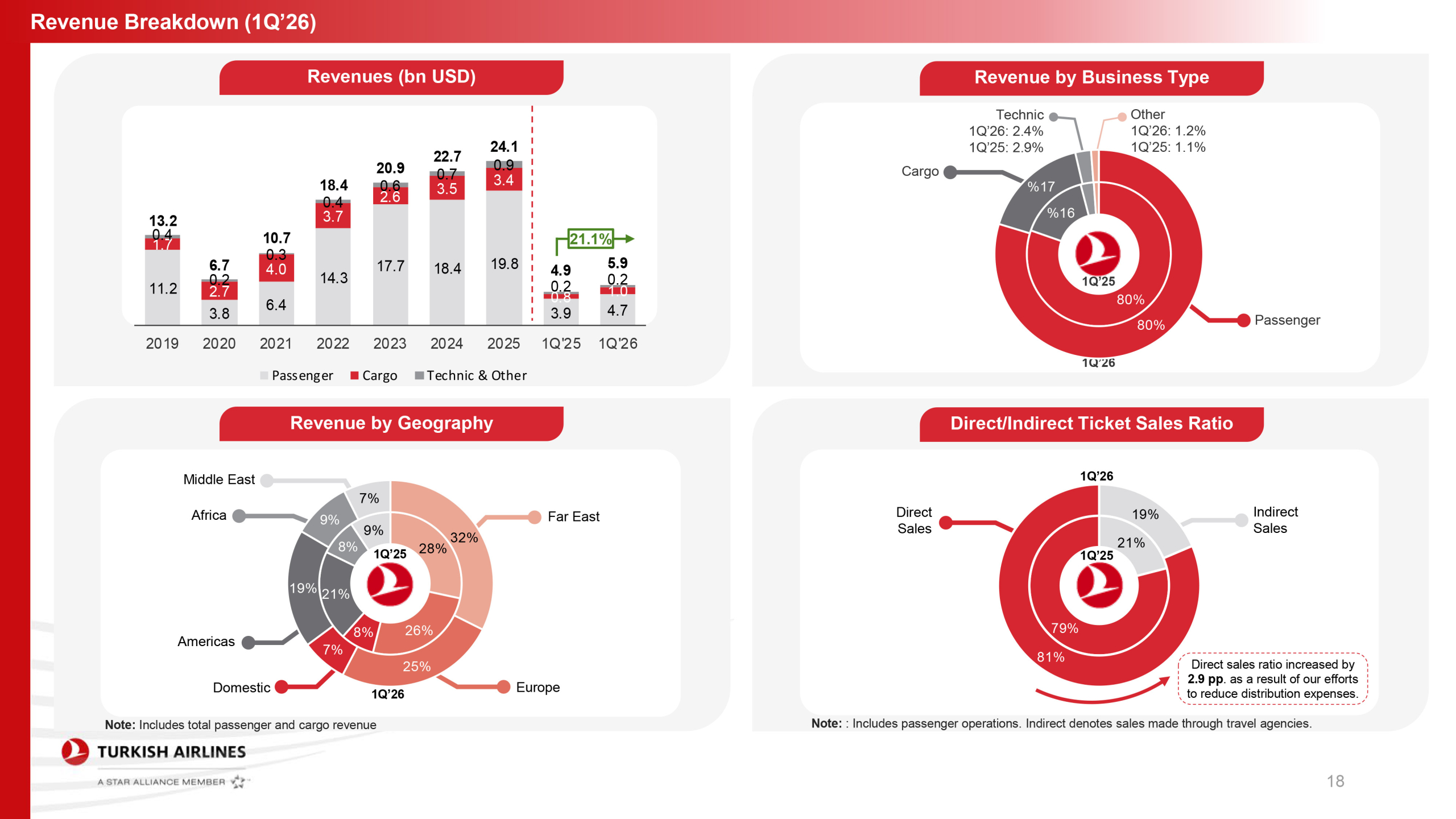




Turkish Airlines increased its revenues by 21 percent in the first quarter of 2026, reaching $5.9 billion. The strong growth in passenger and cargo revenues supported THY’s growth strategy in global aviation.
THY Maintains Profitability with Dual-Engine Growth in Passenger and Cargo
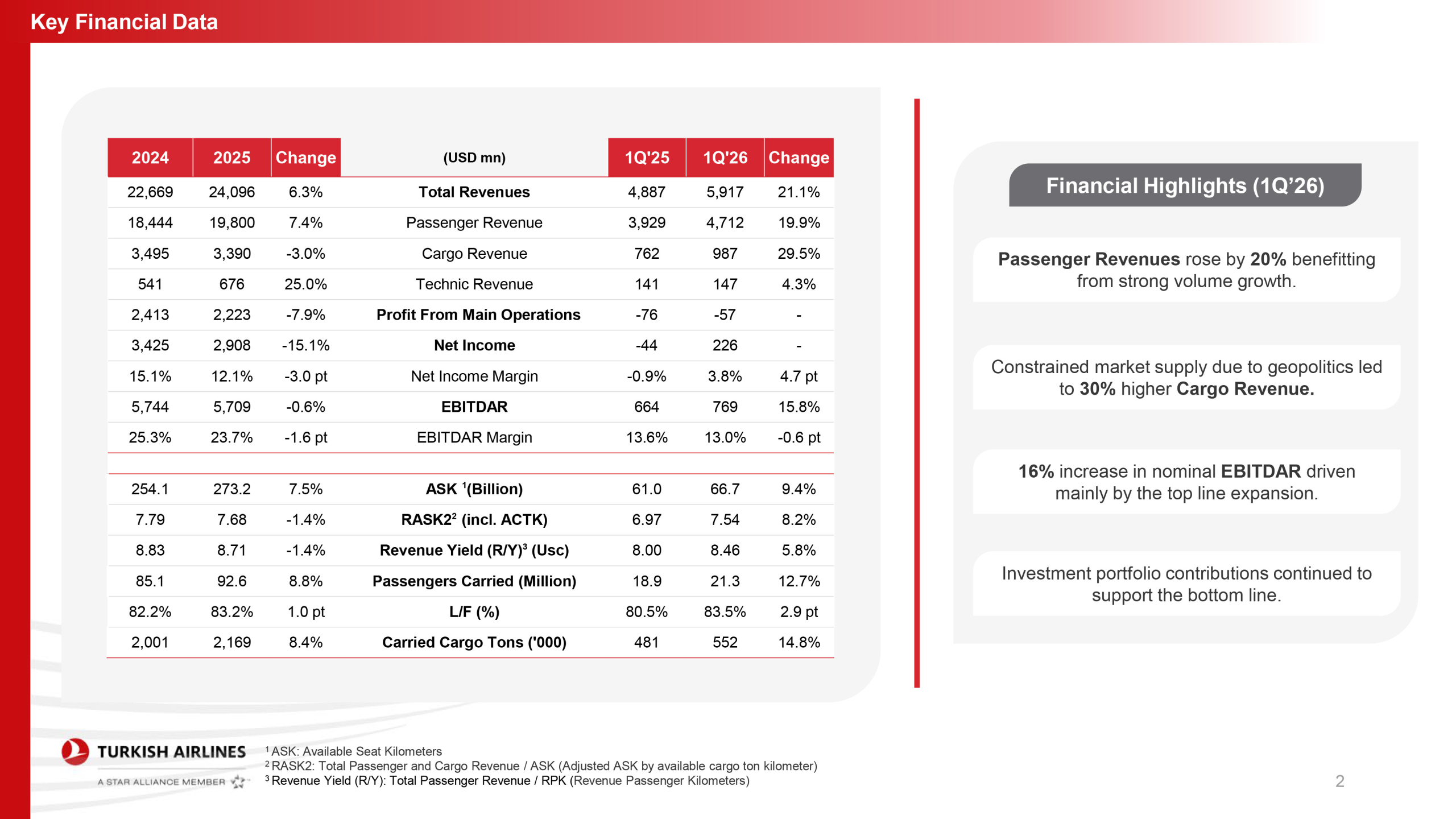
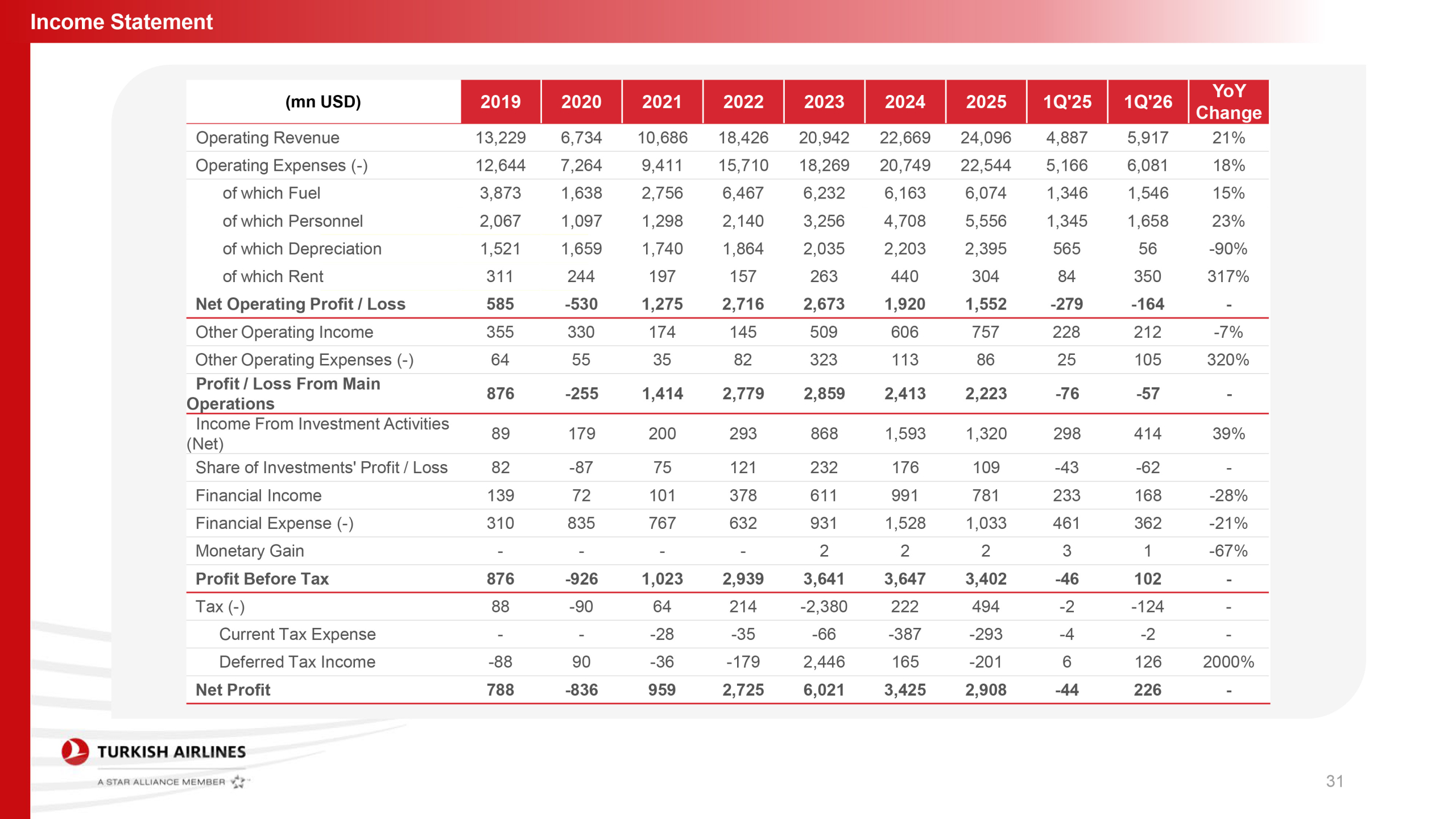
Turkish Airlines, with its 2026 first-quarter financial results disclosed to the Public Disclosure Platform (KAP), demonstrated a remarkable performance in global aviation in terms of scale, revenue, and operational resilience. The company increased its revenues by 21 percent in the first three months of the year, reaching $5.917 billion, while maintaining its net profit at $226 million.
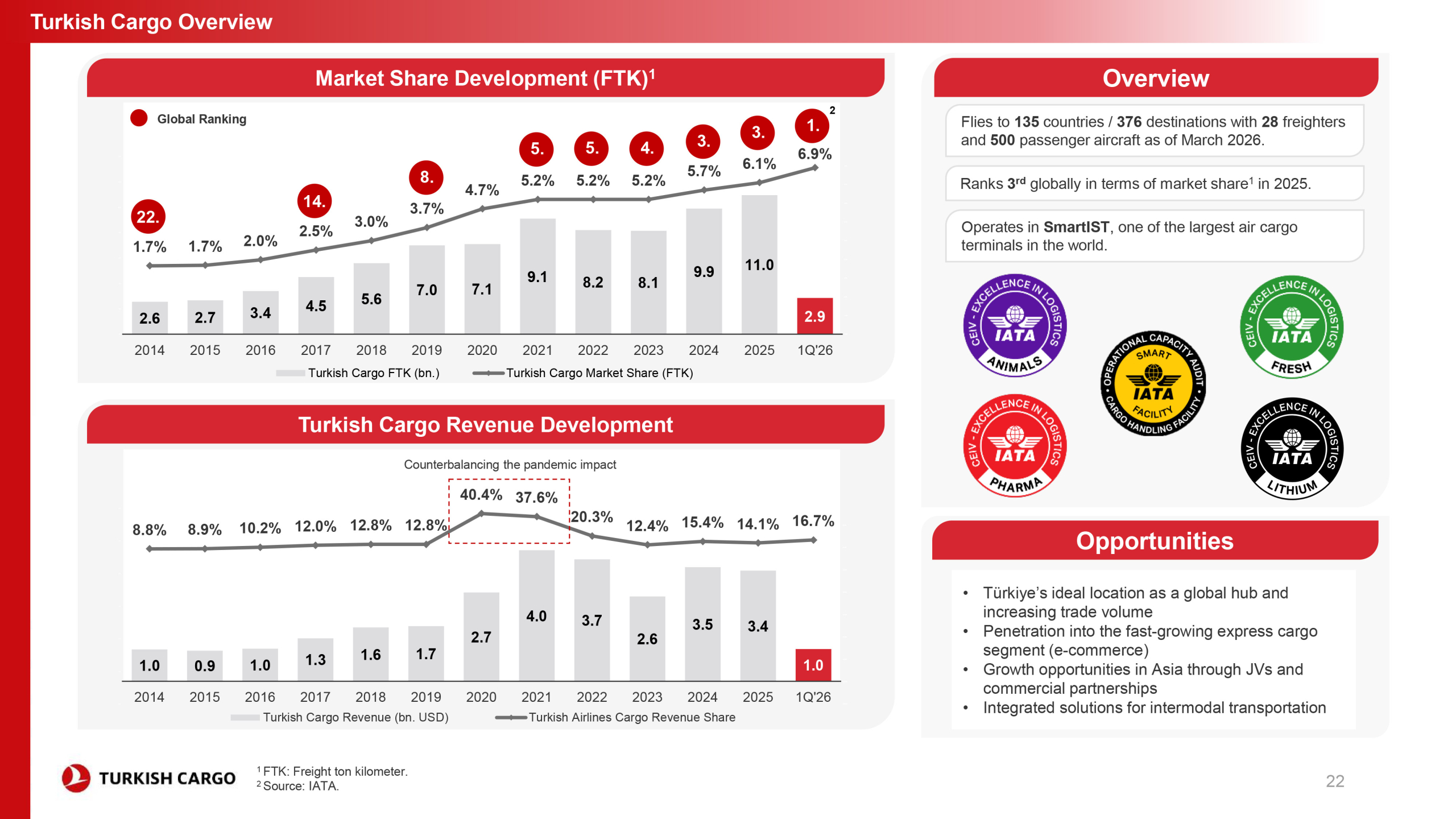
The 20 percent increase in passenger revenues and a 30 percent surge in cargo revenues driven by geopolitical developments showed that THY is growing not only through passenger numbers but also through network management, capacity optimization, and revenue diversification.
Cargo and Passenger Revenues Rise Simultaneously
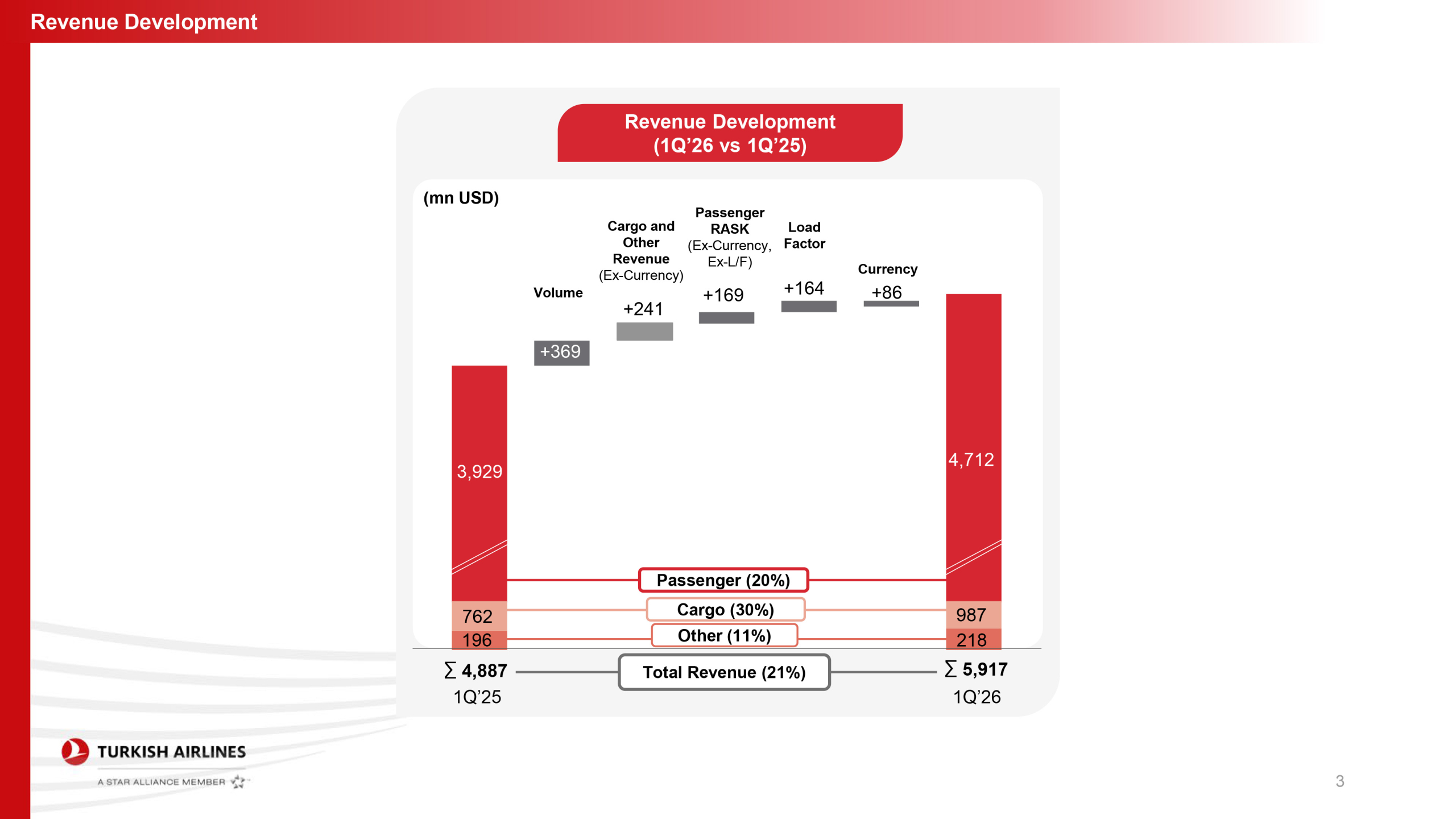
The main driver of revenue growth in the first quarter of 2026 was strong volume expansion. Total revenue increased from $4.887 billion to $5.917 billion, while the limited global supply environment created significant opportunities for Turkish Cargo.
In the revenue composition:
- Passenger revenues: 80%
- Cargo revenues: 17%
- Technical and other revenues: 3%
Far East and Africa Lead Revenue Performance in Regional Markets
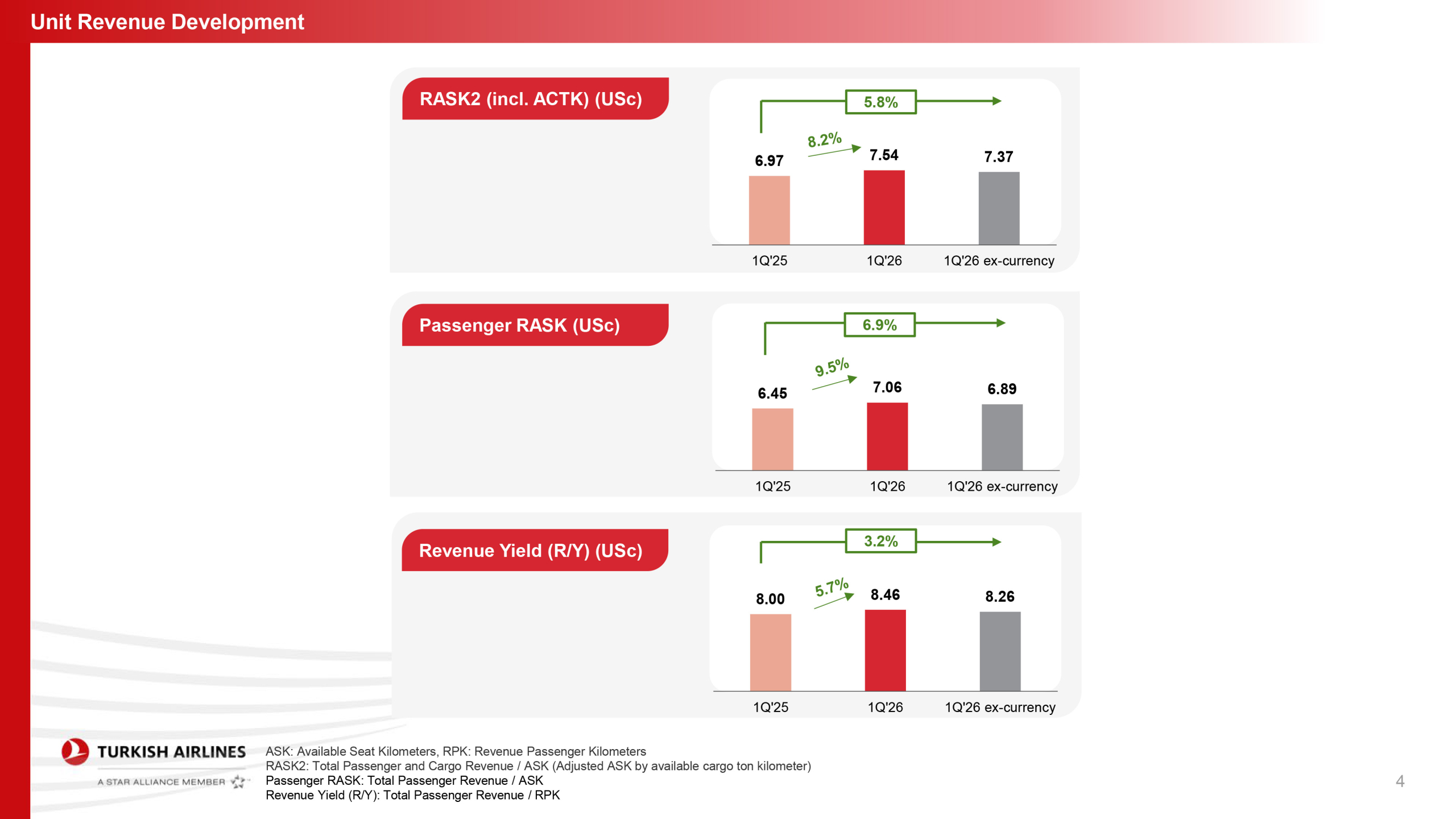
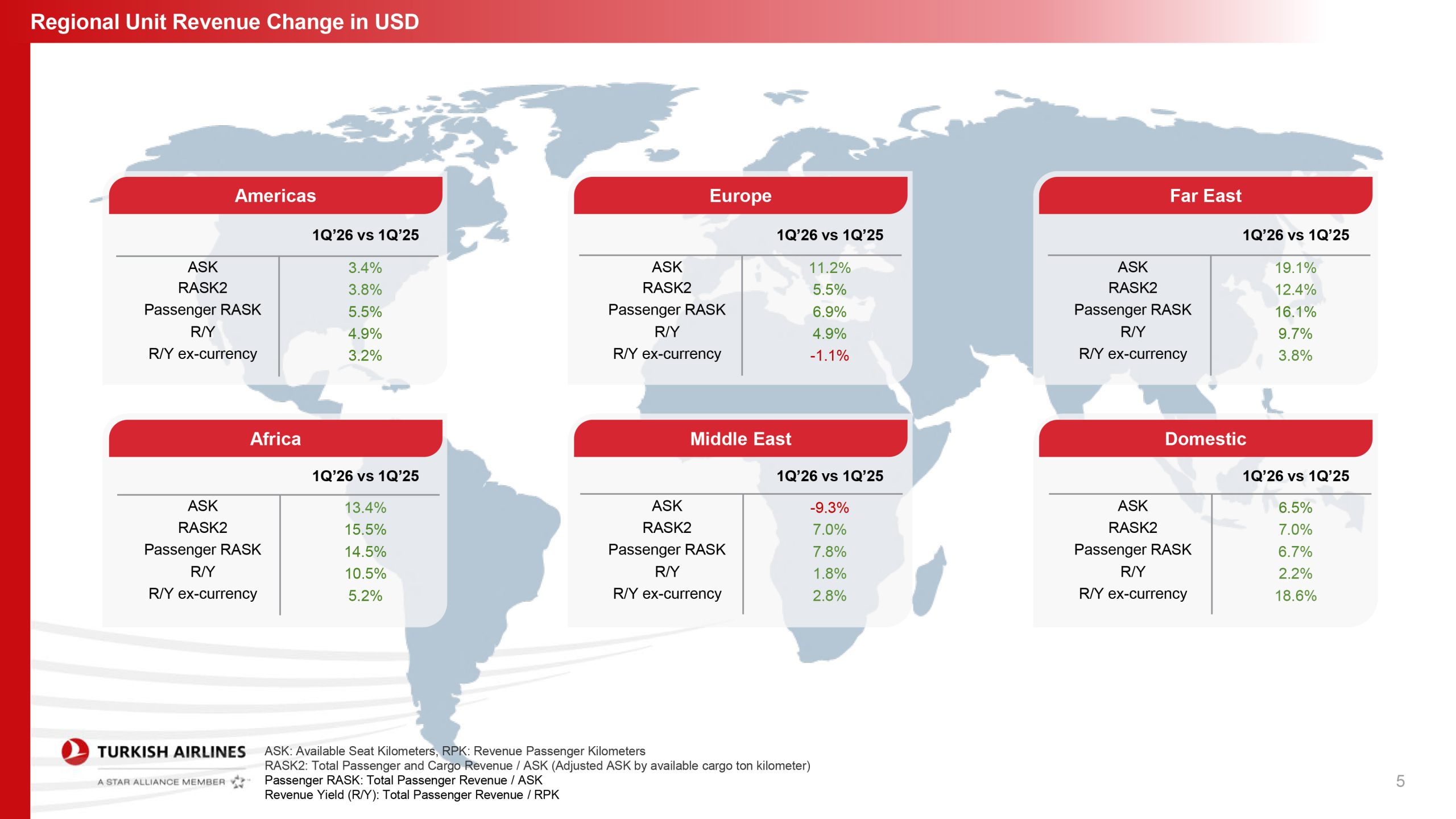
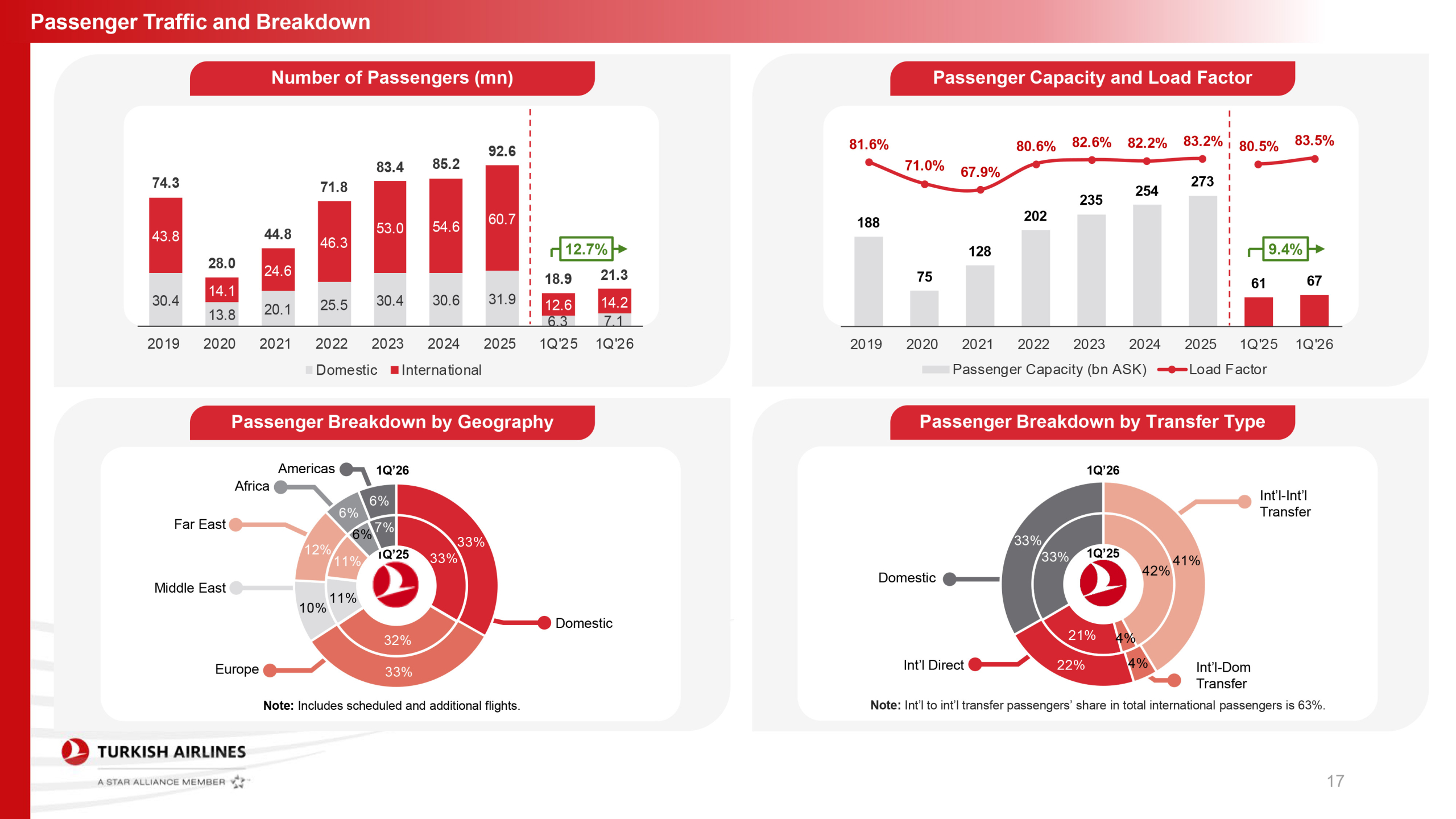
When examined on a regional basis, the most notable growth occurred in Far East and African markets. In the Far East, ASK increased by 19.1 percent, while passenger RASK rose by 16.1 percent. In Africa, RASK growth reached 15.5 percent.
While the European market continued to be the volume driver, maintaining revenue quality despite capacity contraction in the Middle East indicated disciplined capacity utilization in network management.
Costs Increased but Margin Management Was Maintained
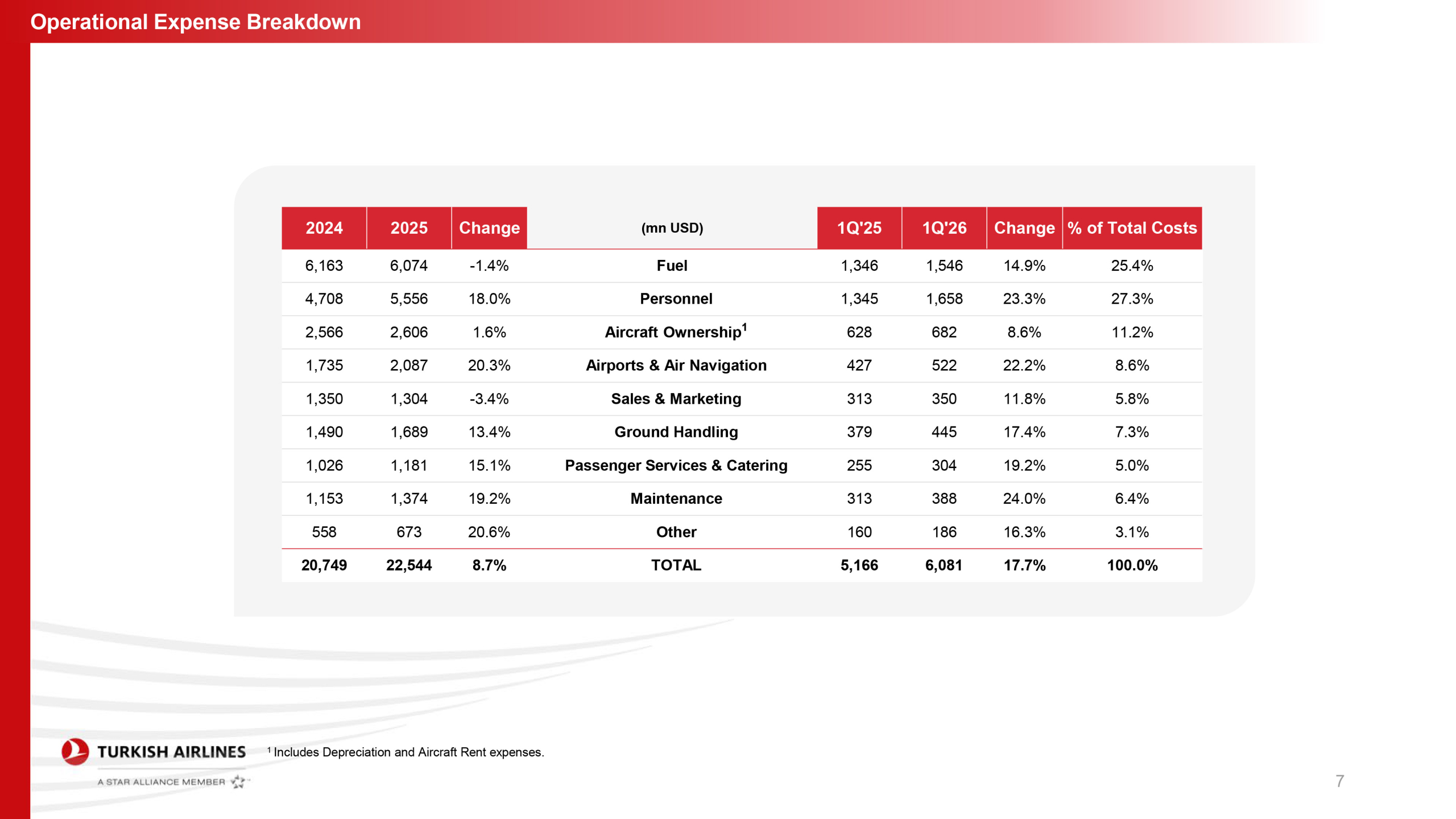
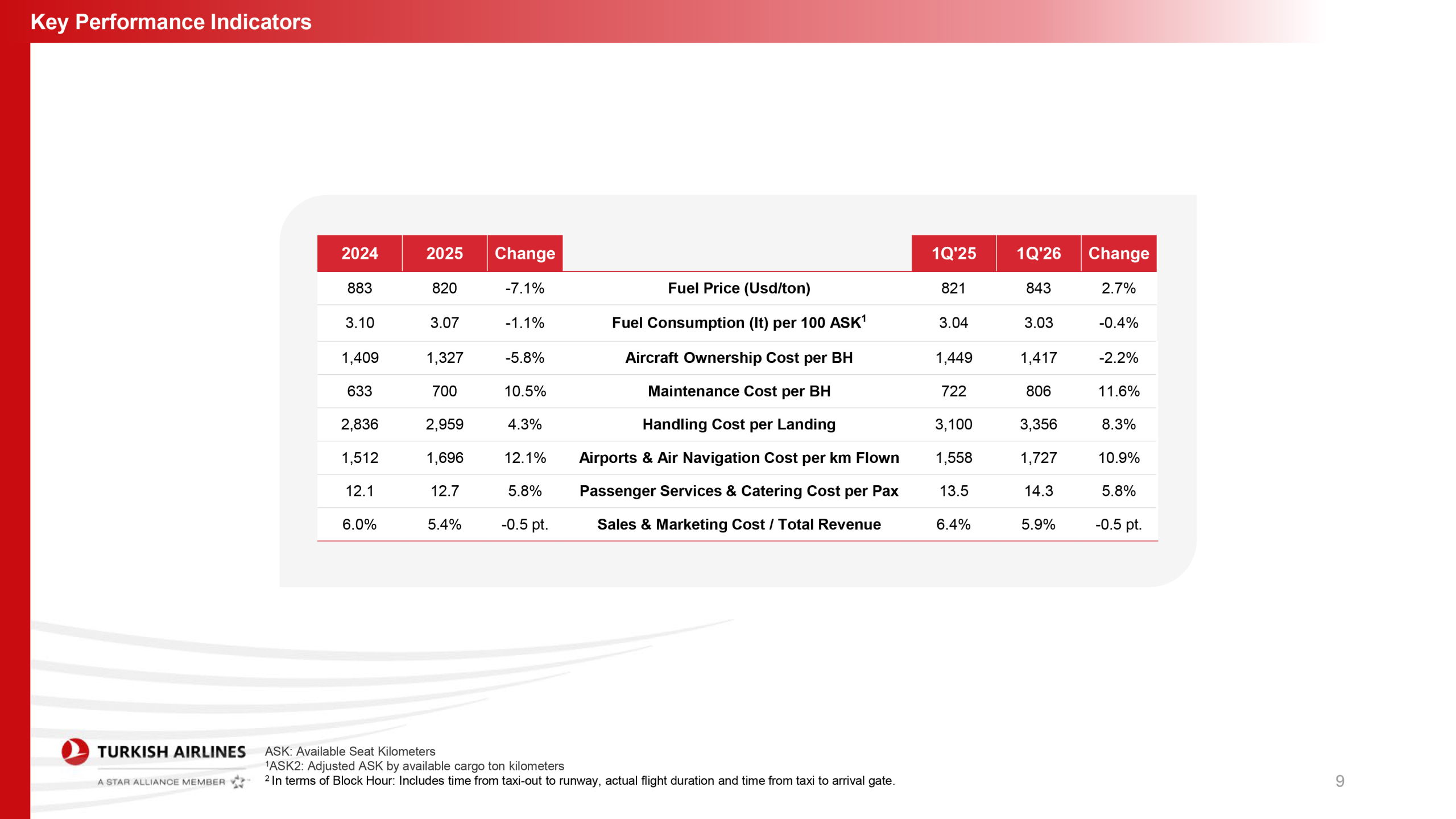
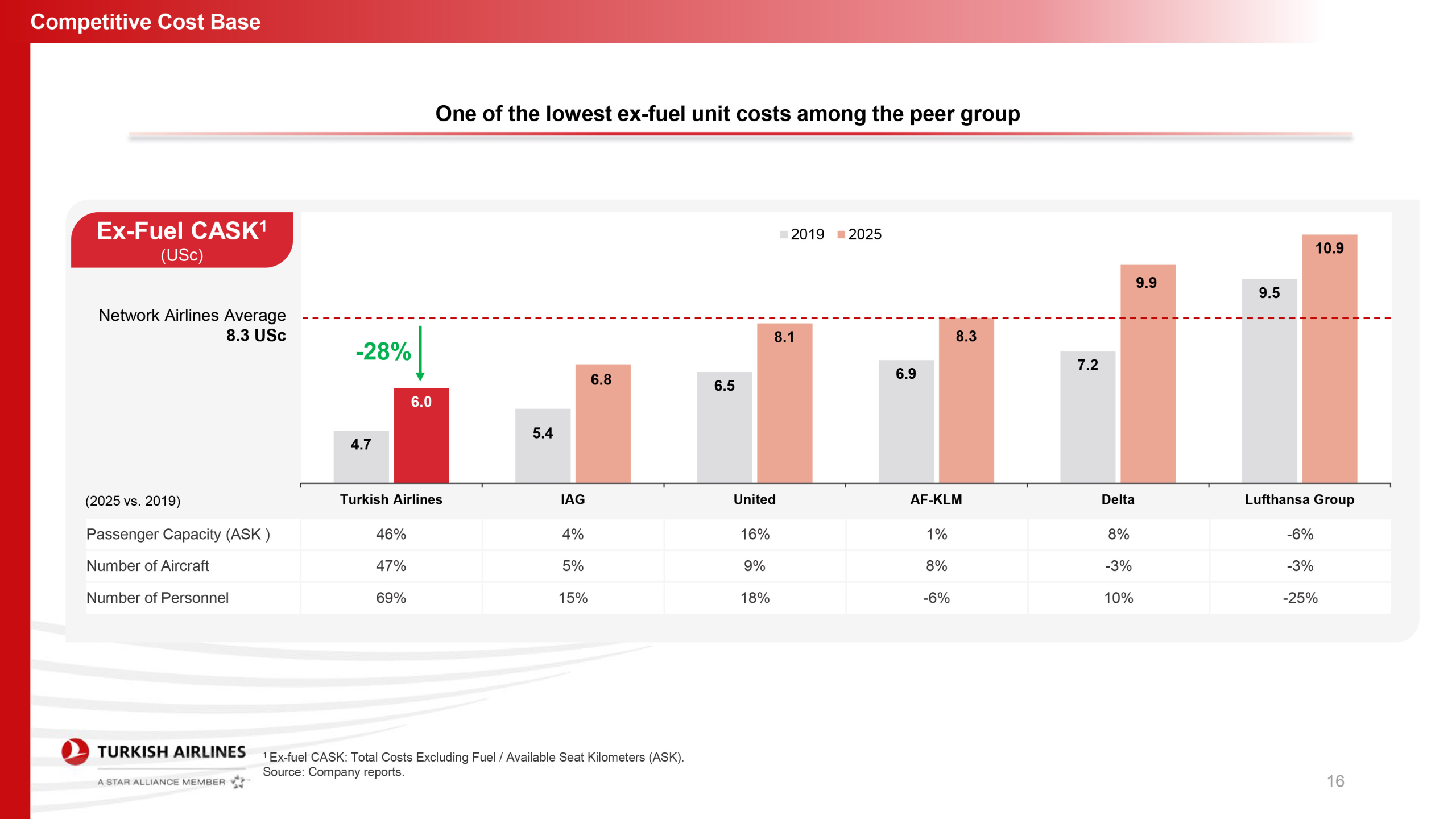
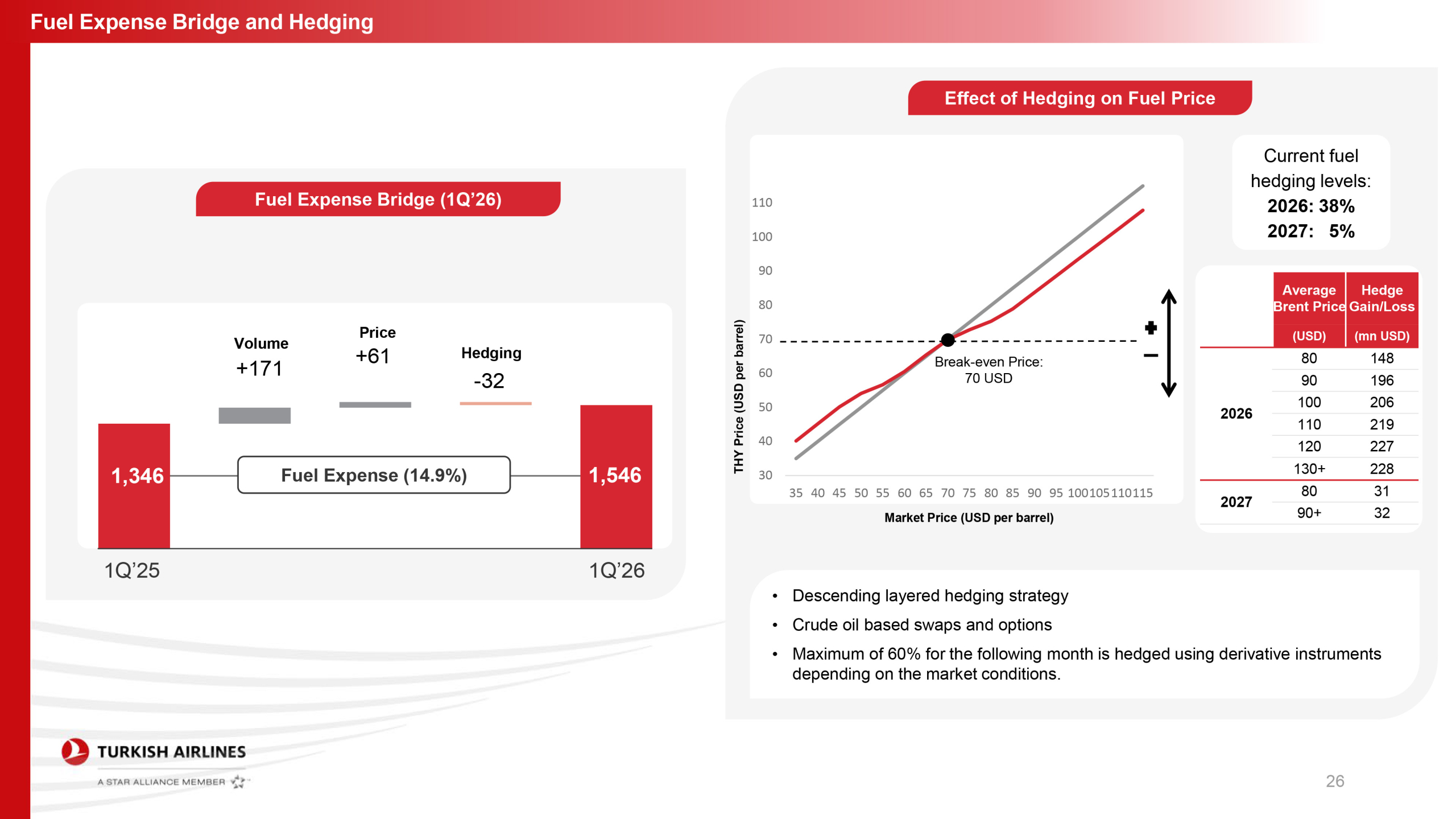
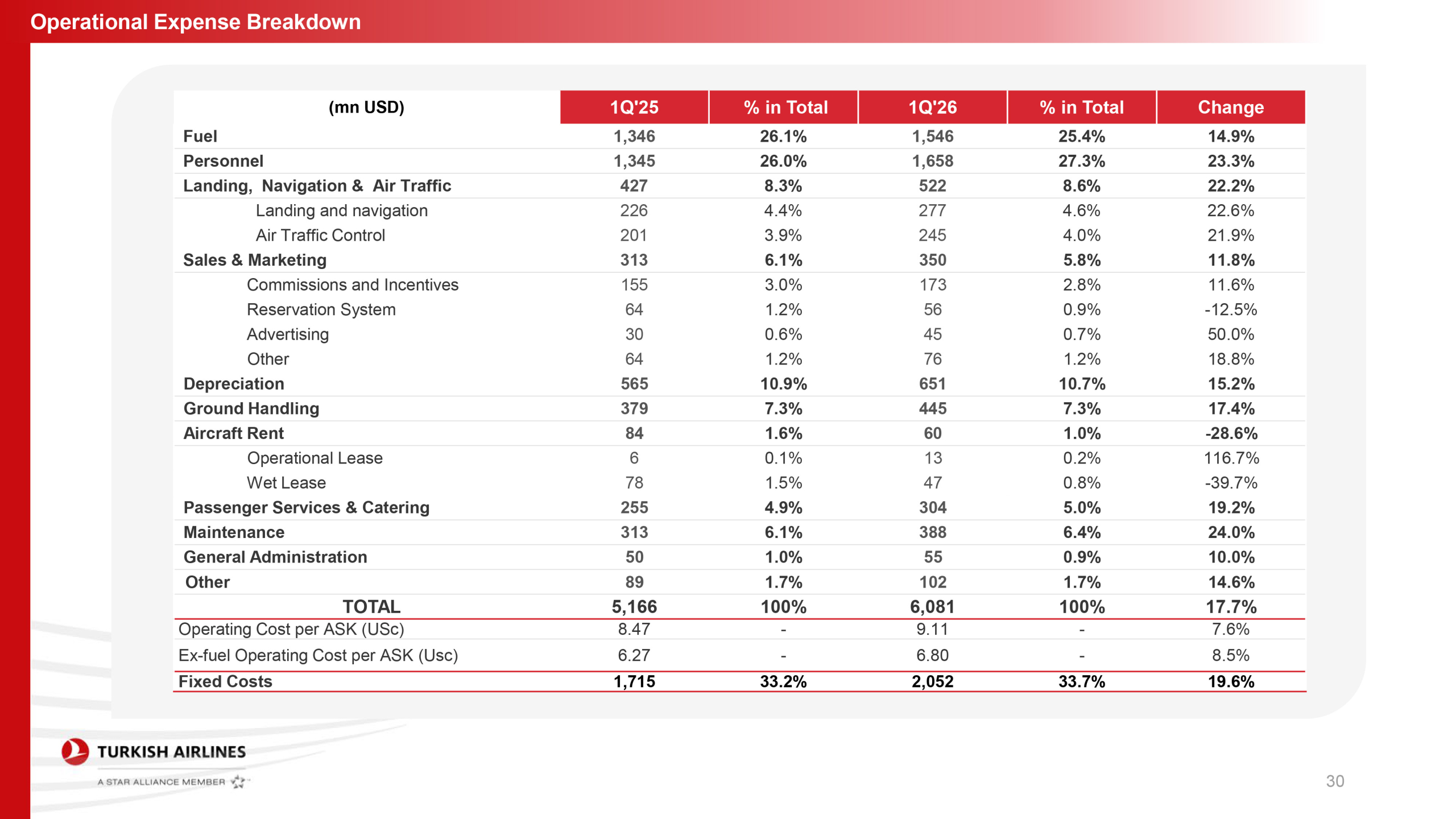
Total operational expenses rose by 17.7 percent to $6.081 billion. The largest cost items were personnel (27.3 percent) and fuel (25.4 percent).
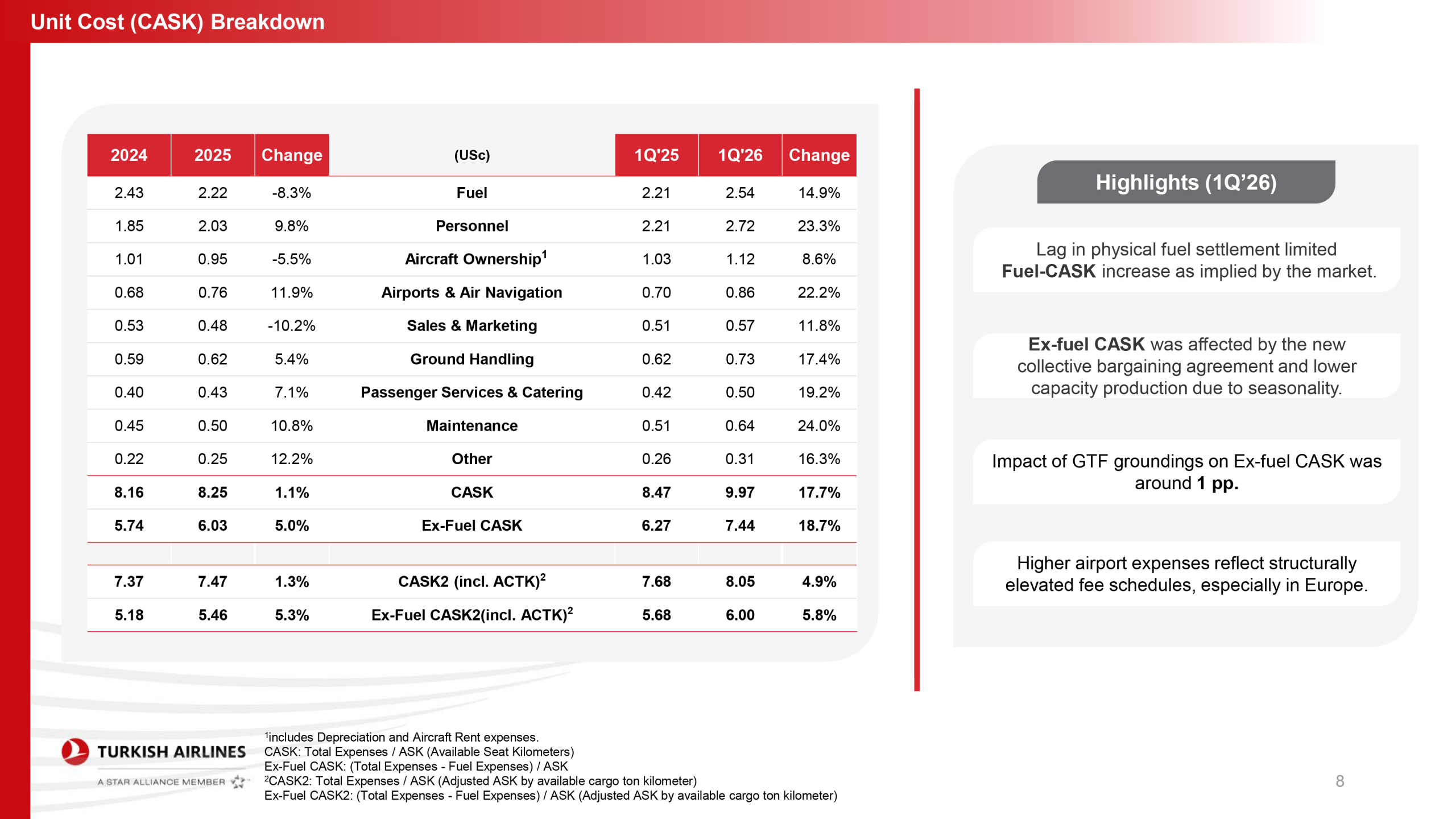
The main reasons for cost pressure included:
- Airport fee increases in Europe
- Collective labor agreement impacts
- Operational issues related to GTF engines
- Double-digit increases in maintenance costs
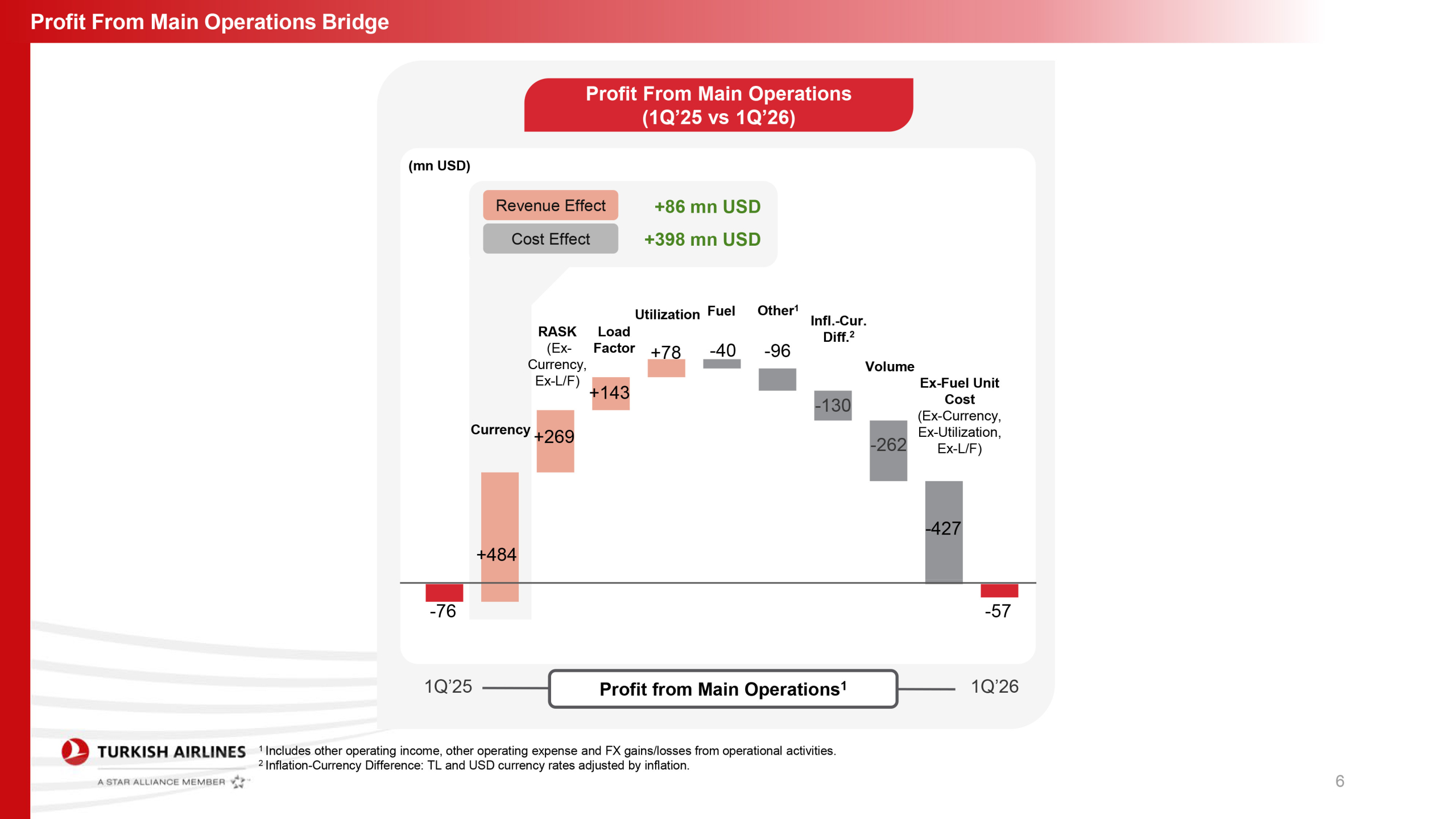
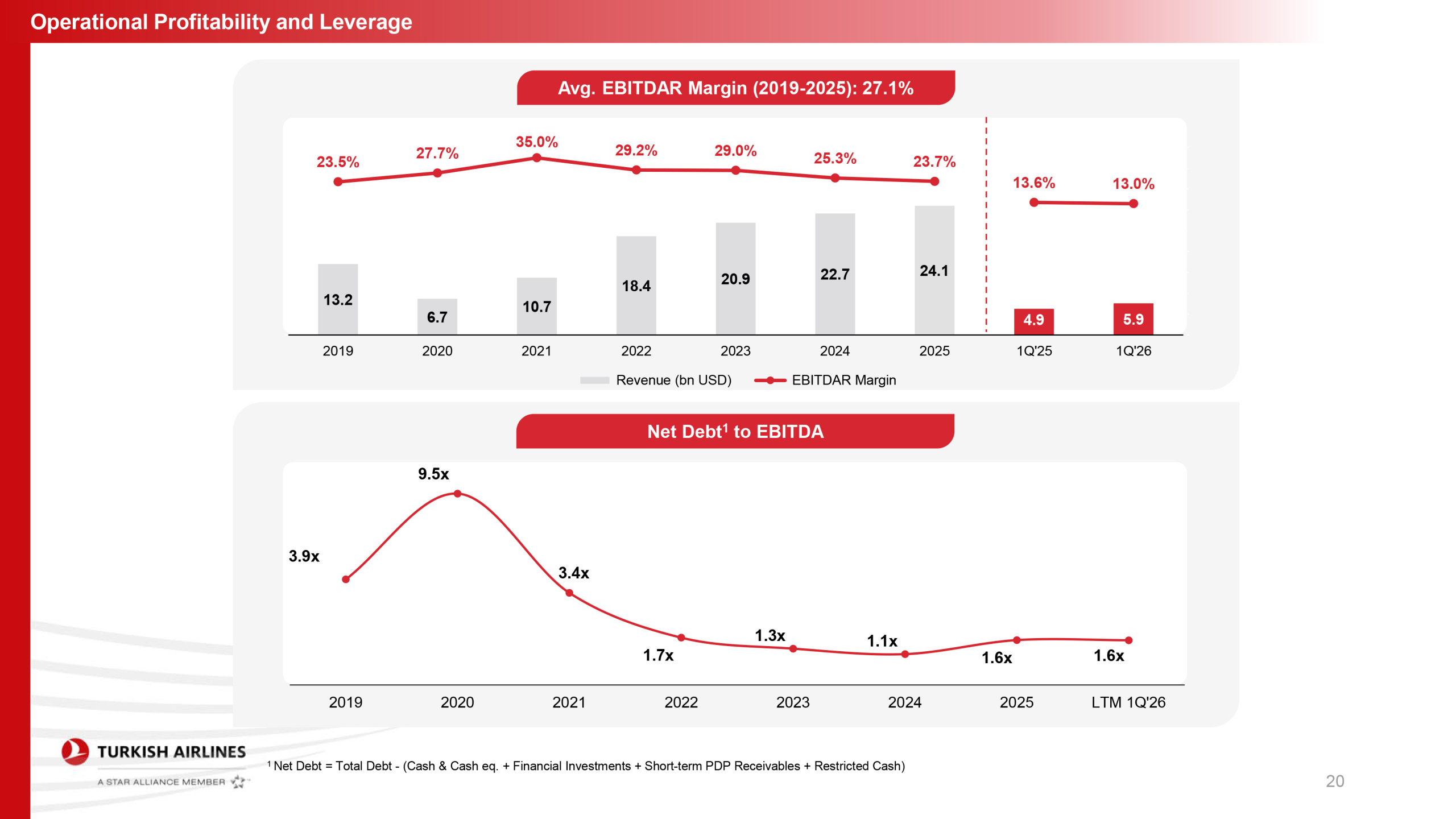
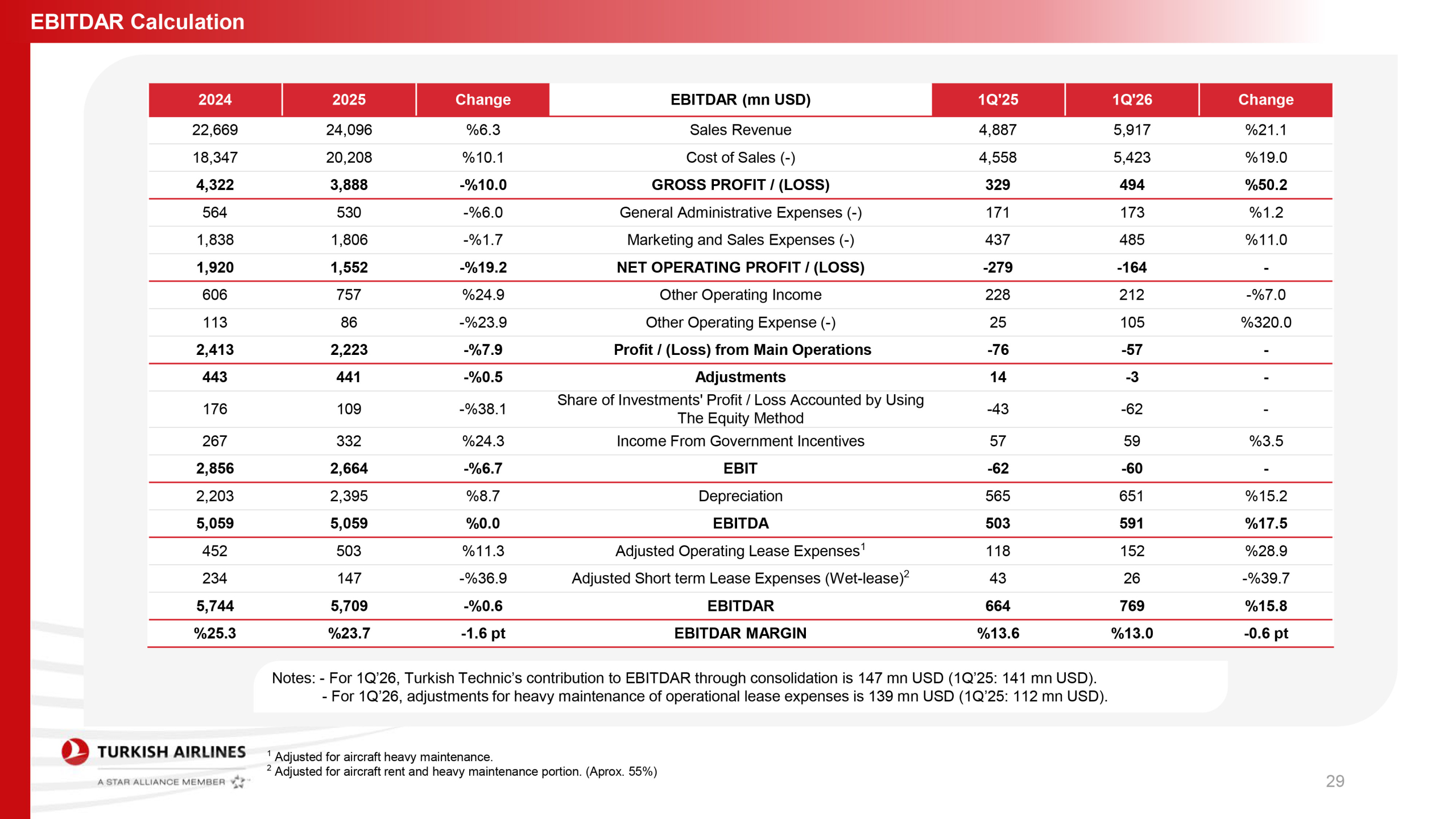
Despite this, THY achieving 16 percent growth in EBITDAR shows that the company is not only exposed to rising costs, but also maintains margins by improving revenue quality.
A Massive Fleet of 528 Aircraft and Low Leverage Stand Out
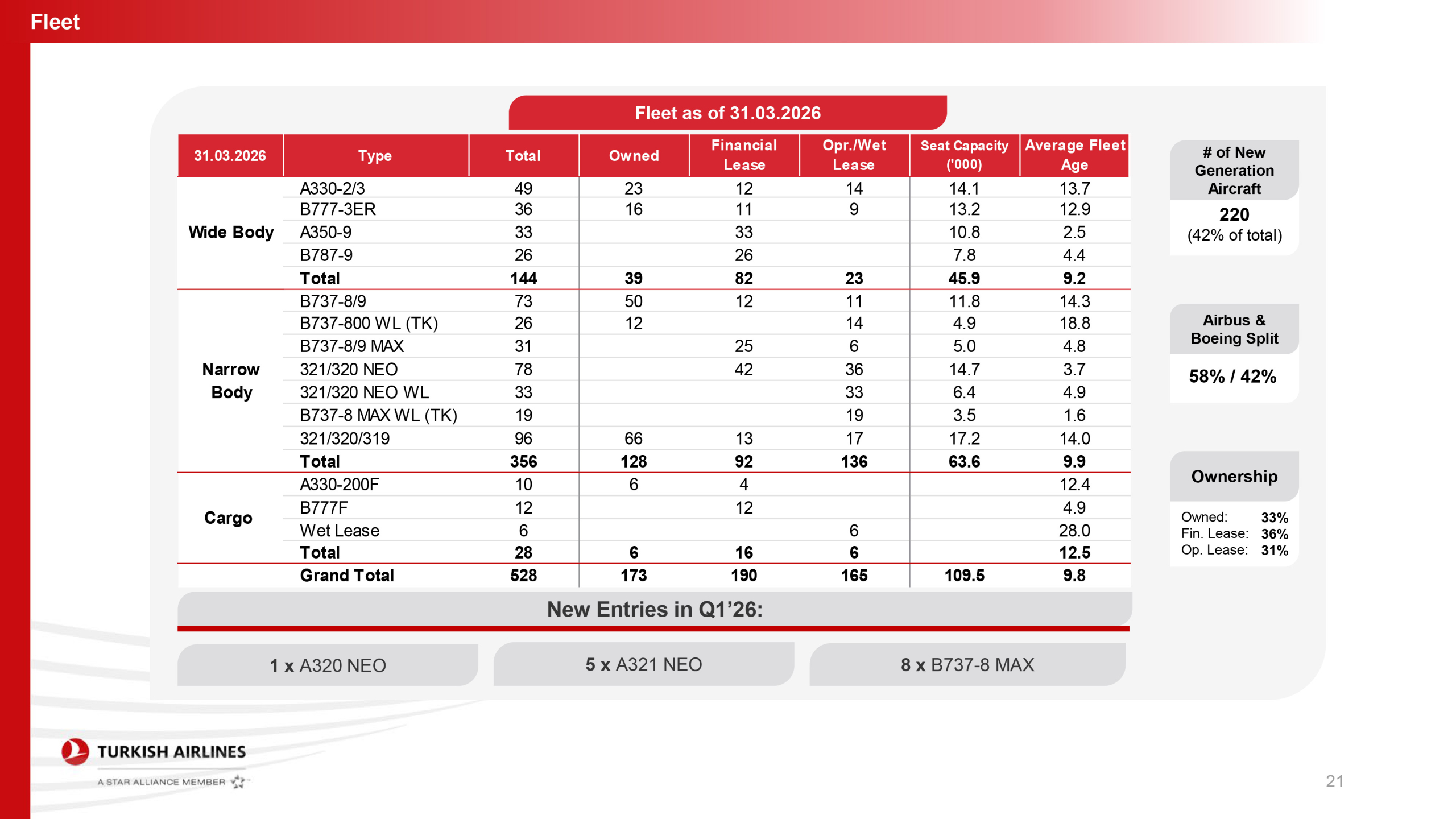
As of March 31, 2026, THY’s fleet reached 528 aircraft, with an average fleet age of 9.8 years. The increase of next-generation aircraft to 42 percent is critical in terms of fuel efficiency and long-term cost advantages.
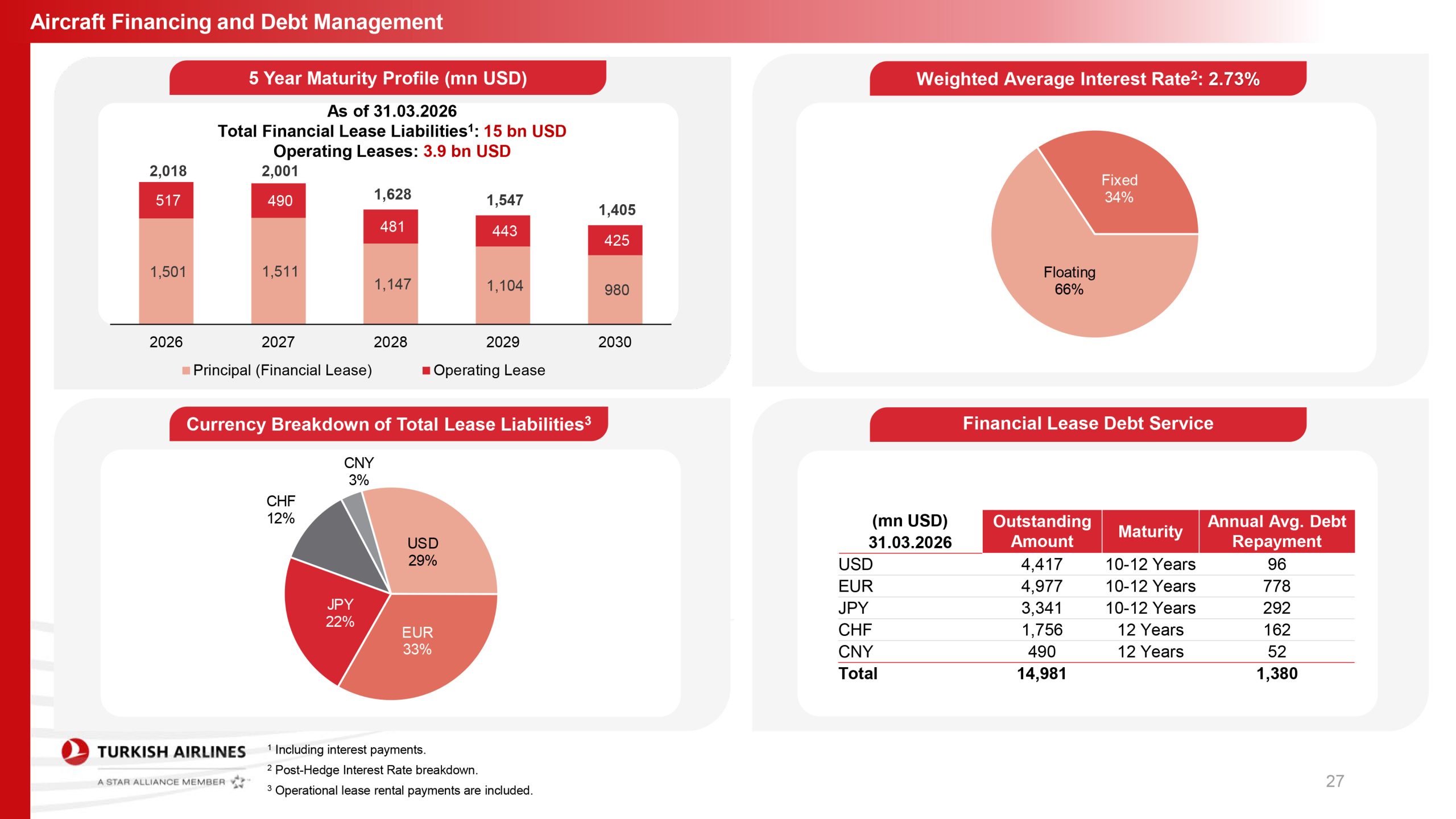
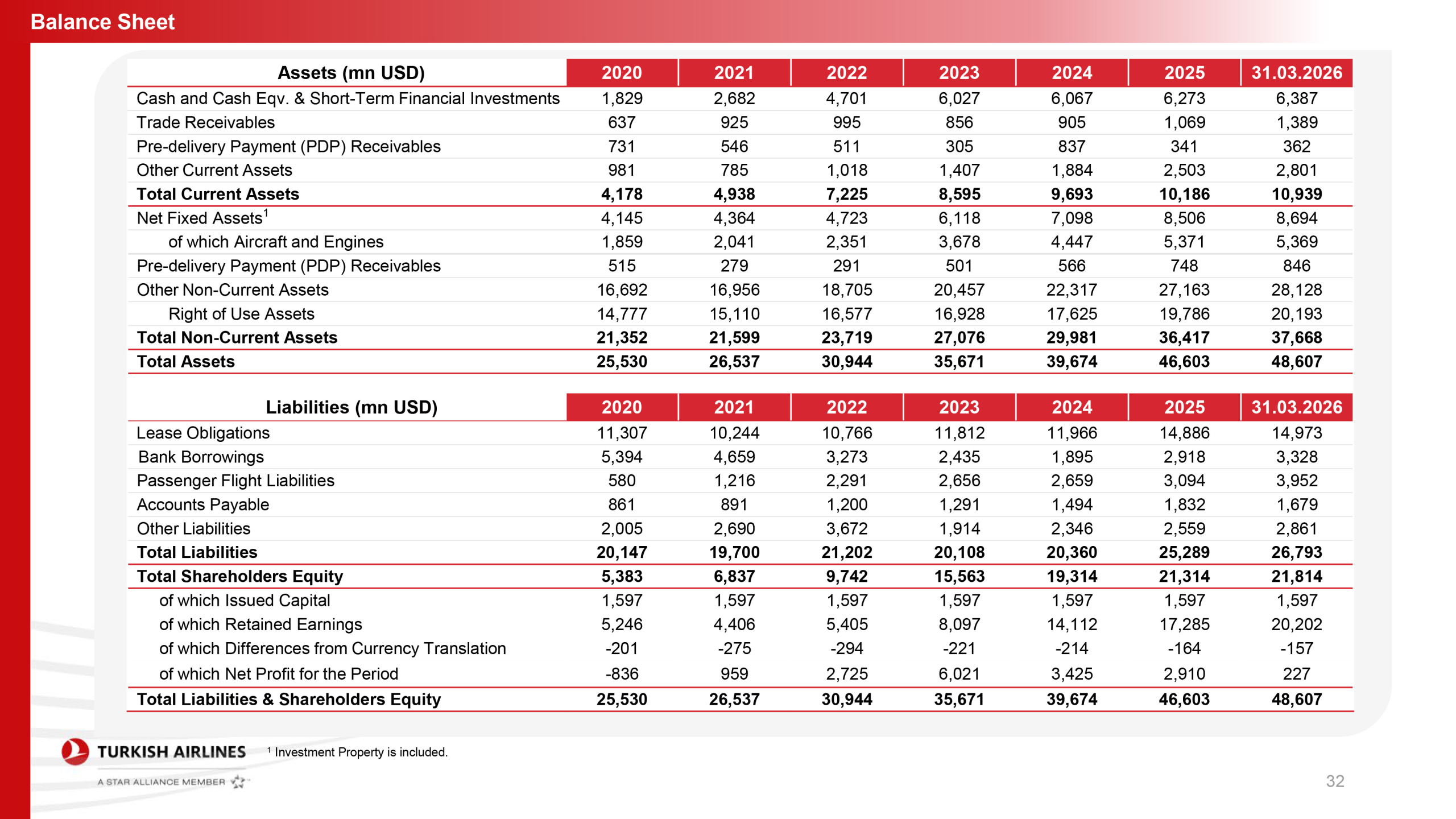
The net debt/EBITDA ratio remaining at 1.6x shows that the company is one of the rare carriers able to maintain financial balance while pursuing aggressive global growth.
Istanbul-Based Global Power
Today, THY:
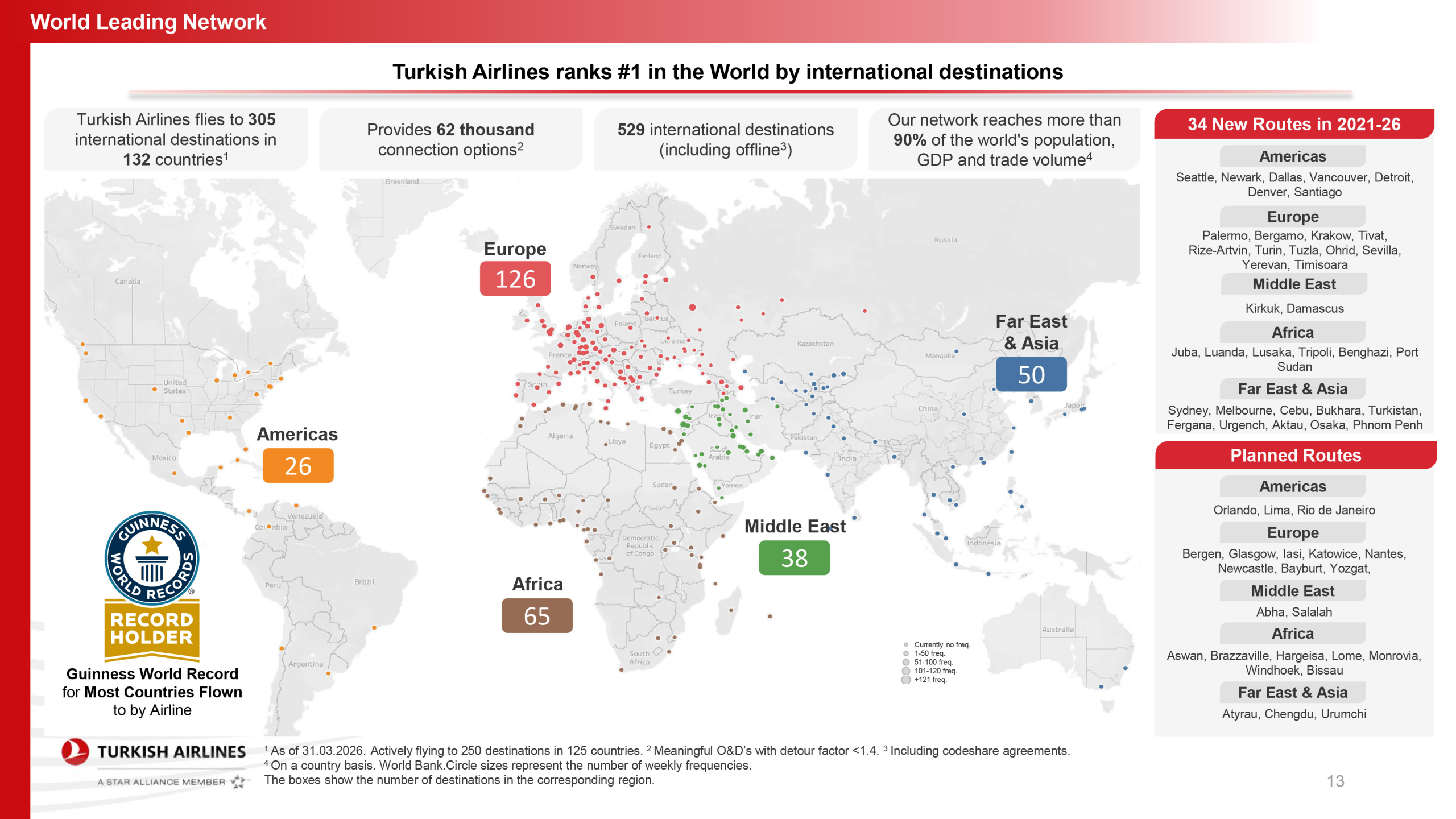
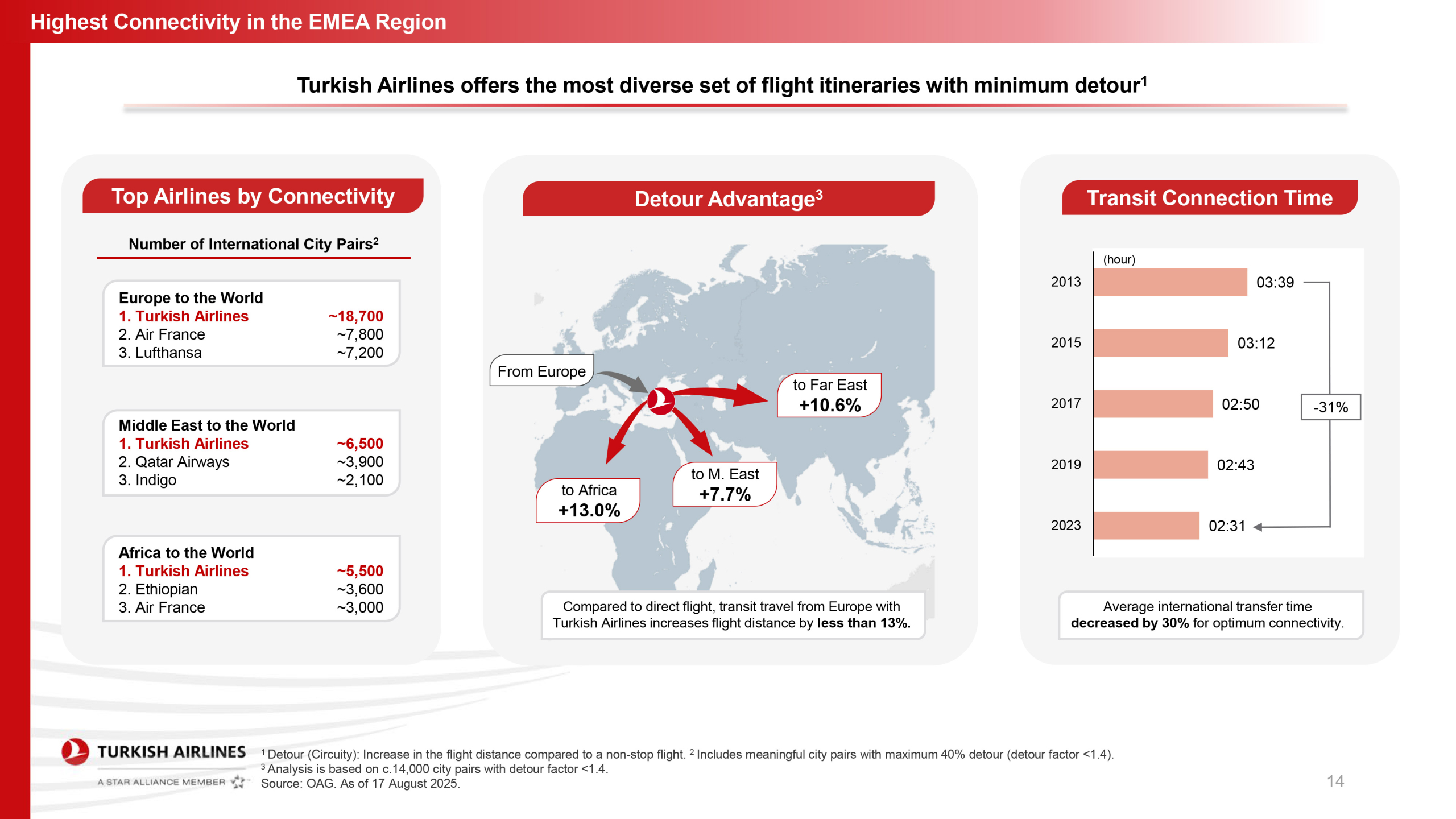
- 305 international destinations in 132 countries
- 62,000 connection options
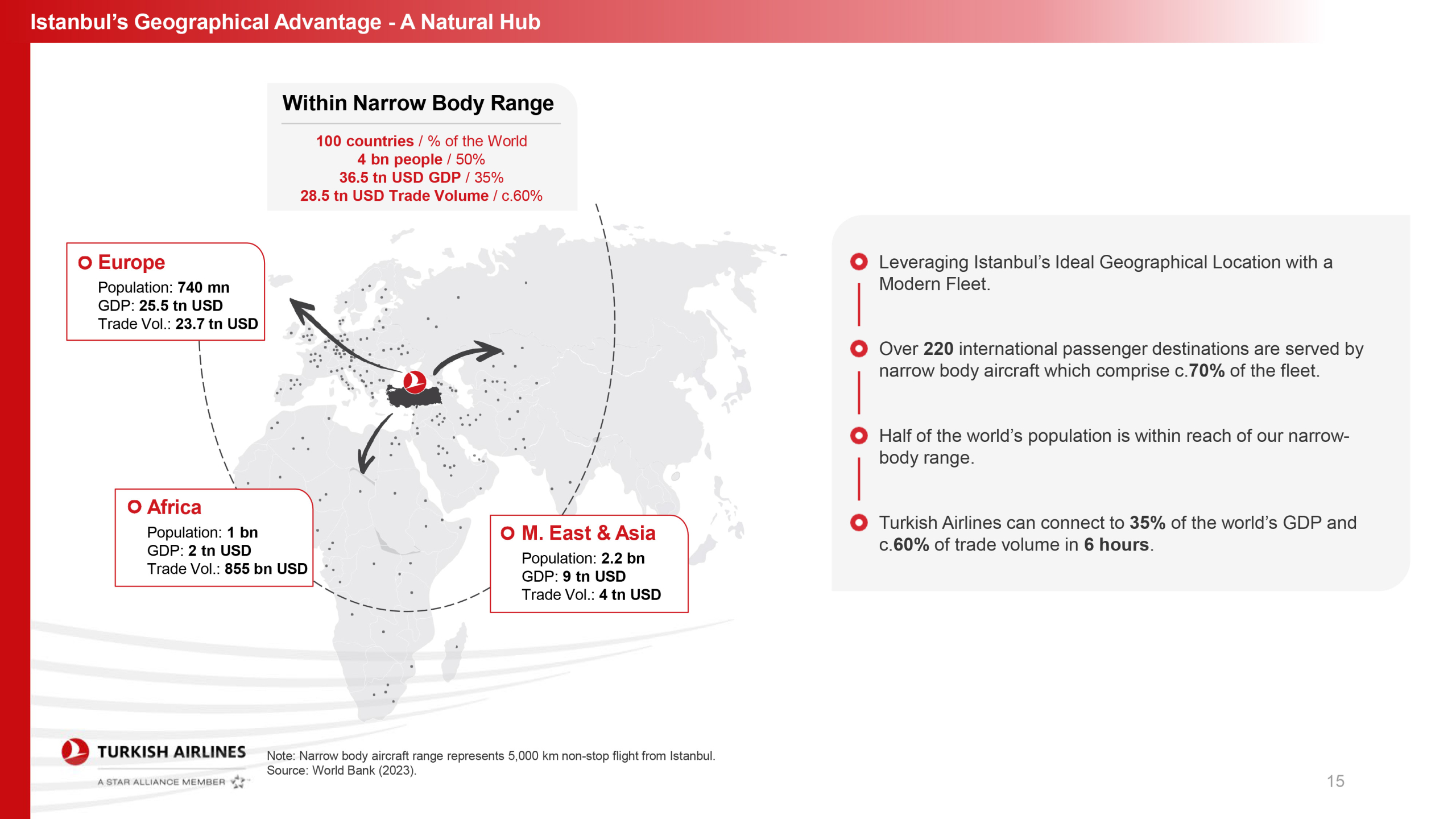
- Access to 90% of the world’s population
- 3rd place globally in cargo
These figures position it not only as an airline but as a strategic transportation ecosystem.
Istanbul’s advantage of access to 4 billion people and its geographical coverage of nearly 60 percent of global trade transforms THY’s growth from a corporate success into a geopolitical air power perspective for Türkiye.
AJet, Turkish Cargo and Digitalization Create New Growth Layers
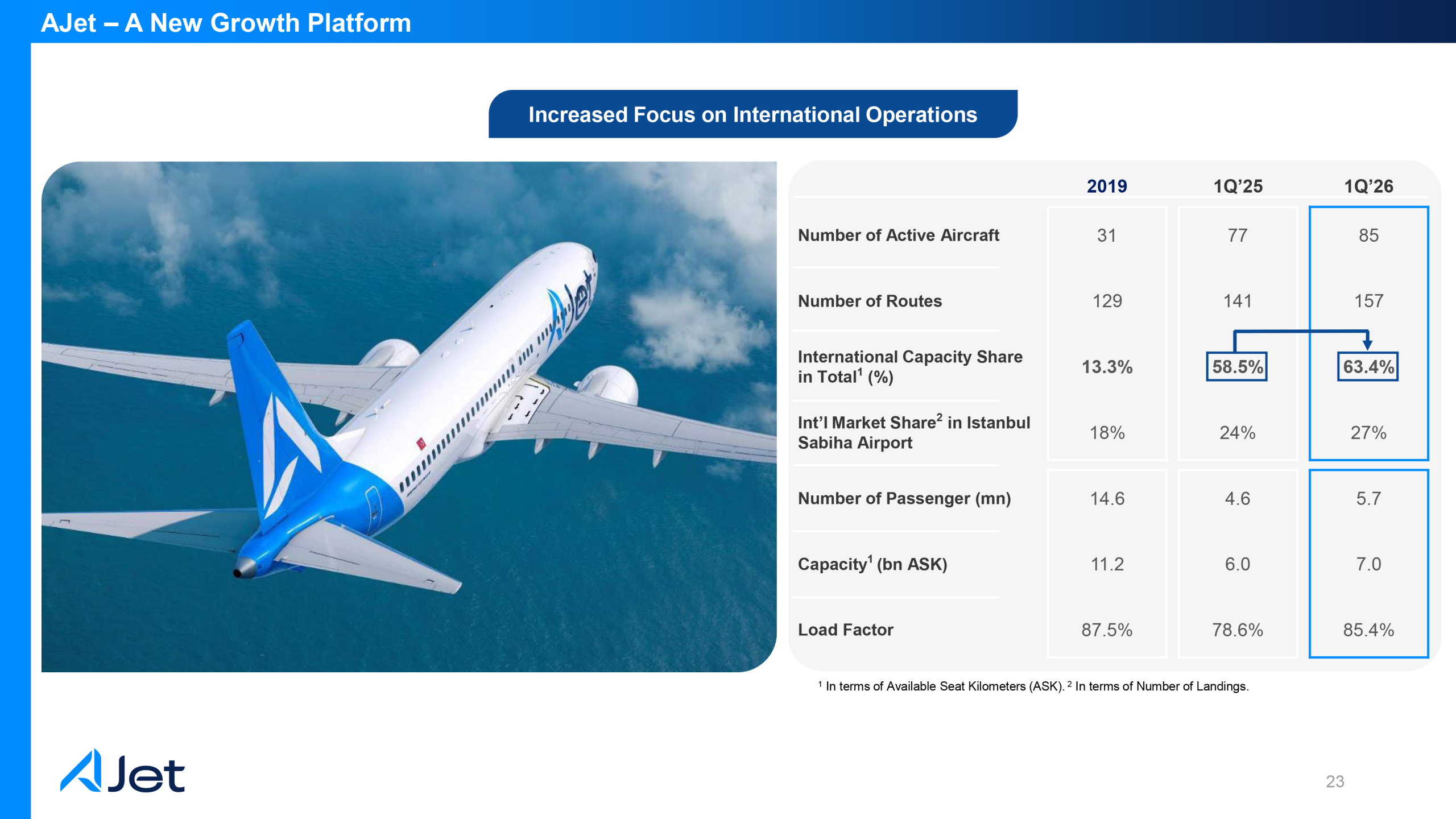
THY’s subsidiary structure is becoming more visible in financial results. The 85-aircraft AJet fleet, Turkish Cargo’s global strength supported by SmartIST, and AI-powered revenue management applications are deepening the holding model.
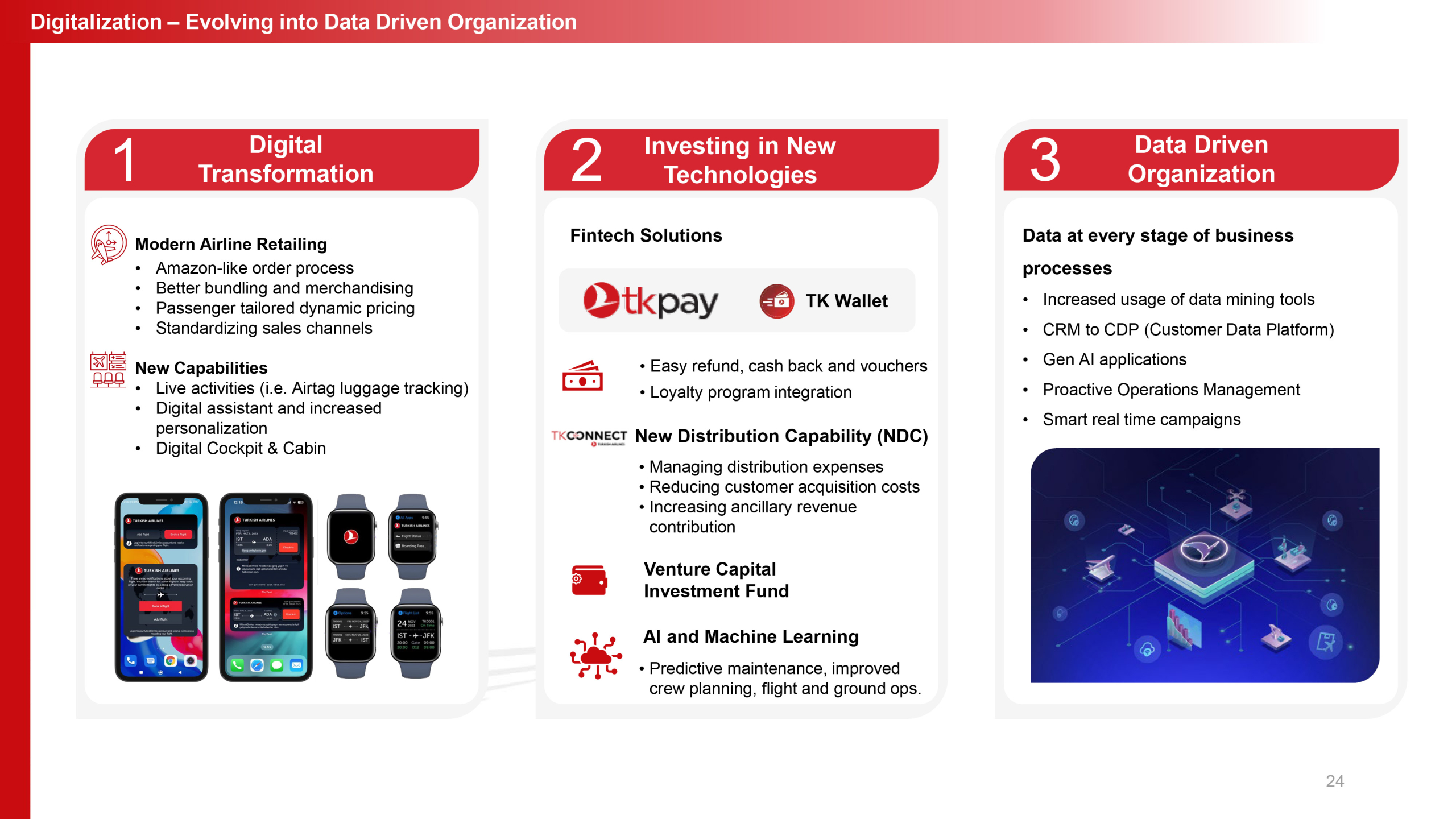
Dynamic pricing, NDC distribution, TK Wallet, and artificial intelligence investments show that THY is evolving into a player that builds efficiency through technology rather than only expanding capacity.
2026 Message: THY Is Not Just Growing, It Is Strengthening Its Global Position
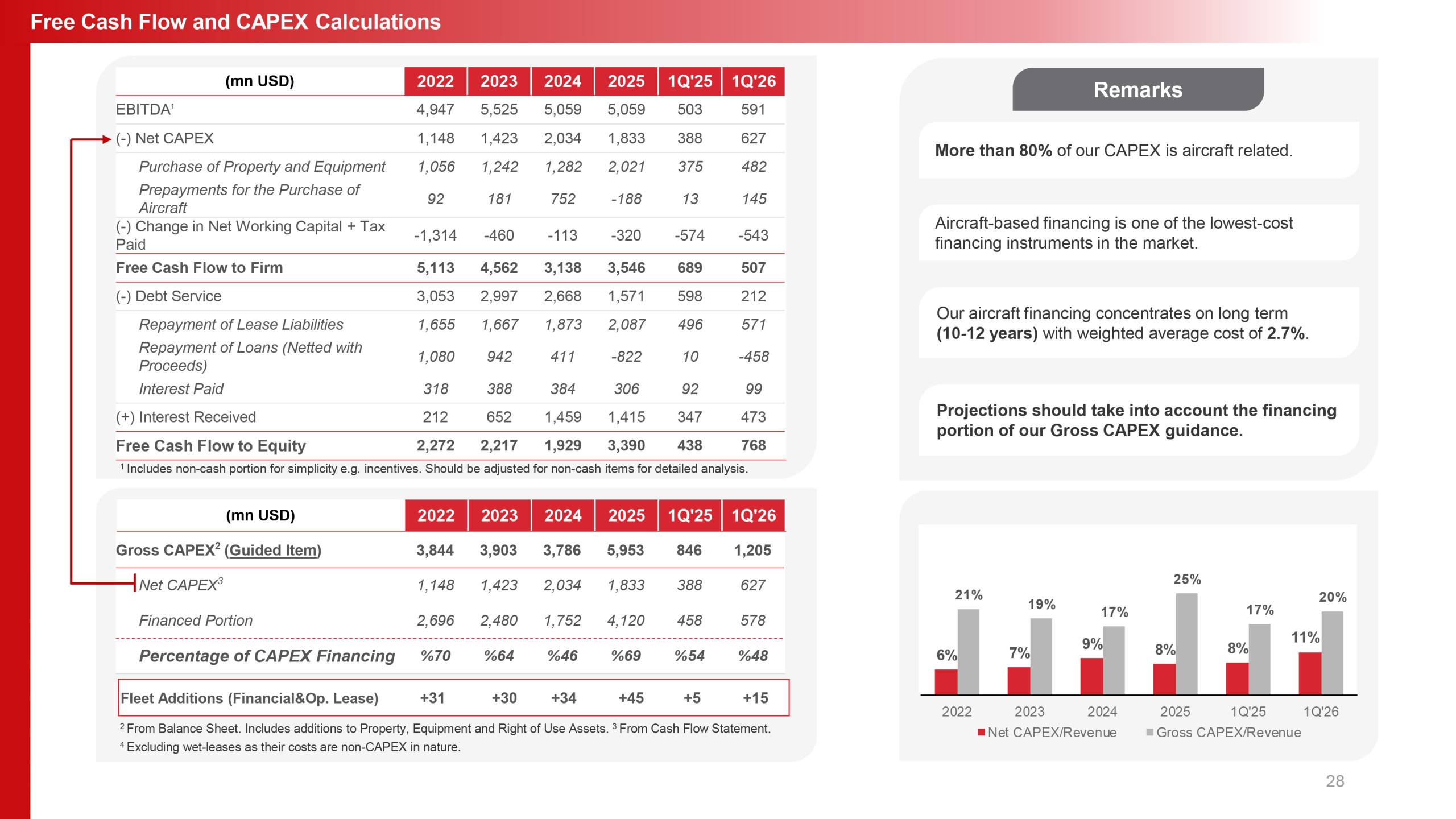
The first quarter results show that Turkish Airlines has maintained its revenue generation strength despite global economic fluctuations, geopolitical pressures, and rising costs. The company’s double-digit revenue growth, strong cash flow, and investment portfolio support indicate that the growth momentum may continue for the rest of 2026.