
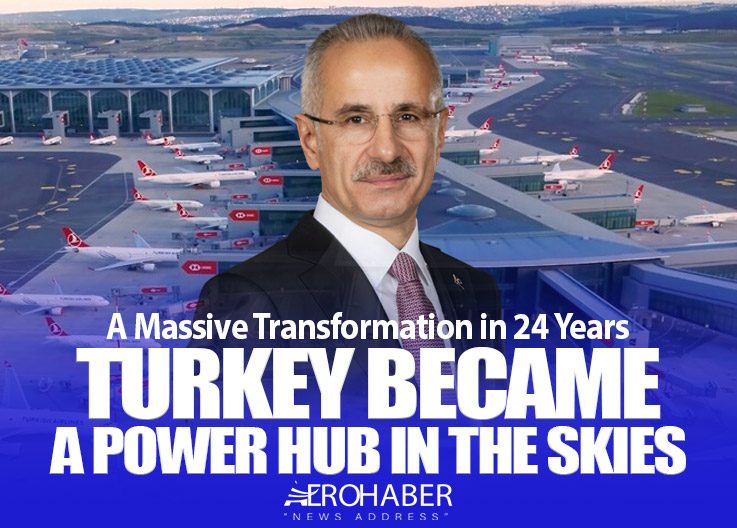


Turkey’s civil aviation has undergone a major transformation over the past 24 years. The number of airports has reached 58, passenger capacity has exceeded 397 million, and the number of international destinations has risen to 356. How did Turkey become a hub in global air transportation?
58 Airports, 356 International Destinations, 2.5 Million Flights: Turkey Expanded Its Central Power in Global Aviation
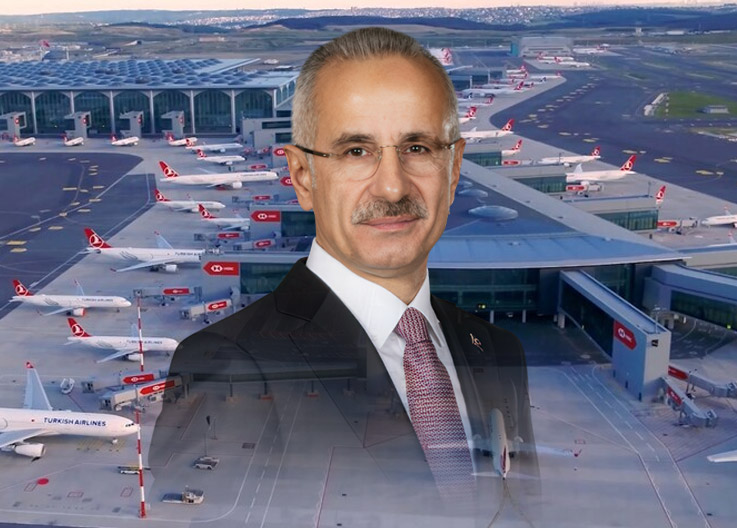
The latest data shared by Minister of Transport and Infrastructure Abdulkadir Uraloğlu reveals that Turkey has not only experienced quantitative growth in civil aviation but has also achieved a strategic transformation in terms of infrastructure, fleet, operations, and global accessibility. Investments made over the past 24 years have transformed Turkey from a regional air transport market into a global transit hub with high connectivity capacity between Europe, Asia, and Africa.
A Leap in Passenger Capacity Surpassing the Population of Europe
Annual airport passenger capacity, which stood at 55 million in 2002, has now exceeded 397.4 million. The announced figure surpasses the total population of 26 European Union countries.
While the increase in the number of airports from 26 to 58 accelerated the integration of Anatolia into air transportation, the expansion of terminal areas from 541 thousand square meters to 4.1 million square meters has marked a new era not only in physical growth but also in passenger experience and operational efficiency.
From 34 Million to 247 Million: Turkey Managed Mass Mobility in the Skies
Turkey, which served approximately 34 million passengers 24 years ago, has now reached 247.1 million passengers. The increase in daily passenger mobility from 92 thousand to 677 thousand shows that air transportation in Turkey has transformed from an elite option into a mass transportation model.
A similar transformation has been experienced in flight traffic. While the total number of flights increased from 532 thousand to over 2.5 million, daily flight operations exceeded 6,800. This growth demonstrates that Turkey manages a much more complex operational structure in air traffic management, slot planning, ground services, and airspace coordination.
From 18th to 7th in the World Rankings
Turkey’s rise in aviation is not limited to domestic data. Rising from 18th to 7th place in global passenger traffic, Turkey also climbed from 7th to 3rd in Europe. The Istanbul-centered growth strategy and next-generation airport investments have found international recognition.
Especially with the opening of Istanbul Airport, Turkey has gone beyond being a country that provides east-west connectivity and has become one of the main backbones of the global transfer system.
Fleet Strength and Cargo Capacity Also Multiplied
The increase in the total number of aircraft from 626 to 2,218 shows that Turkish civil aviation has expanded not only in passenger transport but also in operational diversity. The rise in the number of wide-body aircraft from 150 to 800 clearly demonstrates the leap in long-haul capacity, while the increase in seat capacity from 25 thousand to over 157 thousand strengthens the commercial return of growth.
The increase in cargo capacity holds particular importance for Turkey’s goal of becoming a logistics hub. The capacity rising from 303 tons to 2,903 tons further strengthens Turkey’s position in e-commerce, express logistics, and intercontinental transportation.
From 60 Destinations to 356: Turkey’s Wings Globalized
The increase in the number of international destinations from 60 to 356 demonstrates the historic expansion in the reach capability of Turkish aviation. The rise in the number of countries with air transport agreements from 81 to 175 proves that diplomacy and aviation strategy have progressed in parallel.
This growth is not only commercial; it also shows that Turkey uses air transportation as a strategic power in terms of tourism, foreign trade, investment, and geopolitical influence.
Airspace, Runways, and Technology: The Invisible Power Grew
The expansion of designated flight routes from 41,901 kilometers to 80,000 kilometers indicates that Turkey’s airspace has become much more dense and organized. The increase in aircraft parking positions from 332 to 1,739 and navigation aids from 215 to 589 reveals not only growth but also the increasing technical depth of the system.
The total runway length increasing from 149 kilometers to 241.4 kilometers stands out as a critical factor that creates room for larger operations, new airlines, and expanding fleets in the future.
Turkey’s Aviation Story Is Now More Than a Transportation Success
The picture over the past 24 years shows that Turkey’s transformation in aviation is not limited to building airports. This process has created a multi-layered development model combining economic growth, global integration, tourism strategy, logistics capacity, and international influence.