


Turkish Airlines’ Airbus A321neo Scrapes Tail at Prague: Czech and French Authorities Launch Investigation
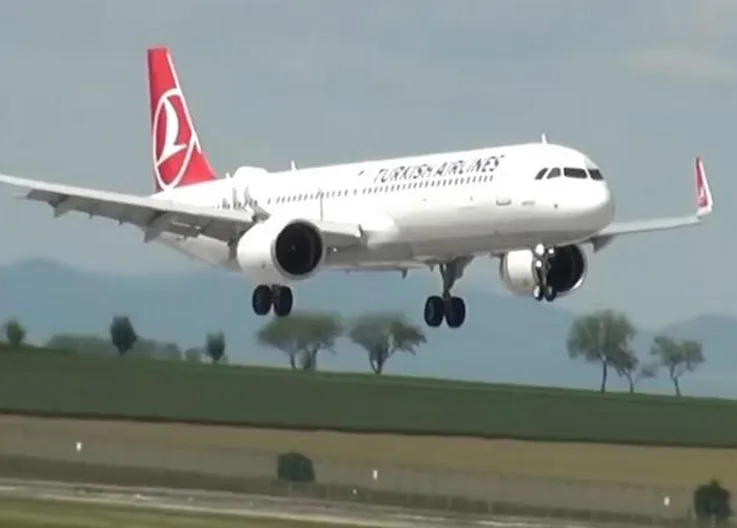
The Czech air accident investigation authority UZPLN announced that a Turkish Airlines (THY) Airbus A321neo passenger aircraft experienced a tail strike while attempting to take off at Prague.
The incident occurred on May 11 involving the five-year-old aircraft registered TC-LSL, powered by Pratt & Whitney PW1100G engines, which was performing an ILS approach to runway 12 at Prague Airport. The approach took place under visual meteorological conditions but with insufficient lighting. The aircraft made a hard landing.
After landing, the captain decided to perform a go-around to prevent “undesired bounces.” However, according to the UZPLN report, despite issuing the takeoff command three times, the captain did not take control of the aircraft as per standard procedures. This resulted in both the captain and first officer giving commands simultaneously from their side sticks, creating dual input.
This dual input caused the aircraft’s nose to pitch up excessively. Consequently, the rear fuselage contacted the runway, leaving a 15-meter scrape mark and causing damage to the tail section.
No passengers were injured in the incident, but the aircraft was taken out of service for maintenance. The French air accident investigation agency BEA has joined the investigation of this incident as well as a similar tail strike event involving another THY A321neo, registration TC-LTG, which occurred under similar conditions in Dublin on July 1.
What is a Tail Strike?
It is an event where the aircraft’s tail contacts the runway during takeoff or landing due to an excessive nose-up angle. This can cause structural damage and require long-term maintenance.