


Josh is an Aviation Journalist and lifelong aviation enthusiast who’s now turning that passion into a career. From watching planes and playing flight simulators at a young age to now sitting in the cockpit, Josh has always been drawn to the world of flight.
Currently training to become a commercial pilot, Josh aims to make aviation interesting and accessible to everyone, whether you’re in the industry or simply passionate about aviation.
Now actively building a career in Aviation, Josh is focused on telling stories from inside the aviation world, stories shaped by firsthand experience, curiosity, and a genuine love of all things that fly.
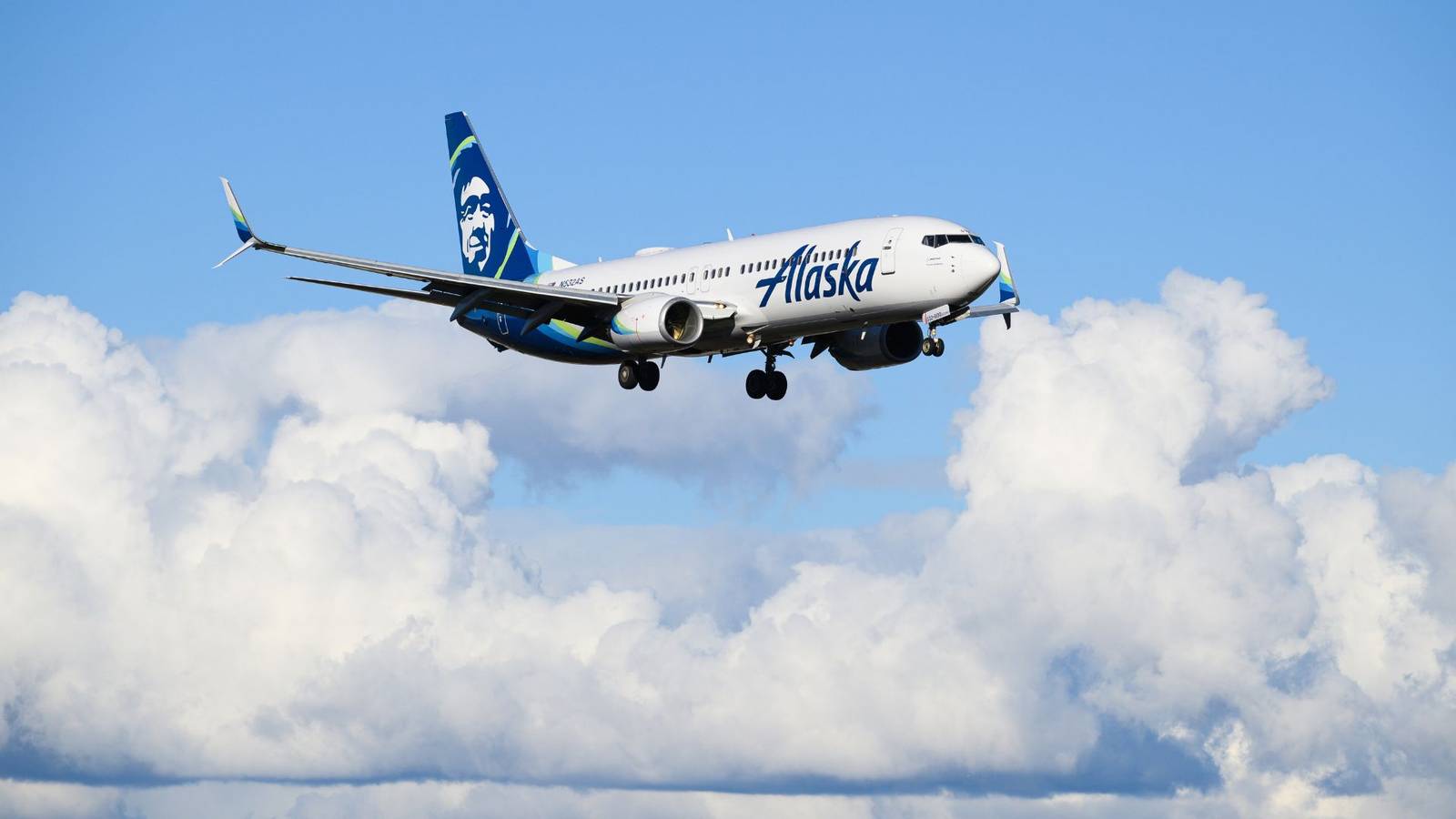
Alaska Air Group, the parent company of Alaska Airlines and Hawaiian Airlines, may be pinpointing a replacement strategy for Hawaiian’s aging Boeing 717 fleet. Alaska’s existing 737-800 aircraft are increasingly appearing as a viable candidate for the carrier’s interisland operations. The development comes from The Air Current Editor-in-Chief Jon Ostrower, who spoke with Alaska’s Chief Financial Officer and now-President Shane Tackett during the IATA Annual General Meeting in Rio de Janeiro earlier this month. Tackett commented that “the default at this point will be 737s,” and that the airframes are the “most likely answer to replace the 717s.”
Hawaiian’s 717s have long formed the backbone of its interisland network, providing the high-frequency operations needed between the islands. The aircraft was purpose-built for the 100-seat market, typically accommodating 106-128 passengers, with a maximum capacity of 134 seats and a range of roughly 2,060 nautical miles. However, with the fleet becoming increasingly expensive to maintain and with no direct modern successor available, Alaska faces a major strategic decision regarding the future of Hawaiian’s domestic network.
Alaska’s 737-800s are increasingly viewed internally as a potential solution to replace the 717s. While the prospect may initially seem surprising, particularly given the differences between the two aircraft types and mission profiles, the decision would align with broader fleet commonality objectives within Alaska Air Group.
Fleet simplification frequently drives airline decisions as much as pure aircraft performance. Maintaining a common fleet can reduce crew and staff training requirements, simplify maintenance programs, streamline spare parts inventories, and improve operational flexibility across an airline network. For Alaska, introducing an entirely new aircraft family would likely entail high long-term costs despite potential operational advantages.
The aircraft itself would also represent a notable increase in capability. A 737-800 typically seats between 160 and 189 passengers, depending on cabin configuration, making it substantially larger than the 717. It also offers a significantly greater range, 2,935 to 3,115 nautical miles (5,436 to 5,765 km), depending on its configuration and payload, despite Alaska potentially using the aircraft for sectors that often last less than an hour.
It is worth noting that the prospect of Alaska deploying its 737s for interisland operations is still quite some time away. Tackett mentioned that the plan is “not imminent,” and that the 717 remains a workhorse given the nature of the flights and the climate.
Simple Flying contacted Alaska for a statement on Thursday, but a representative could not be immediately reached.
Existing Operations Already Offer A Blueprint
Although some observers may question whether a larger narrowbody aircraft would fit Hawaii’s short interisland routes, examples already exist within the market. Southwest Airlines currently operates 737 MAX 8 aircraft on interisland services, such as the hugely popular Honolulu (HNL) – Kahului (OGG) route, demonstrating that larger single-aisle aircraft can function successfully on these sectors.
Alaska itself also possesses extensive operational familiarity with the aircraft type. A portion of Alaska’s current 737 fleet is ETOPS-certified and routinely operates long overwater services connecting Hawaii and destinations on the US mainland. While these missions differ substantially from interisland flying, they nevertheless provide Alaska with operational experience of the 737 family in Hawaiian conditions.
The challenge comes from the fact that Hawaiian’s current operation was built around the strengths of the 717. The aircraft’s smaller size and quick-turn capabilities suit a network where flights between islands can take as little as 25 to 45 minutes. Larger aircraft naturally spread operating costs across more seats, but they also risk introducing excess capacity if demand patterns do not consistently support higher passenger volumes.
Alaska Air Group executives admitted that the move was a “difficult decision.”
Other Aircraft Could Still Remain In The Conversation
Despite Boeing 737s appearing to emerge as a frontrunner, alternative aircraft have frequently been discussed as possible replacements for Hawaiian’s 717 fleet. Among the most commonly cited options are the Airbus A220 and Embraer E195-E2, both of which were designed with modern efficiency and mid-sized capacity in mind.
The A220-100 typically accommodates between 100 and 125 passengers, placing it much closer to the 717’s size profile while delivering significant fuel-efficiency improvements. The E195-E2 occupies a similar segment, generally seating between 120 and 146 passengers, depending on the airline’s configuration. Both aircraft effectively sit between the 717 and 737-800 in terms of capacity.
Ultimately, Alaska’s decision may come down to balancing mission optimization against broader fleet strategy. The 737 may not represent the perfect one-for-one operational replacement for the 717, but the benefits associated with maintaining commonality across Alaska Air Group’s fleet could outweigh the advantages offered by introducing an entirely new aircraft family.
Found an error? Send it info@simpleflying.com so it can be corrected.
Orijinal Haberi Görüntüle