
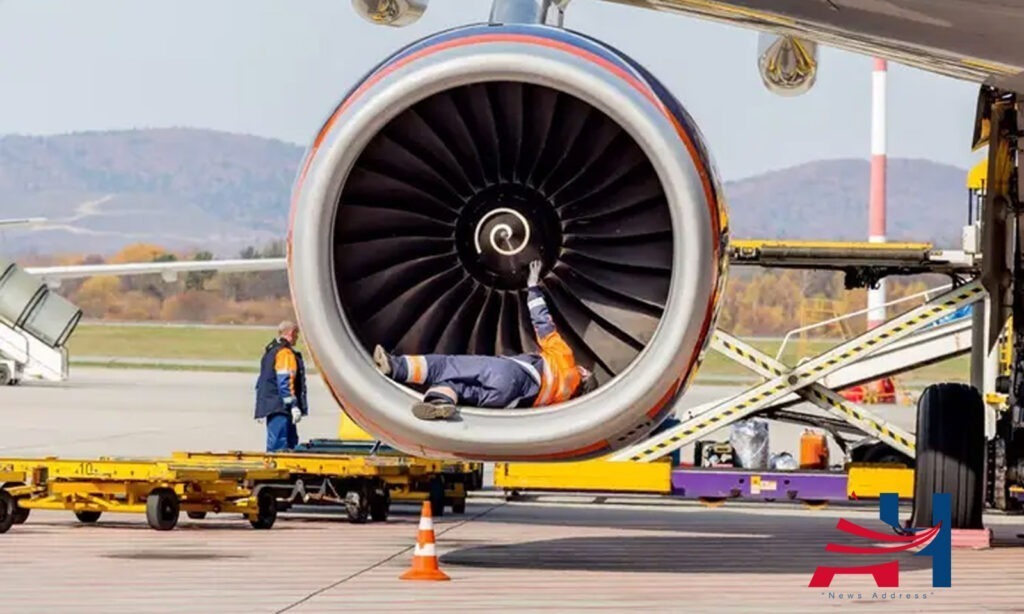


Following its invasion of Ukraine, Russia has faced sanctions from Western aviation giants, according to Politico. These sanctions have blocked access to critical spare parts, forcing Russia to produce its own. However, planes with counterfeit parts are unlikely to be allowed to fly in Europe.
Domestic Counterfeit Spare Parts Production
In a move that violates international regulations and poses safety risks, Russia has decided to produce domestic counterfeit spare parts for Boeing and Airbus aircraft. According to Politico, citing the Russian newspaper Izvestia, the state-owned nuclear energy company Rosatom and Aeroflot will jointly produce various components, from lighting systems to fire extinguishing equipment. Russia’s aviation sector has been unable to access legal spare parts since the sanctions imposed following the 2022 invasion of Ukraine.
Russian media reported that a Sukhoi Superjet 100 passenger plane crashed near Moscow last Friday, killing all three crew members on board. The aircraft had been en route to Moscow’s Vnukovo airport following routine technical assessment and repairs. Despite being designed in Russia, most of the Superjet’s key components come from Western countries, and Russia has struggled to replace the sanctioned parts.
In retaliation for EU and US sanctions, Russia seized about 400 aircraft leased from predominantly Irish companies by Russian airlines. Some of these planes were seized when landing at non-Russian airports, and since then, Russia has been buying most of the leased aircraft. However, EU and US sanctions have closed the skies to Russian airlines, meaning most Russian planes can now only fly to a few friendly countries.
Sanctions also prevent Russia from accessing the maintenance updates and spare parts needed to keep these aircraft operational. Airlines must meticulously document every spare part, from screws to lights and cables, to ensure the planes meet regulatory standards. Last year, the Russian government issued a decree legalizing the ‘cannibalization’ of aircraft for spare parts, allowing technicians to dismantle part of the fleet to keep the rest flying.
Difficulty Flying in Europe
Russia is now compelled to produce its own parts. It announced that these parts will be certified by Russian aviation authorities. However, this does not equate to meeting the standards of original manufacturers and international safety organizations. Andrew Charlton, managing director of Aviation Advocacy, stated, “Sanctions or not, no Russian aircraft with domestically produced parts, not certified or overseen by Boeing or Airbus, will be allowed to operate in Europe. Given that Boeing and Airbus aircraft are certified by the US Federal Aviation Administration and the EU Aviation Safety Agency, these regulators must also certify the spare parts or be assured of the certifying authority’s standards. This cannot be guaranteed in this situation.”
Reactions from Aviation Giants
Both major aircraft manufacturers have stated they will not participate in Russia’s new initiative. A Boeing spokesperson said, “In March 2022, we suspended our significant operations in Russia, including providing parts, maintenance, and technical support to our customers.” An Airbus spokesperson added, “Airbus can track original parts and documents and identify end-user commitments. However, there is no method for original equipment manufacturers to monitor non-original parts, documentation, and services.”
Russia’s Dilemma
The lack of access to Western parts and technicians is an increasing problem for Russia. Last week, it was reported that the country’s largest private airline, S7 Airlines, had to ground dozens of aircraft due to technical issues. While Russia’s Federal Air Transport Agency (Rosaviatsiya) reported a decrease in air accidents in 2023, independent media outlets Moscow Times and Novaya Gazeta Europe have reported the opposite.
© www.aerohaber.com | www.tr.aerohaber.com
Note: Aviation news on our news site cannot be used without citing the source.