


Saudi Arabia’s giant airline project faces Boeing delays and a crisis-ridden Middle East environment
Riyadh Air has entered a difficult launch phase due to Boeing 787 delivery delays and geopolitical crises in the Middle East. Established by Saudi Arabia to compete with Emirates and Qatar Airways, the airline aims for a strong entry into the premium passenger market.
Even before launching its first commercial flights, Riyadh Air is facing one of the most complex challenges in the global aviation industry. The airline, established as part of Saudi Arabia’s goal to reshape the balance of power in Gulf aviation, has been pushed into a turbulent start due to delays in Boeing 787 deliveries and security crises across the Middle East.
When the Riyadh administration announced the project in 2023, the objective was very clear: to create a next-generation premium airline that would directly compete with global brands such as Emirates and Qatar Airways. Rapidly growing post-pandemic air travel demand, rising ticket revenues, and the global influence of Gulf carriers had created a strong foundation for the project. However, operational realities quickly diverged from the plans laid out on the table.
Riyadh Air’s growth plan stalled by aircraft delivery delays
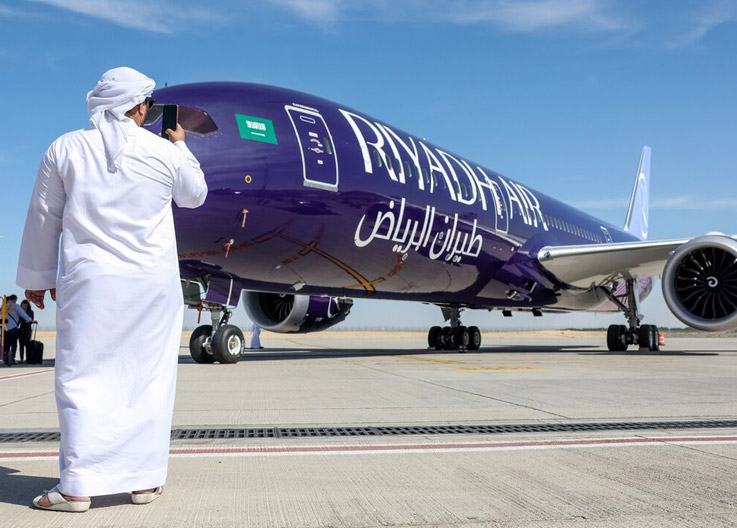
The Boeing 787-9 Dreamliner fleet, which will form the backbone of the airline, was scheduled to enter service by 2025. However, slowdowns in production and certification processes have seriously disrupted Riyadh Air’s timeline.
According to sources, certification procedures conducted by the US Federal Aviation Administration (FAA) took longer than expected. In particular, safety tests related to new cabin concepts and premium-class equipment became key factors slowing down the delivery chain.
In a statement from Riyadh Air, the company said that production of seven aircraft has been completed and that they have reached the final certification stage, although no clear timeline was provided regarding when the aircraft would become operationally ready.
This situation is creating a new area of pressure not only for Riyadh Air, but also for Boeing’s wide-body aircraft programs. Inspection processes that became more sensitive after the 737 MAX crises have pushed relations between the manufacturer and regulatory authorities into a more fragile phase. Similar pressure is also known to be affecting the Boeing 777X program.
Gulf aviation operating under the shadow of war
The challenges facing Riyadh Air are not limited to aircraft deliveries alone. The airline is preparing to launch operations at a time when security crises in the Middle East are directly affecting air transportation.
Due to tensions in the region, many Gulf airlines are struggling with flight cancellations, route changes, and weakening demand. Major carriers such as Etihad Airways, Emirates, and Qatar Airways have been forced to reshape their operational networks. Temporary operational disruptions have occurred at some airports, while airspace risks have made flight planning more costly.
The fragility seen particularly in the long-haul transit passenger market is critically important for the premium segment targeted by Riyadh Air. This is because the airline’s business model is largely based on high-income transit passengers traveling between Europe, Asia, and the Gulf.
Targeting the Emirates model with a luxury cabin strategy
Riyadh Air’s biggest ambition is to create a new brand perception in passenger experience. With sliding private suite doors in business class, fully flat beds, advanced ambient lighting, and large-screen entertainment systems, the airline is pursuing an aggressive premium strategy aimed at high-income travelers.
So far, the company has ordered at least 39 Boeing 787-9 aircraft, with options for an additional 33 aircraft included in the agreement. In addition, deals have been signed with Airbus for more than 100 narrow-body and wide-body aircraft. Despite this, Riyadh Air still does not have a single aircraft directly delivered into its fleet.
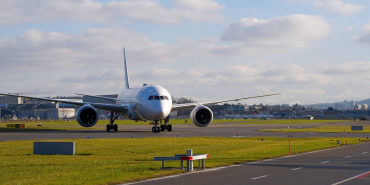
The only 787 currently being actively used by the airline is leased for service and training operations on the Riyadh–London Heathrow route.
The real test for Riyadh Air is only just beginning
Seen as one of the most prestigious projects of Saudi Arabia’s Public Investment Fund, Riyadh Air is not merely a new airline; it is also regarded as one of the showcase projects of the country’s transformation in tourism, logistics, and global branding.
However, in the aviation industry, timing often overtakes strategy. With undelivered aircraft, certification pressures, and regional security risks combining together, Riyadh Air has entered a heavy stress test before even taking to the skies.
Whether a new giant will emerge in Gulf aviation will be determined not only by fleet size, but also by the ability to maintain sustainable operations during times of crisis.