
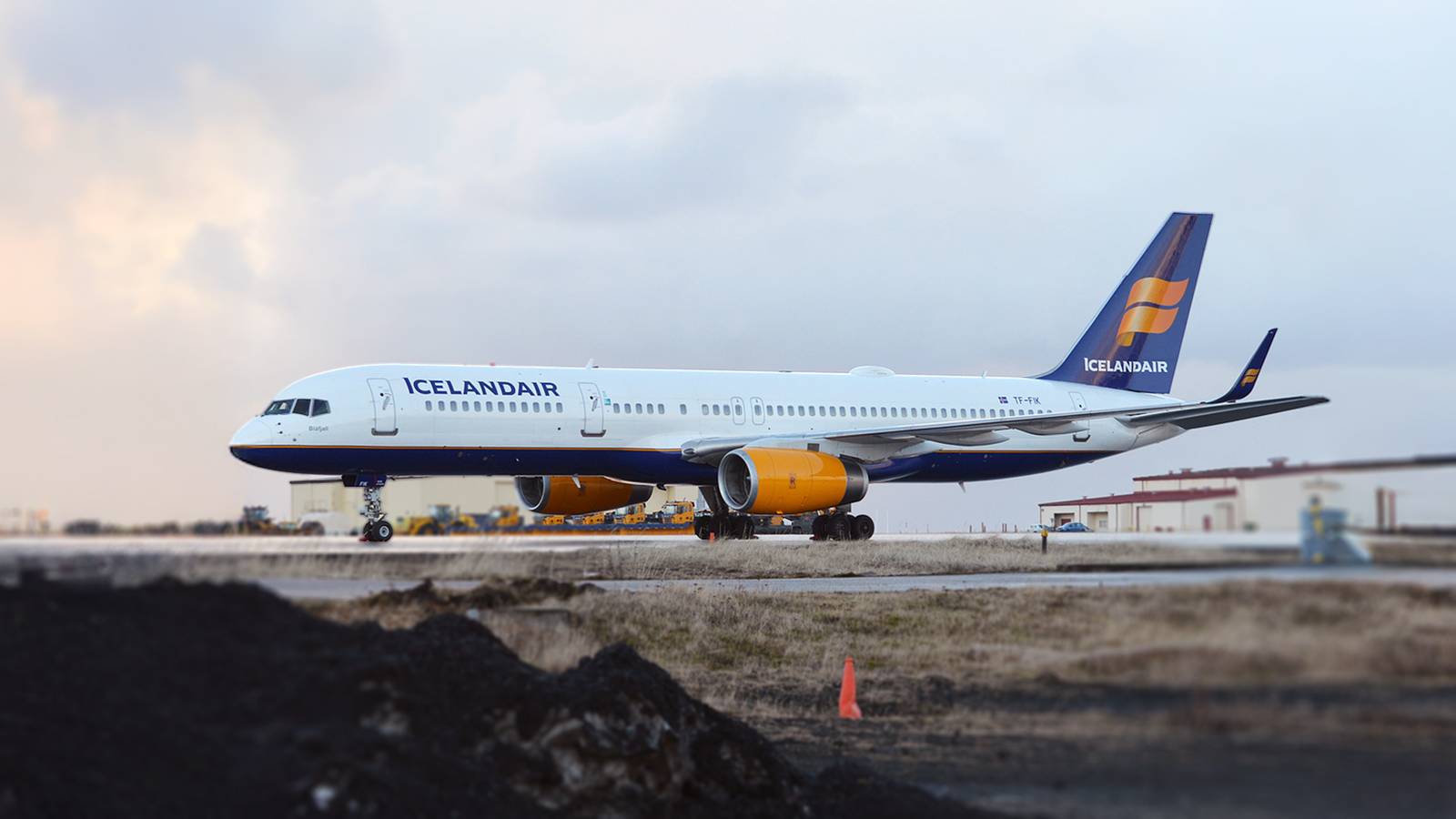


The veteran captain who operated an unsafe flyover in a Boeing 757-200 on his final flight with Icelandair has had his license stripped for two years after it was found that the plane flew below a safe altitude over the pilot’s hometown of Vestmannaeyjar, on the Westman Islands. The incident occurred on April 11, when the captain of the plane flew the aircraft over the archipelago, which is located off the southern coast of Iceland.
The Captain, along with the First Officer, has had their licenses stripped, with both being found negligent. The First Officer has also subsequently lost his license for 12 months and has been on leave since the incident while the investigation was ongoing.
A Low Flyover Of The Westman Islands Has Led To Two Pilots Losing Their Licenses
As described by Breaking Aviation News & Videos, the incident, which was captured and shared on social media by many, involved the Icelandair Boeing 757-200 operating a flyover of the Westman Islands of Iceland on April 11. This was done as a joke by the captain who was operating his final flight for the Icelandic flag carrier, and wanted to pass the aircraft over his hometown located on the Westman Islands.
The incident, which saw the aircraft fly below a safe altitude, resulted in an investigation by the Iceland Transport Authority and the Ministry of Infrastructure. Since being negligent, both pilots have the option of appealing the decision with the departments, but it is not clear whether this will proceed.
Icelandair has also completed its own investigation of the flight, where it was confirmed by the airline’s communication officer. The airline shared the following statement:
“The results of internal investigations are confidential, but their goal is always to increase safety, and the report includes recommendations to that effect.”
The flight was operating between Frankfurt Airport (FRA) and Keflavik International Airport (KEF) on the aircraft that bears registration TF-ISR. There were passengers onboard the plane, which has raised immediate safety concerns about the act.
While it can be common for farewell gestures to be undertaken by final flights for both captains and retiring aircraft themselves, these gestures must usually be pre-approved and conducted within operational limits. The move by the two pilots in this incident has drawn widespread attention due to the lack of authorization and the aircraft’s maneuvers at a low altitude.
As reported by Simple Flying, it is presumed the aircraft descended to 328 feet (100 m) above ground level, which is significantly below the standard minimum for commercial operations. Residents in the area, following the incident, reported noticeable noise and vibration as the plane passed overhead.
A veteran pilot’s final flight takes an unexpected turn as he allegedly performs an unauthorized low-altitude flyover over his hometown.
Icelandair has a robust network of operations to both Europe and North America, and the airline uses its position as a halfway point between the two continents to offer convenient one-stop itineraries, which allow transit passengers to stay in Iceland for up to seven days without additional fare increases. These flights are a major pillar of the airline’s business strategy.
According to the carrier’s website, the airline currently has four 757-200 remaining in operation; these are gradually being retired as the airline opts for more modern and fuel-efficient Airbus A321LR and A321XLR, both of which have the range to reach both North America and Europe from its home at Keflavik. Each of Icelandair’s aircraft carries special names, as detailed below:
Eldborg is the name of an extinct volcanic crater in the west of Iceland, one of the country’s most beautifully formed.
Ketildyngja is a shield volcano southeast of the famous Lake Mývatn, formed as a result of an eruption in Ketildyngja about 3,800 years ago.
Krafla is a caldera about 6 miles (10 km) in diameter and is in a 55-mile (90 km) long fissure zone, in the north of Iceland in the Mývatn region. Krafla’s highest peak reaches 2,684 feet (818 m). There have been 29 reported eruptions in recorded history, the last of which occurred between 1975 and 1984.
Snæfell is the name of an extinct volcano northeast of the Vatnajökull glacier. It has been dormant for at least 10,000 years.
While the pilot’s actions onboard this aircraft type were likely done as a joke, these actions have now been reprimanded due to the serious safety concerns that the aircraft, passengers, and crew were exposed to.
Orijinal Haberi Görüntüle