


The Future of Transportation in Indonesia: The Strategic Role of Turboprop Aircraft in Regional Aviation
With its geography of more than 17,000 islands and a population exceeding 280 million, Indonesia is becoming not only the focal point of Southeast Asia but also of the global aviation sector. Challenging transportation conditions make turboprop aircraft a strategic necessity in the country.
The Indispensability of Aviation in Island Nations
In countries with complex geographical structures like Indonesia, transportation is also a critical factor for sociological development. In regions where land and sea routes are limited, turboprop aircraft stand out with their ability to take off and land on short runways and their lower operating costs.
According to 2022 data, Indonesia carried 52.6 million passengers on domestic routes and 7.1 million passengers on international routes. These figures clearly demonstrate the indispensable role of aviation in the country’s infrastructure.
Countries with the Highest Number of Turboprop Aircraft
Indonesia ranks among the leading countries worldwide that prefer turboprop aircraft to overcome geographical challenges:
-
Canada: 800+ aircraft
-
Indonesia: 300+ aircraft
-
India: 200+ aircraft
-
Russia, Brazil, China, Australia, USA, Japan: Around 150 aircraft on average
This table shows that turboprop aircraft stand out not only for geographical but also for economic reasons.
Indonesia’s National Aircraft Dream: Historical Experiences
Following independence, Indonesia placed great emphasis on national aircraft projects:
-
N-250 Gatotkaca Project (1990s): A turboprop aircraft project with a capacity of 50–70 passengers, halted due to the 1997 Asian financial crisis.
-
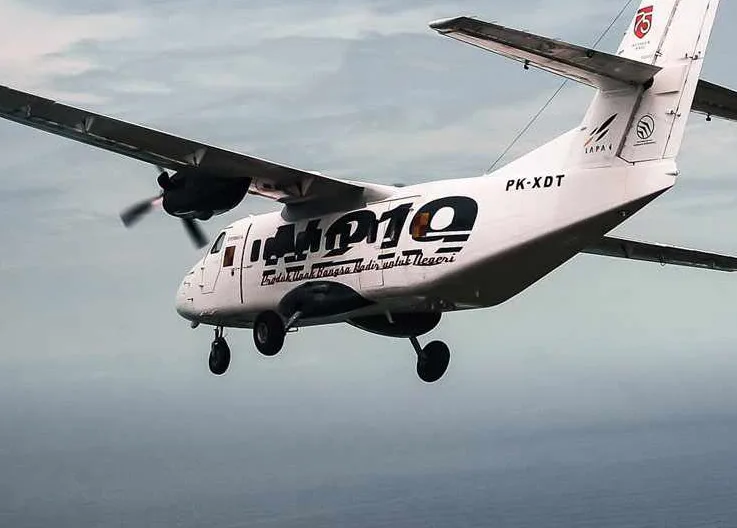
N-219 (post-2003): A 19-passenger aircraft that made its maiden flight in 2017, though its international competitiveness remained limited.
-
N-245 Project: Designed to compete with the ATR42, but faced financial and technical challenges that hindered its success.
These experiences reveal that lack of financing, insufficient market demand, and industrial infrastructure weaknesses have constrained Indonesia’s national aircraft projects.
Consortium Model with Türkiye: A Strategic Solution
The international consortium model proposed by STRASAM offers a viable roadmap for Indonesia:
-
Financial Advantage: Enables investment and risk-sharing.
-
Technical Cooperation: Accelerates certification and production processes.
-
Market Access: Provides competitive advantages in the global market.
Combining Türkiye’s advanced aviation industry capacity with Indonesia’s needs could bring the regional turboprop aircraft vision to life.