



Following the US-Iran ceasefire, Middle Eastern airspace is reopening, but missile threats and operational risks remain. The latest situation regarding airlines including Emirates, Qatar Airways, THY and Pegasus, along with cancellations and flight updates, is in our report.
Although the extended ceasefire agreement between the United States and Iran remains in effect, tensions in Middle Eastern skies have not fully eased. Intermittent missile and drone attacks, particularly along the Gulf corridor led by the United Arab Emirates (UAE), continue to keep regional air traffic in a fragile balance. While airlines are gradually reactivating their operational plans, uncertainty for millions of passengers is still far from over.
Following the UAE General Civil Aviation Authority’s removal of the last airspace restrictions on 2 May, operations centred around Dubai and Abu Dhabi have largely resumed. However, industry sources indicate that extraordinary security protocols remain in place behind the appearance of “normalisation.” The risk in the region is no longer limited to war itself; sudden airspace closures, route diversions and chain-reaction operational crises have become key concerns.
A period of controlled normalisation in Gulf airspace
Since March, UAE airspace has been gradually reopened and managed through controlled corridors for an extended period. The situation significantly increased flight durations and airline operating costs. Fuel planning had to be revised, transit times lengthened and particularly low-cost carriers came under operational pressure.
The reopening of the airspaces of Bahrain, Kuwait, Qatar and Iraq is being regarded as a critical development for regional aviation. However, experts stress that this does not yet mean “stability.” A permanent security agreement between the US and Iran has still not been achieved. Military activity around the Strait of Hormuz also remains one of the key issues closely monitored by the global aviation industry.
Emirates, Etihad and Qatar Airways expanding again
The region’s largest carriers have started expanding their operations once more. Dubai-based Emirates has returned to approximately 96 percent of its global network. The airline is currently operating more than 1,300 flights per week. However, the carrier continues to advise passengers to monitor flight updates even after check-in.
Etihad Airways is operating a limited schedule to more than 80 destinations. While the airline’s flexible ticket policy has drawn attention, the company states that operations will continue to expand “as conditions allow.”
One of the airlines showing the fastest recovery signals from the regional crisis has been Qatar Airways. The airline announced that it aims to reach 150 destinations by mid-June. The Doha-based carrier’s decision to reopen high-risk routes, including Baghdad, has been described by industry observers as “controlled boldness.”
Turkish aviation also affected
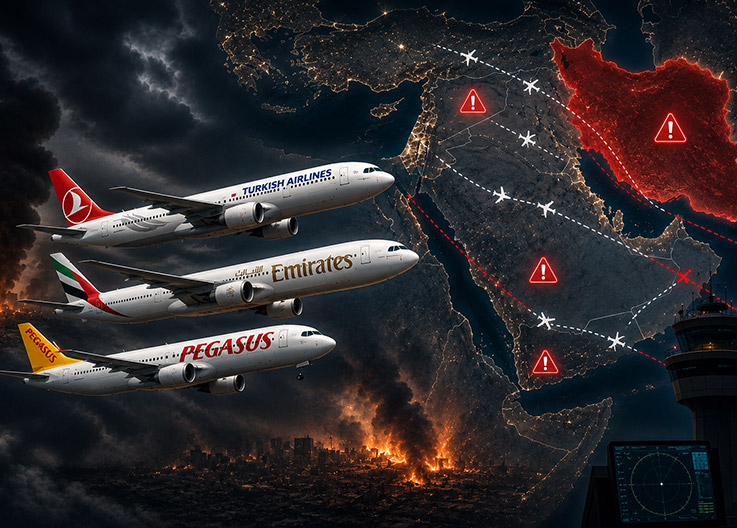
Pegasus Airlines has temporarily suspended flights to several destinations in the region, while Turkish Airlines has reopened bookings for its Istanbul–Dubai route. However, security risks still need to decline before operations can fully return to capacity.
For passengers dependent on transit flights through Dubai, Doha and Riyadh, the situation is not merely about delays. Pressure on the main aviation corridors connecting Europe, Asia and Africa is also affecting global schedules.
European and Asian airlines remain cautious
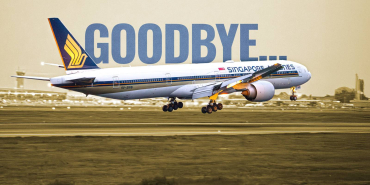
Many international carriers are still unwilling to increase their exposure to regional risks. Airlines including British Airways, Lufthansa, Air France, KLM and Singapore Airlines have extended suspension decisions on numerous routes, including Dubai, Riyadh, Tel Aviv and Beirut.
The cautious approach of European-based carriers in particular reflects the fact that insurance costs and security risks are still considered high. According to aviation experts, airlines are now calculating not only war-related risks but also the operational chaos that could arise from sudden missile threats.
What should passengers expect?
Although regional operations are restarting, the process remains highly sensitive for passengers. Airlines continue to issue frequent warnings regarding last-minute cancellations and route changes.
The most common issues include:
- Extended flight durations
- Delays caused by alternative air corridors
- Technical fuel stops in Europe
- Chain-reaction operational disruptions
- Last-minute flight cancellations
- Loss of transit connections
It is stated that significant schedule changes may occur, especially on long-haul flights transiting through Dubai and Doha. For this reason, airlines are offering flexible ticket options and free date-change opportunities to passengers.
Aviation authorities maintain high alert
In its latest advisory to European airlines, the European Union Aviation Safety Agency stated that all altitude levels in high-risk airspace should be approached with caution. The agency requested carriers to closely monitor regional developments in real time.
Fragile balance in the skies
While air traffic in the Middle East is trying to recover, the aviation sector is battling one of the most complex crises in history. The issue is no longer simply avoiding war zones; it is about keeping the global operational network functioning against security risks that can change within minutes.
Aircraft may once again be taking off over Dubai, Doha and Abu Dhabi today. However, the clearest message from the industry remains this: the skies have reopened, but the threat has not completely disappeared.