


Journalist – Aaron is an aviation and travel journalist with 14 years of experience in the travel and tourism industry. His background spans airport operations, aviation infrastructure, and travel consulting, having worked with global organizations across New Zealand, Europe, and North America. Combining industry expertise with firsthand travel experience across more than 52 countries and five continents, Aaron covers airlines, airports, aviation policy, and the wider travel sector. He is based in Canterbury, New Zealand. His work has been published in Simple Flying and featured by MSN, SAM CHUI Aviation & Travel, EIN News, Pakistan Defence, and Climate Depot.
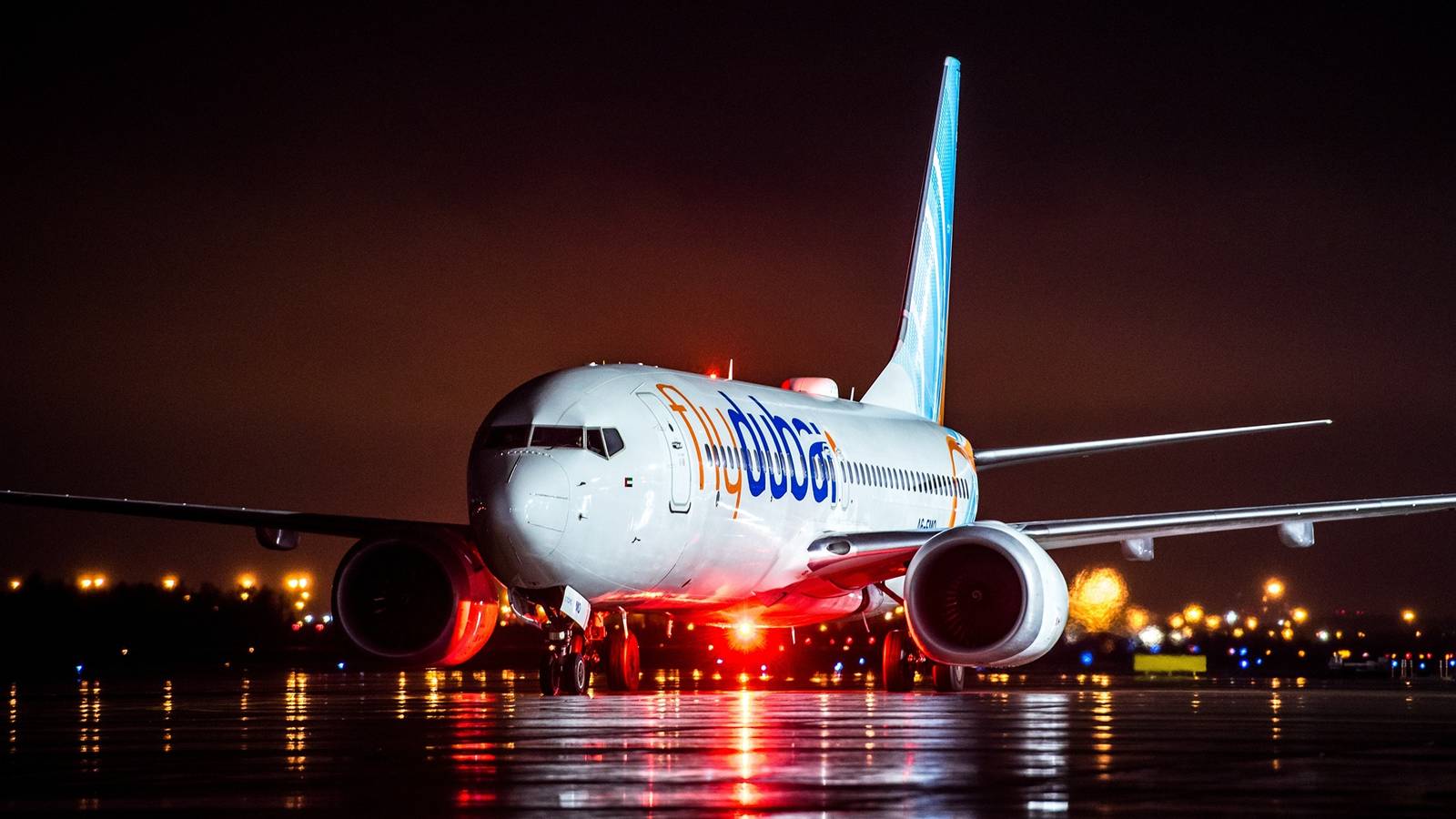
United Arab Emirates carrier flydubai has made the decision to resume flights overflying Iranian airspace. This is the first time the carrier has done so since geopolitical instability forced most major airlines to reroute their operations away from the region. This shift will see the airline resume services across Iran, instead of bypassing it through longer detours that force carriers to travel through corridors such as Iraq.
FlyDubai has signalled that the change was primarily influenced as it would save flight time and excess fuel burn. The first flight to pass through Iranian airspace was that of FZ709 on Sunday, August 17, as the flight traveled from Dubai International Airport (DXB) to Baku Heydar Aliyev International Airport (GYD) on board the airline’s Boeing 737 MAX 8 aircraft.
As analyzed by AirLive, flyDubai’s first flight over Iran shaved around 40 minutes off the total flight time to the capital of Azerbaijan, with the service taking three hours, ten minutes, when compared to three hours, 50 minutes when circumventing the Iranian airspace. While FlyDubai appears to be one of the only carriers making this decision, the European Union Aviation Safety Agency (EASA) has strongly discouraged airlines from doing so.
For airlines operating to and from the Gulf countries, the return to flying over Iranian airspace has several benefits that have influenced FlyDubai’s decision, such as shorter flight times to services in Eastern Europe, the Caucasus, and Central Asia, reduced fuel consumption, and overall easing of airway congestion in overcrowded corridors.
It is ultimately up to each airline to assess route safety based on risk evaluations and coordination with respective civil aviation authorities. Simple Flying reached out to flyDubai for a statement; however, an airline spokesperson could not immediately be reached.
With flyDubai now resuming flights through Iranian airspace, both the carrier and its passengers will enjoy shorter geographical flight paths by using the Iranian Flight Information Region (FIR), with improved fuel efficiency meaning lower emissions and operating costs. The typical flight time to destinations such as the Caucasus will see a reduction of approximately 25% of the total flight time.
Lower flight times will decrease the amount of fuel burnt and will allow the airline to shift away from overcrowded corridors that are currently being used by other carriers, such as above Iraq and Saudi Arabia. Benefits for the airline are listed below:
The removal of detours for flights in Central Asia, Eastern Europe, and the Caucasus will mean shorter flight routes and less flight duration
Cutting out the detour means shorter flights, resulting in less fuel burn
Flights will arrive quicker by traveling through Iranian airspace, instead of through congested air corridors across neighbouring countries such as Iraq
Detailed safety checks and risk assessments have been undertaken by FlyDubai to ensure the safety of passengers and crew
EASA has continually warned airlines to avoid Iranian airspace due to several severe safety risks, and the threat of aircraft misidentification from active air defense systems. The active military zone has seen advisories issued by international aviation authorities due to the volatile flare-ups that can occur between regional powers.
Geopolitical tensions have left a gaping hole in one of the busiest aviation markets in the world.
Operating In Iranian Airspace Despite Numerous Warnings
Multiple national aviation authorities have explicitly warned commercial carriers against flying over Iran, and ongoing security and military risks due to the active conflict, fragile ceasefires, and air defence activations mean that ongoing tension could result in the tragic misidentification of civilian aircraft. EASA has issued several strict Conflict Zone Information Bulletins (CZIB) which advise operators to avoid the FIR completely.
After months of detours that have been caused by the conflict, flyDubai has made the commercial decision to resume flying over the region to save time and money after months of detours inflicted on airlines. The new direct corridor will shave precious time off flight times and lower operating costs that have been incurred by flying around the conflict zone.
Only a select number of destinations in the flyDubai network are using this corridor at present, and other regional airlines such as Emirates and Etihad Airways have maintained their own flight paths to still avoid the region, depending on the destination of the flight. Flydubai has stressed that the decision to resume services over Iran was made only after detailed safety checks.
Orijinal Haberi Görüntüle