
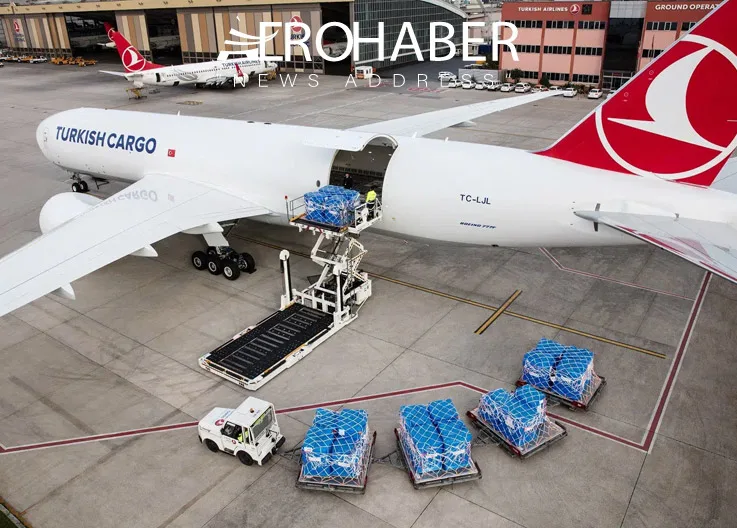


Linz-Hörsching Airport stands at a critical juncture regarding cargo operations, which form the backbone of its operational balance. While cargo activities have long offset declining passenger traffic, the airport now faces the potential departure of one of its largest clients, Turkish Cargo.
The cargo division of Turkish Airlines has confirmed talks regarding the possibility of transferring the four weekly flights between Linz and Istanbul to Vienna Airport. While no final decision has been made yet, removing these flights could significantly distance Linz from its position as a regional cargo hub. If the relocation occurs, DHL Express would be the only remaining operator at the airport.
Cargo Operations: Linz’s Backbone
Linz-Hörsching Airport has increasingly focused on cargo transportation, particularly in recent years as passenger numbers declined. Upper Austria’s export-oriented industrial structure makes the airport an ideal logistics point for transporting high-value goods. Cargo traffic is critical both for revenue stability and employment.
In this context, Turkish Cargo has played a vital role for Linz. The company positioned Linz as an important collection point to transfer its wide product portfolio—from pharmaceuticals to automotive parts—into its Istanbul-based global network.
Vienna: A Stronger Logistics Base
The possibility of Turkish Cargo moving its flights to Vienna aligns with the broader trend of logistics centralization across Europe. Vienna-Schwechat Airport, one of Europe’s leading transfer hubs, offers global integration advantages with a denser flight network and broader connection options.
For Turkish Cargo, this shift could mean:
- Higher load factors
- Shorter transit times
- Reduced operating costs
- Increased operational efficiency
Linz Faces Growing Economic Risk
A potential withdrawal would shake Linz Airport’s revenue structure and the region’s logistics infrastructure. Relying on a single cargo provider (DHL) would significantly increase the airport’s financial risk.
Logistics companies and exporters in the region who actively use Turkish Cargo flights might be forced to turn to Vienna or Munich airports instead, leading to:
- Increased shipping costs
- Longer logistics times
- Reduced competitiveness for regional exporters
Re-Shaping the Airport’s Future
The current situation makes it imperative for Linz-Hörsching Airport to develop a sustainable strategy. Management faces several critical options:
- Attract new cargo clients
- Expand existing DHL operations
- Establish incentive programs for cargo airlines
Strengthen regional partnerships with logistics companies
However, given the ongoing centralization pressures in Europe, maintaining the competitiveness of regional airports is becoming increasingly challenging.