
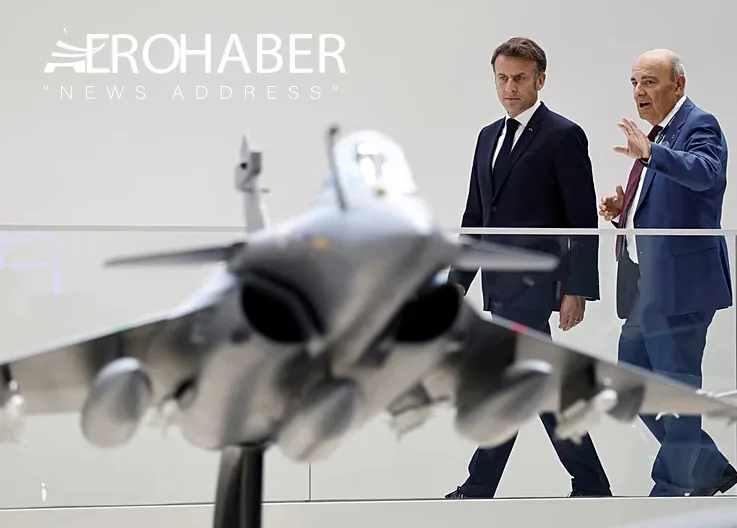


The Future Combat Air System (FCAS), described as Europe’s most ambitious defence project, is at a critical threshold due to long-standing unresolved disputes between Germany and France. According to sources close to the matter, the two countries are preparing to reach a political decision on December 17 to conclude negotiations that have been deadlocked for months.
This date represents a turning point for both Berlin and Paris in their aim to produce a next-generation fighter jet that will replace the Rafale and Eurofighter Typhoon in the 2040s. The goal is also for the two leaders to appear with a unified position ahead of the EU–Western Balkans Summit to be held in Brussels on the same day.
Europe’s Largest Defence Project Is at a Standstill
Launched in 2017, the FCAS program brings together comprehensive components such as a sixth-generation fighter jet, accompanying unmanned systems, a multinational combat cloud, and integrated sensor and communication technologies. However, the project has struggled to progress for years due to structural disputes, primarily industrial conflicts between Dassault Aviation (France) and Airbus (Germany).
Although Spain, the other member of the consortium, plays a less problematic role, major disagreements occur on the Paris–Berlin axis.
Restructuring the Project Is on the Table: Shared Technology, Separate Aircraft
Although no final decision has yet been made, officials and industry representatives state that the most likely scenario is that FCAS will continue in a reduced or restructured form.
One of the options on the table:
- The program would continue as an overarching framework for shared combat cloud and sensor technologies,
- But the most critical component—the fighter jet—would be separated by country.
If this model is implemented, Germany and France would develop their own national variants instead of sharing a single aircraft design.
France Favors a 15-Ton Light Jet, Germany a Heavier 18-Ton Aircraft
According to experts, the divergence stems from the two countries’ operational needs:
- France wants a 15-ton aircraft light enough to land on an aircraft carrier.
- Germany, on the other hand, prefers an 18-ton design focused on air superiority.
This divergence is seen as a new version of the historical tension that arose when France withdrew from the Eurofighter project due to past disputes over design authority and went on to develop the Rafale.
“Mid-December” Decision Timeline Set
According to an earlier Reuters report, following the meeting between Macron and Merz in Berlin, the German Air Force prepared a roadmap targeting a decision in “mid-December.”
Officials note that developments that could shift the balance may occur before December 17, but project circles state that this date is considered the final threshold for political clarity.