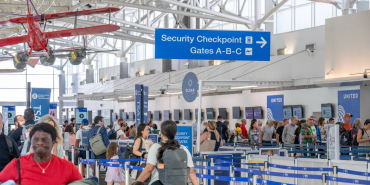




The International Air Transport Association (IATA) has released a report revealing that separating domestic and international passengers at airports through biometric digital identity technology instead of physical barriers can offer significant benefits in terms of cost, operational efficiency, passenger experience, and sustainability.
Passenger Integration Programme: A New Era at Airports
According to the Domestic and International Passenger Integration Programme (DIPIP) report jointly prepared by IATA and the engineering and project management company AtkinsRéalis, passenger flows physically separated at airports can be managed under one roof through biometrics-supported digital identity systems.
IATA’s Senior Vice President for Operations, Safety and Security, Nick Careen, said: “Biometric digital identity can meet both security and regulatory requirements without the need for inefficient and costly physical separations. This technology reduces costs for airports and airlines while offering passengers a better travel experience.”
20% Improvement in Passenger Satisfaction
The report revealed that the digital identity application provides passengers with shorter processing times, simplified flows, and higher satisfaction levels.
It is stated that the efficiency gains could shorten connecting flight times by approximately 20%.
Million-Dollar Savings for Airport Operators
The study shows that large-scale airports could achieve up to an 11% reduction in staff costs.
A ground handling company is projected to save $5.3 million annually through digital identity integration.
A medium-sized airport serving 10 million passengers per year could save up to $80 million in future capital expenditures through physical space optimisation and reduce its carbon footprint by 18,000 tonnes.
This reduction is equivalent to removing 4,000 vehicles from traffic annually.
Phased Implementation Within the Regulatory Framework
The DIPIP report proposes a three-phase implementation plan within existing regulatory frameworks:
Basic, Integrated, and Final Stage.
In the final stage, passengers will be able to complete identity and travel checks remotely, experiencing a seamless journey from home to aircraft.
AtkinsRéalis Aviation Market Director Gareth Vest stated: “Biometric identity will be a key element in the future of aviation, reducing costs, enhancing security, and transforming the passenger experience.”
Emphasis on Industry Collaboration
Careen said: “For this transformation to happen, airlines, airports, and governments need to work together. By modernising existing frameworks, we can elevate both security and the passenger experience.”