
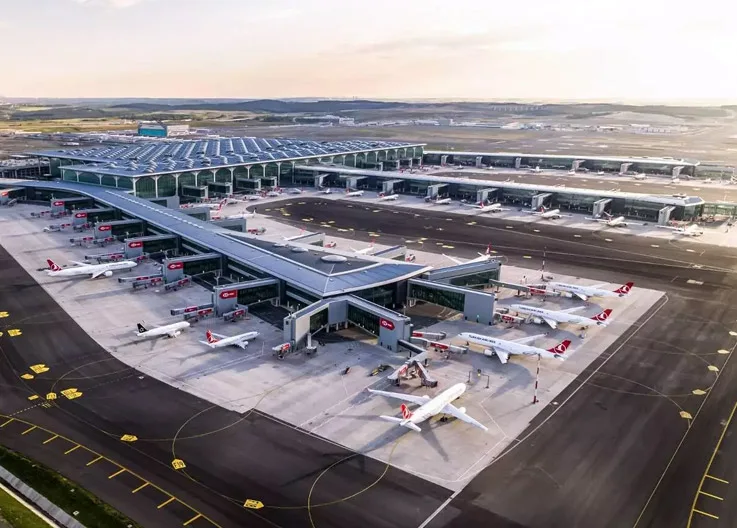


The German Aviation Association (BDL) officially announced that as of 2024, the title of Europe’s largest cargo airport has shifted from Frankfurt Airport to Istanbul Airport. This development marks a historic shift in the balance of air transport across Europe.
Istanbul Airport on the Rise, Frankfurt in Decline
According to the statement, Istanbul Airport increased its annual cargo volume by 39.6% in 2024, surpassing Frankfurt. In contrast, Frankfurt Airport saw a 2.5% decline during the same period.
Pierre Dominique Prümm, Executive Board Member of Frankfurt Airport’s operator Fraport, stated, “This development highlights the urgent need to reassess Germany’s role in the global air cargo market.”
High Ground Costs and Bureaucracy Leave Germany Behind
In a press release from Berlin, it was emphasised that high ground costs and growing bureaucratic obstacles in Germany have significantly weakened the competitiveness of the air transport sector. Meanwhile, flexible, digitalised, and low-cost logistics hubs like Istanbul have gained a competitive edge.
According to BDL data, Germany’s air freight sector grew by only 1.2% in 2024, while global growth reached 6%.
Five-Point Reform Package from BDL
To maintain Germany’s strategic position in air freight, the German Aviation Association has proposed a five-point reform plan, which includes:
-
Government intervention to reduce ground handling costs
-
Digitalisation of EU aviation safety standards
-
Flexible and demand-based shift systems at cargo hubs
-
Harmonisation of customs procedures across the EU
-
Simplification of import VAT processes
Commenting on the proposal, BDL Director General Dr Joachim Lang said, “We want to urgently address this programme with the new government. Our competitiveness in air transport is under historical pressure.”
Air Freight: A Lifeline for German Exports
Air cargo plays a critical role in Germany’s foreign trade, particularly in high-tech sectors such as mechanical engineering and pharmaceuticals. Around 25% of Germany’s exports outside the EU are transported by air. Therefore, a decline in air freight performance poses serious risks for the national economy.