


Turkey Approves Egypt’s Participation in the KAAN Program: A New Defense Balance in the Middle East
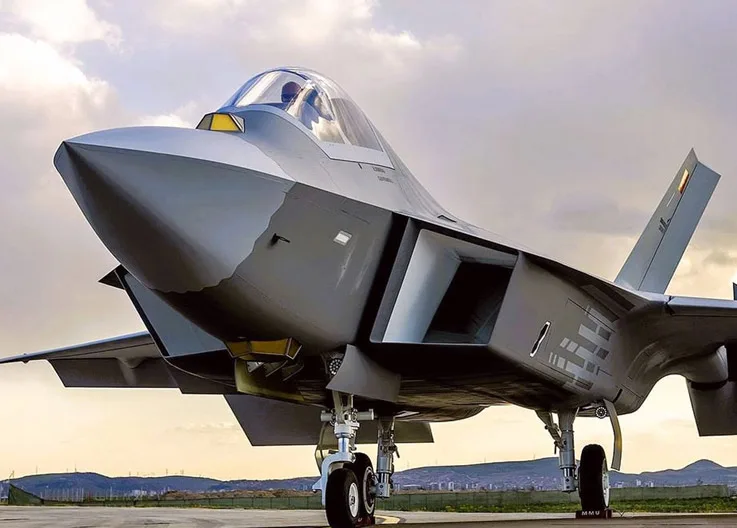
Turkey has approved Egypt’s participation as a co-producer in the development program of the fifth-generation national fighter jet, KAAN. This move is regarded as a strategic collaboration that could alter the regional air power balance.
Historic Decision for Joint Production
With Egypt joining the KAAN program, led by Turkish Aerospace Industries (TUSAŞ), Cairo will assume the role of co-producer and manufacturer. The two countries are expected to sign a memorandum of understanding formalising technical cooperation and joint production efforts by the end of 2025.
Egyptian Air Force experts have already begun reviewing the KAAN prototype, which is projected to become operational by 2030.
Military and Technological Advantages
Former Egyptian Air Force Chief of Staff General Hasan Rashid welcomed the collaboration. He emphasized that the partnership will provide Egypt access to cutting-edge technology, reducing reliance on external suppliers.
KAAN, also known as the Turkish National Combat Aircraft (MMU), is a twin-engine platform equipped with stealth technologies and optimised for air superiority. It is considered in the same class as the U.S. F-35, Russia’s Su-57, and China’s J-20.
Shifting Regional Balances
Ali Bakir, a lecturer at Qatar University and researcher at the Atlantic Council, stated that this collaboration could help balance Israel’s F-35 superiority in the region. Israel remains the only country in the Middle East operating the F-35 due to strict U.S. export controls.
Meanwhile, Saudi Arabia and the UAE are reportedly closely monitoring the KAAN program, with the aircraft potentially entering service as early as 2028.
Egypt’s Modernization Drive
In recent years, Egypt has taken significant steps to modernize its fighter fleet. Alongside Rafale and MiG-29 acquisitions, negotiations are underway with South Korea for the FA-50. Talks with the U.S. on F-15s continue, while alternative options such as China’s J-31 are also being considered.
The KAAN partnership will not only provide Egypt with a modern fighter jet but also allow it to take a leading role in Africa’s defense production. With technology transfer and local assembly capabilities, Cairo could become a candidate for exporting both aircraft parts and assembled jets across the continent.
Geopolitical Impact
Experts note that this move represents a strategic gain for both Egypt and Turkey in terms of reduced dependence on Western arms suppliers, technology sharing, and economic benefits. It is also expected to increase Egypt’s influence within the African Union and the Arab League.