


Boeing has always been good at designing and selling compelling airliners. Most of its major commercial aircraft projects have been popular, particularly in its home country, the US. Even recently, the 737 MAX and 787 have been extremely well-received. The Boeing 777X, however, has been a relatively slow seller, largely because it occupies a smaller market space compared to other Boeing models, and it notably hasn’t received any orders from US airlines.
Delta Air Lines only ordered 18 777s and retired its fleet during the pandemic, but American Airlines and United Airlines were both major customers for the 777, currently operating 67 and 96 examples, respectively. These carriers are seemingly prime customers for the 777X, and are already major operators of the 787 as well as the 737 MAX. Yet, even with Boeing’s efforts to sell more 777Xs, including reportedly discounting early-production units, the US carriers have stayed away.
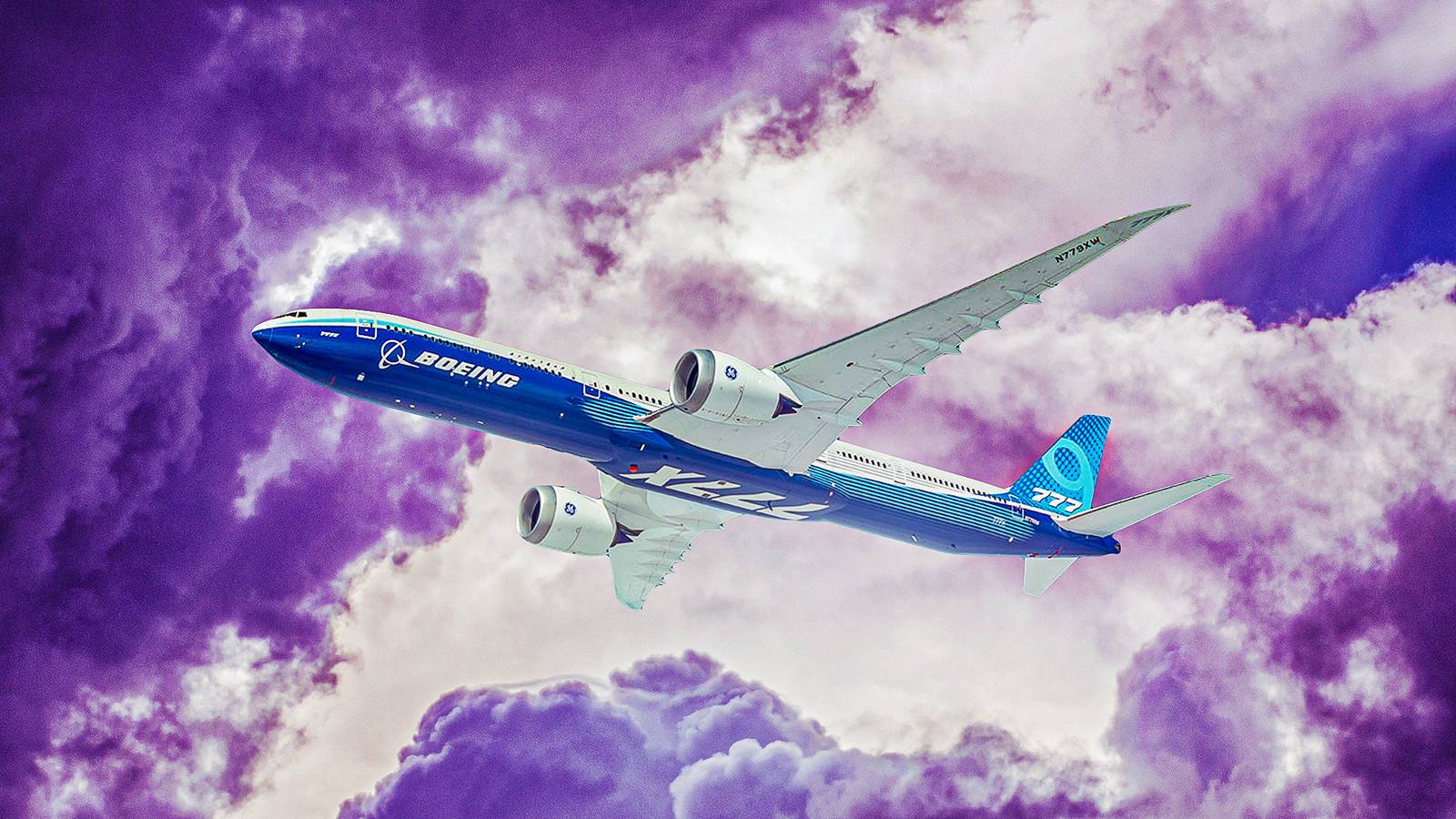
First launched in 2013, the 777X program has received well over 600 orders, split between the 777-8, 777-8F, and 777-9. The 777-8F is a new-build freighter that competes head-on against the Airbus A350F, while development of the passenger 777-8 is on pause due to a lack of orders. When discussing the 777X’s sales prospects in the passenger market, it’s the 777-9 that’s usually being discussed, which has received 521 orders from 12 customers since its 2013 launch.
Emirates is by far the largest 777X customer, having ordered 270 examples in total, and the type has also been ordered in large numbers by Qatar Airways, Cathay Pacific, Singapore Airlines, and other large flagship airlines. Notably, 11 out of the 12 777-9 customers have also ordered the Airbus A350, while nearly all Airbus A380 operators have ordered the 777-9. This is crucial in understanding the 777-9’s market position, because it’s the largest aircraft on sale today.
Boeing originally aimed to market the 777-9 as a replacement for A380s, but most airlines have instead ordered the type to serve as a super-premium flagship aircraft with a first class cabin. Premium demand is high, while premium seats have physically become large, and so the 777-9 is complementing A350s with smaller business class cabins and no first class. The 777-9 is also much larger than the 777-300ER (which is instead close in size to the A350-1000), and its floor space/cargo capacity is the main selling point over the A350.
The 777-300ER remains the most popular variant of the 777, with 838 sales in total. As an upsized replacement for the 777-300ER, the 777-9 is tapping into a substantial market, especially for operators that are looking to grow. In the US, however, the vast majority of 777s are the smaller 777-200ER model, with American operating 47 examples and United flying 55 units (alongside 19 777-200s for domestic flights). The 777-9 is significantly larger than the 777-200ER and is therefore ill-suited to replace these aircraft.
It’s not a given that American and United need to replace their 777-200ERs with an aircraft of the same size; United Airlines in particular has been upgauging network-wide. However, the Chicago-based carrier will mainly use the 787-10 Dreamliner to replace the 777-200ER, and still holds orders for A350-900s that may either be changed to the A350-1000 or (more likely) canceled. The 787-10 is larger than either the 777-200ER or A350-900, while United has specifically ruled out the 777-9 in the past as being too expensive.
Airbus A350-900 (likely to be changed/canceled)
American Airlines is currently shopping for a 777-200ER replacement and is reported to be looking at either the Airbus A330-900, A350, or more Boeing 787s. The 787s are the obvious choice, while the A330/A350 could also be selected depending on price. Notably, the 777-9 has been largely absent from reports because the aircraft is too large, too heavy, and too expensive to replace the 777-200ER, which is sized more closely to the A330-900, 787-9, and A350-900.
The Boeing 777-300ER plays a significant role in United Airlines’ fleet.
As previously mentioned, American and United mainly operate Boeing 777-200ERs, which are far smaller than the 777-9. However, both of them also operate smaller 777-300ER fleets, for which the 777-9 is a direct successor. American operates 20 examples, whereas United flies 22 units, and several airlines have already committed to the 777-9 as their replacement for the 777-300ER. However, American and United’s examples specifically are far too young to be replaced just yet.
American Airlines took delivery of its 777-300ERs from 2012 to 2016, and the aircraft have an average age of 12.5 years. Meanwhile, United’s 777-300ERs were delivered from 2016 to 2020, with an average age of 8.6 years, and are younger than many of the airline’s 787s. For both airlines, the 777-300ER is a fairly new aircraft type that is almost guaranteed to fly into the 2040s. In other words, neither American nor United needs the 777-9 to replace the 777-300ER anytime soon.
Of course, this isn’t the only way that one of these two airlines could use the 777-9. Depending on their growth needs, American and/or United could order 777-9s to complement the 777-300ERs and displace them on flagship routes, while the latter takes over routes currently flown by the 777-200ERs, which are then retired. But while it’s a valid strategy, the route networks operated by these airlines make the massive twinjet far harder to integrate than other aircraft types.
Cathay Pacific operates out of one hub (Hong Kong International Airport). When it examines demand within its network to New York, all connecting passengers are routed onto a single route (Hong Kong to New York), and it therefore only has one route that it can upgauge to meet growing demand, justifying the use of the 777-9. United Airlines, however, has eight hub airports, while American Airlines has hubs in ten airports. This fragments network demand across more routes.
Because of the design and scale of these networks, it’s more beneficial for a US airline to capture growth by boosting capacity out of another hub (upgauging a 787-9 flight to the 787-10) rather than upgauging a route operated by the 777-300ER. Depending on the spoke, US airlines can fill the 777-9 on certain routes, but this would require funneling more connections through that specific hub rather than spreading demand across multiple airports, and US carriers have stayed away from such a strategy.
United Airlines is a powerhouse in Asia, and its hub in San Francisco is the US’s premier transpacific hub, with huge local demand and an excellent geographic location for connections. SFO is also constrained, making it appear as an ideal location for United to deploy some 777-9s and displace 777-300ERs. However, while it’s certainly possible, United can also address growing demand by upgauging 777-200ER flights to the 787-10 or by growing out of other hubs like Los Angeles.
The 777-300ER is one of the most common widebody airliners currently in the skies.
The airline industry is anything but stable. United Airlines could likely fill a 777-9 today on its route from San Francisco to Tokyo, or from San Francisco to Manila, but this plan falls apart if travel demand declines or if demand to a specific destination/region drops. If this happens, then the carrier is left with a fleet of expensive 777-9s with hundreds of seats that don’t have anywhere to fly to. A Boeing 787-10 or even an Airbus A350-1000 is a cheaper aircraft to purchase and operate while also being smaller, making them less of a liability.
This is also true for other airlines that have ordered the 777-9, but the aircraft’s customers have a clear need for the plane within their networks. US airlines do not, and while they certainly could find a place for it, the 777-9 isn’t necessary. As a whole, the 777-9 is a pricey aircraft that’s not versatile and is optimized for airlines with only one hub, not for US carriers with multiple hubs spread out across the US.
Another factor behind the 777-9’s limited appeal in the US is integration costs. Unlike aircraft like the Airbus A330neo or Boeing 737 MAX, the 777-9 has significant parts differences from prior 777 models, and pilots would need transition training from the 777 or 787. These would admittedly be short courses, but they can still be costly. Given that the aircraft will be costly to integrate, expensive to purchase, inflexible, and doesn’t fit cleanly into their networks, it’s difficult to see one of the US legacy carriers purchasing the latest generation of the 777.
Orijinal Haberi Görüntüle