


WASHINGTON — Aerospace giant Boeing is developing a cheaper version of a radar seeker, a key technology for offensive and defensive weapons that has often been a choke point for missile production, the company announced today.
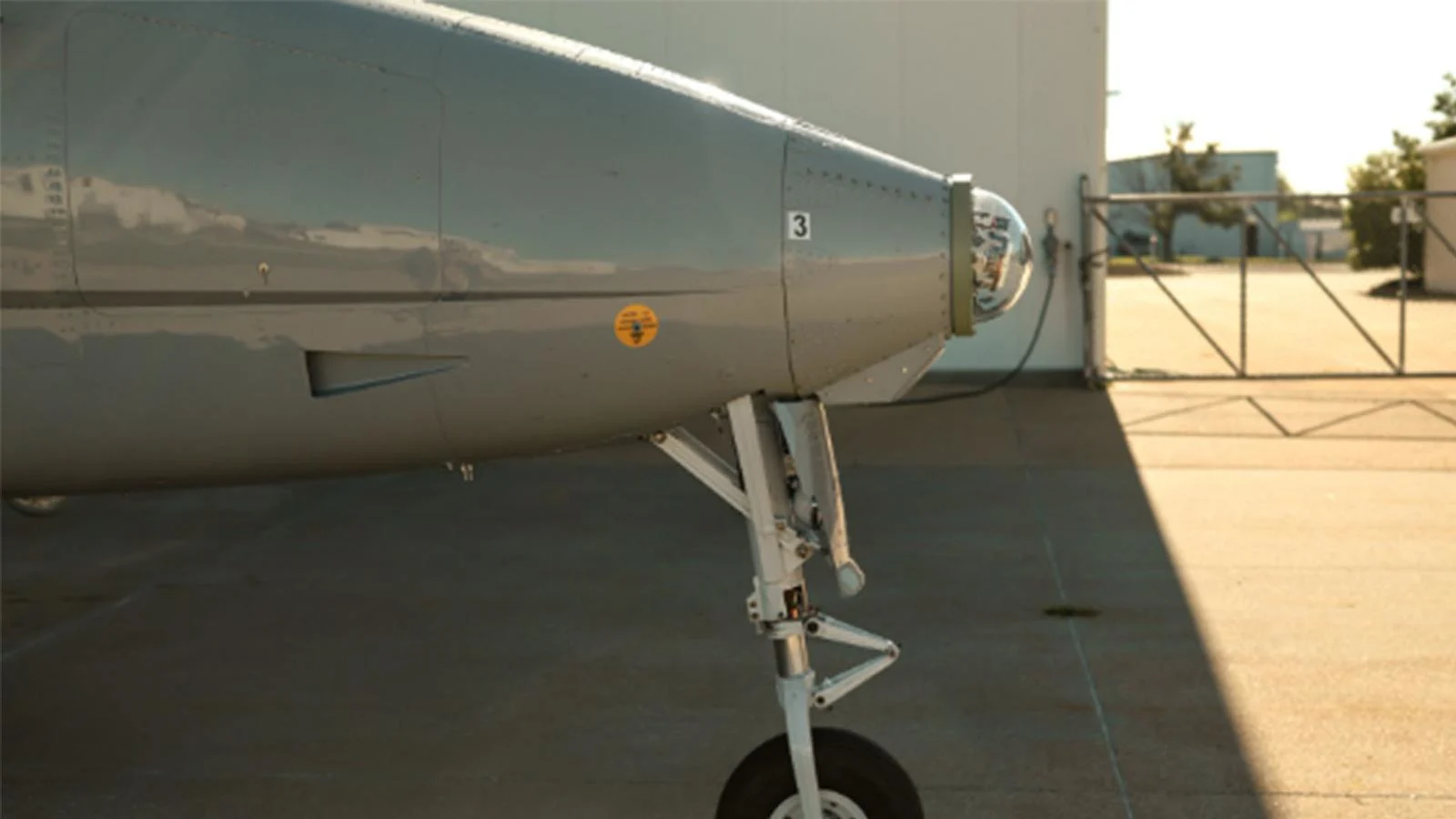
The new seeker, called an Ultra Low-Cost Seeker (ULCS), has successfully demonstrated it can withstand the harsh conditions of flying atop a rocket while detecting and tracking targets, according to a Boeing press release published today. Without offering a timeline for entering service, the release says that “multiple flight tests” are planned next year that more closely mirror desired end-use cases.
A seeker is essentially what guides a weapon to its target in the moments leading up to a hit. Mounted on a missile’s nose, a seeker can use different types of guidance — including heat-seeking infrared, radar and lasers, among other technologies — or some combination for redundancy and greater accuracy. Seekers can be mounted on offensive weapons like a cruise missile or defensive weapons like air defense interceptors.
The ULCS comes as the Pentagon is pushing industry to deliver a greater volume of weapons at a lower cost, particularly as the ongoing war with Iran burns through expensive and sophisticated munitions. Boeing says the ULCS is aimed at bolstering “affordable mass for air, land or maritime strike,” and that the company is examining applications for air and missile defense, direct attack and cruise missiles.
“We still have more work to do but the rapid testing our teams have completed prove that this capability is real and will fundamentally change how we look at seeker affordability across our programs,” Steve Wright, Boeing’s senior manager for weapon sensors and advanced guidance, said in the release. The announcement coincides with the opening day of the Space and Missile Defense Symposium in Huntsville, Ala.
Notably, Boeing produces the seeker for the greatly in demand PAC-3 interceptor missile used in the Patriot air defense system. The PAC-3 seeker itself has been a chokepoint for Patriot production in the past, and the Pentagon earlier this year announced a framework agreement to triple its production over the next seven years. (Similar to the seeker used in the PAC-3, the ULCS is radar guided.)
Boeing’s release says the ULCS leverages commercial off-the-shelf components that the company modified for military use. The company did not disclose what kind of cost savings the ULCS could achieve, saying only it can “dramatically reduce per-unit costs and enable precision munition employment at scale across programs.”
Similarly, Northrop Grumman today revealed that it has dubbed its 50 mm gun-based air defense system the Raid Hunter, which the company says can be used for short-range air defense against threats like drone swarms and cruise missiles.
Kenn Todorov, vice president and general manager for command and control and weapons integration at Northrop, explained that a key distinguishing feature of the Raid Hunter is its cannon-fired 50 mm munition. The munition is maneuverable — Todorov declined to specify how — and is networked with a sensor system to help guide it to its target, where it would then detonate via a proximity fuse.
“We believe in the capability, and we believe it’s going to be different than many of the other gun-based air defense systems that are out there,” Todorov said during a virtual briefing with reporters today.
Todorov said Northrop is building the Raid Hunter using the company’s XM913 chain gun that the US Army selected for its next-generation tracked troop carrier called the XM30. The firm is also pitching the Raid Hunter with an in-house command-and-control system, though Todorov emphasized that an open systems approach can incorporate outside hardware and software.
The Raid Hunter has not been tested against a live target yet, but Todorov said multiple tests are planned and that the company expects to deliver an operational prototype in summer 2027. Once in production, Northrop anticipates the munition’s price tag will cost roughly in the “single 1,000s of [US] dollars” per round, he said.
The XM913 can fire up to 200 shots per minute, according to Northrop. But Todorov noted the Raider Hunter’s precision means the system won’t need to fire what he described as a “wall of lead” against incoming threats.
“The existing systems in the battle space today use a high number of projectiles to hit threats,” he said. “What Raid Hunter is going to do that’ll be different is, because the round can maneuver, you can actually be much more economical in firing against inbound threats.”
Both the Boeing and Northrop announcements come on the heels of an Army competition for a low-cost interceptor launched in June. The Boeing release does not address the competition. Todorov, for his part, said the Raid Hunter is not aimed at the Army’s interceptor program, and that Northrop is examining other solutions for the competition.
Orijinal Haberi Görüntüle