


By the mid-1980s, Pan American World Airways—better known as Pan Am—was in serious financial trouble. Although the airline would continue operating until December 4th, 1991, its mounting losses had already forced it to begin selling some of its most valuable assets.
Among those assets was an extensive Pacific network centered on a hub at Tokyo Narita International Airport. Resembling Continental Airlines’ operation in Micronesia, Pan Am’s Tokyo hub connected the Japanese capital with destinations across Asia, primarily using narrow-body aircraft. The network was made possible by unusual traffic rights negotiated by the U.S. government after World War II, which allowed Pan Am and Northwest Airlines to carry passengers between Tokyo and other international destinations under fifth-freedom authority.
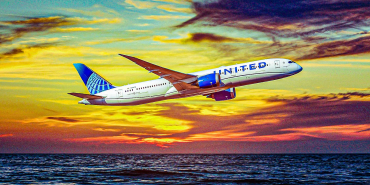
In April 1985, Pan Am agreed to sell its entire trans-Pacific network to United Airlines for $750 million in an effort to ease its financial crisis. The acquisition gave United an immediate foothold in the Asian market. In 1986, the airline positioned its first narrow-body aircraft in Tokyo and launched the first intra-Asian services in its history.
United Airlines had decided to establish Tokyo Narita as a hub for passengers connecting to and from the United States. However, the introduction of long-range aircraft, which were able to operate longer routes, made the Tokyo hub a less attractive option for passengers, who had begun to choose non-stop flights instead.
After signing a joint venture agreement with All Nippon Airways to continue establishing connections in Tokyo, United Airlines ceased its intra-Asian flights from Japan due to a decline in demand in 2017. Nevertheless, the airline did not completely abandon intra-Asian flights, as it continued to operate those from and to Guam, which it had inherited from Continental Airlines.
In 1968, Continental Airlines, partnered with local operators in Micronesia, launched Air Micronesia, also known by its callsign, Air Mike. Guam, an unincorporated island territory of the United States located in the western Pacific Ocean (in the Micronesian archipelago), was chosen as the hub for the new airline, which commenced operations with a Boeing 727. Subsequently, as it added more routes, the airline introduced Boeing 737s, Boeing 747s, and DC-10s, with the latter two connecting the archipelago to the United States and major destinations in Asia, such as Hong Kong and Tokyo.
The airline provided air service for passengers, cargo, mail, and medical supplies to isolated communities, connecting all of these islands through a single route that began in Honolulu and ended in Guam and vice versa. It was popularly known as the Island Hopper route.
United and Continental merged in 2010, acquiring the Guam hub formerly developed by Continental Airlines, continuing its operations, and basing its own aircraft there, as United considered it a strategic hub in the Pacific. Over the years, flight numbers and scheduling were gradually integrated into the United Airlines system, as were the aircraft based in Guam. United Airlines officially removed Continental Micronesia’s air operator’s certificate in 2017, thereby completing the full takeover by United.
On October 28th, 2017, the last United Airlines flight operated by a narrow-body aircraft departed from Tokyo Narita. The Boeing 737-800, based in the Japanese capital, operated flight UA79 to Seoul-Incheon, and the following day concluded its service at that hub with flight UA78 from Seoul to Tokyo, marking the end of United’s Tokyo Hub after 21 years. United Airlines continued to operate in Narita and Haneda, but only on flights to and from the United States and Guam.
However, seven years later, United made an announcement that stunned the entire aviation industry: the return of its Tokyo Narita hub with fifth-freedom flights. On October 27th, 2024, the first flight from United’s current Tokyo Narita hub took off: it was flight UA32 to Cebu, operated by a Boeing 737-800 with registration number N35260.
The Tokyo Narita hub’s rebirth was accompanied by a shift in strategy: operating routes to rapidly growing and mid-sized Asian destinations that do not have a direct connection to the United States. Thanks to its new Tokyo hub, United launched its first-ever service to Mongolia, which now has connections in Tokyo to more than five U.S. cities.
United Airlines is the only US airline to operate flights within Asia using narrow-body aircraft, with its two hubs previously mentioned. The other two major US airlines, American Airlines and Delta Air Lines, have a significant presence in Asia, connecting major cities with their hubs in the United States, all using wide-body aircraft such as the Airbus A350, Boeing 777, and Boeing 787.
With regard to United’s narrow-body hubs in Asia, each operates differently. The hub in Guam serves as a connection point to cities such as Manila, Nagoya, Osaka, Saipan, Tokyo, and Yap, among others, thereby enhancing passenger and cargo connectivity to remote islands. Meanwhile, in the Japanese capital, United operates point-to-point routes, using fifth freedom rights to connect Japan with the Philippines, Mongolia, and Taiwan, and also offers connections to the United States via Tokyo to cities such as Denver, Houston, Los Angeles, Newark, and San Francisco.
The only US airline currently operating intra-Asian flights is United, but this wasn’t always the case. Between 2008 and 2020, Delta Air Lines also operated a hub in Tokyo, from which it offered fifth-freedom routes, served by narrow-body aircraft. Delta did not establish this hub on its own; rather, it was inherited from Northwest Airlines following their merger, as Northwest had launched the Tokyo hub in the 1970s.
Delta Air Lines also provided point-to-point routes, offering flights from Tokyo Narita to Busan, Fukuoka, Kaohsiung, and Nagoya, among others. The introduction of increasingly efficient wide-body aircraft, the lack of a domestic partner in Japan, and the COVID-19 pandemic were the main factors behind Delta’s decision to cease operations at its intra-Asian hub in Japan, while continuing its flights to and from the United States.
According to our database, United Airlines serves 25 destinations in Asia, including those served exclusively by wide-body aircraft, those served exclusively by narrow-body aircraft, and the rest by both. In terms of the number of routes, Guam and Japan are its main markets, further boosted by its intra-Asian flights.
Abu Dhabi, Bangkok, Beijing, Cebu, Chuuk, Delhi, Guam, Ho Chi Minh City, Kaohsiung, Kosrae, Kwajalein, Majuro, Manila, Nagoya, Osaka, Pohnpei, Saipan, Seoul, Shanghai, Singapore, Taipei, Tokyo (Haneda and Narita), Ulaanbaatar, and Yap are its destinations in Asia. China, Guam, Hong Kong, India, Japan, the Marshall Islands, Micronesia, Mongolia, the Northern Mariana Islands, the Philippines, South Korea, Taiwan, Thailand, the United Arab Emirates, and Vietnam, the markets.
*Palau is located in Oceania.
United Airlines offers point-to-point flights to and from Guam, as well as multi-island services that include three to four stops before returning to Guam or ending in Hawaii.
Cover photo: © Steve Chang – JetPhotos (Tokyo Narita, Japan)
The post A look at United’s intra-Asian operations appeared first on Flightradar24 Blog.
Orijinal Haberi Görüntüle