


Australia Surpasses Half a Century in Defence Industry with MQ-28A Ghost Bat
MQ-28A Ghost Bat: Australia’s Unmanned Aerial Vehicle Revolution
After half a century without producing its own combat aircraft, Australia is entering a new era in defence with the MQ-28A Ghost Bat unmanned aerial vehicle (UAV), developed in collaboration with Boeing. The project not only enhances the country’s military capabilities but also represents a strategic step in the global arms race.
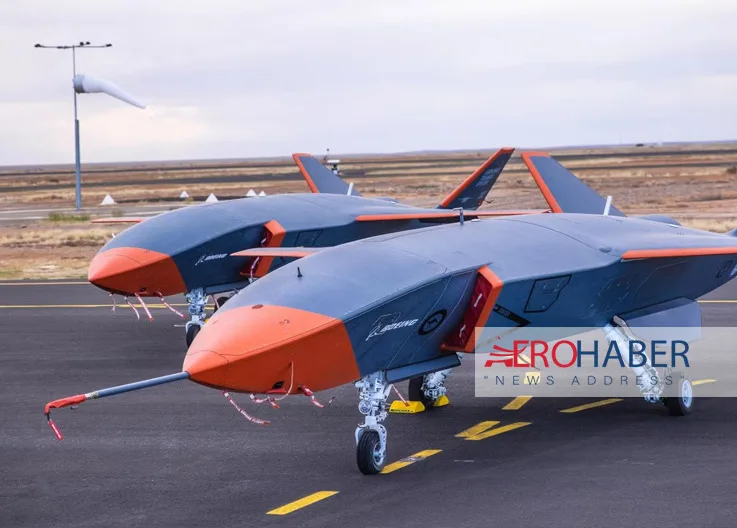
The first flights at the Woomera test range in South Australia showcased Australia’s technological advancements in unmanned systems. Approximately 12 metres long, Ghost Bat drones can be controlled from hundreds of kilometres away during pre-programmed missions.
$650 Million Investment and Domestic Production
Australia has invested $650 million in the joint project with Boeing. The Ghost Bat is the first combat aircraft designed and produced in Australia in 50 years. Boeing officials state that approximately 70% of the components will be manufactured domestically.
The cost of each drone is planned to be about one-tenth of a piloted F-35 fighter jet, providing Australia with significant economic and strategic advantages.
Technical Specifications and Missions of the Ghost Bat
The MQ-28A Ghost Bat stands out with its AI-supported high-autonomy systems. Capable of operating alongside modern manned aircraft, this UAV reduces costs and minimizes human risk. Key technical specifications include:
-
Length: 11.6–12 metres
-
Wingspan: 7.3 metres
-
Maximum speed: 570 knots (approximately 1,055 km/h)
-
Range: 3,700 km (roughly the width of Australia)
-
Maximum payload: 500 kg
-
Propulsion system: Williams FJ33 turbofan engine
-
Missions: Intelligence, surveillance, reconnaissance (ISR), electronic warfare, air-to-air testing
Thanks to its modular mission nose system, the Ghost Bat can be equipped with various sensors and payloads. AI-supported autonomous systems allow it to operate in coordination with piloted aircraft such as the F-35A, E-7 Wedgetail, and F/A-18F Super Hornet. Its wing design and electromechanical actuators provide high speed, manoeuvrability, and low radar visibility.
Global Arms Race and Strategic Implications
Australia’s Minister for Defence Industry, Pat Conroy, stated, “We are witnessing the largest conventional arms race since World War II. China is rapidly modernising its conventional and nuclear capabilities,” highlighting the importance of defence investments in the new era.
Recently, China showcased its “Loyal Friend” unmanned combat aircraft in Beijing, while the U.S. Air Force is working on similar projects. In this context, the Ghost Bat offers Australia both strategic independence and potential export opportunities. The U.S. Navy is reportedly among the potential buyers.
Production, Testing, and International Cooperation
The Ghost Bat’s first flight took place in February 2021, and by 2024, more than 100 test flights had been completed. Australia aims to produce three new prototypes to Block 2 standards by the end of 2025 and conduct air-to-air missile testing.
Initially planned for armed missions, the Ghost Bat is now focused on ISR tasks to reduce operational complexity and increase international collaboration potential. With unit costs between $10–15 million, the Ghost Bat is both an economical and strategic choice.
The project also includes integration with the U.S. under the AUKUS agreement. While Australia provides maintenance for nuclear submarines, American companies collaborate on munitions production, representing a critical step in global security balance.
A New Era in Defence Industry
The MQ-28A Ghost Bat is Australia’s first military aircraft developed since the Vietnam War. This highly autonomous UAV plays a crucial role in the country’s defence strategy and has the potential to reshape regional power balances.
The project provides new opportunities for national security and economic growth, bringing Australia back onto the global defence stage after half a century.