
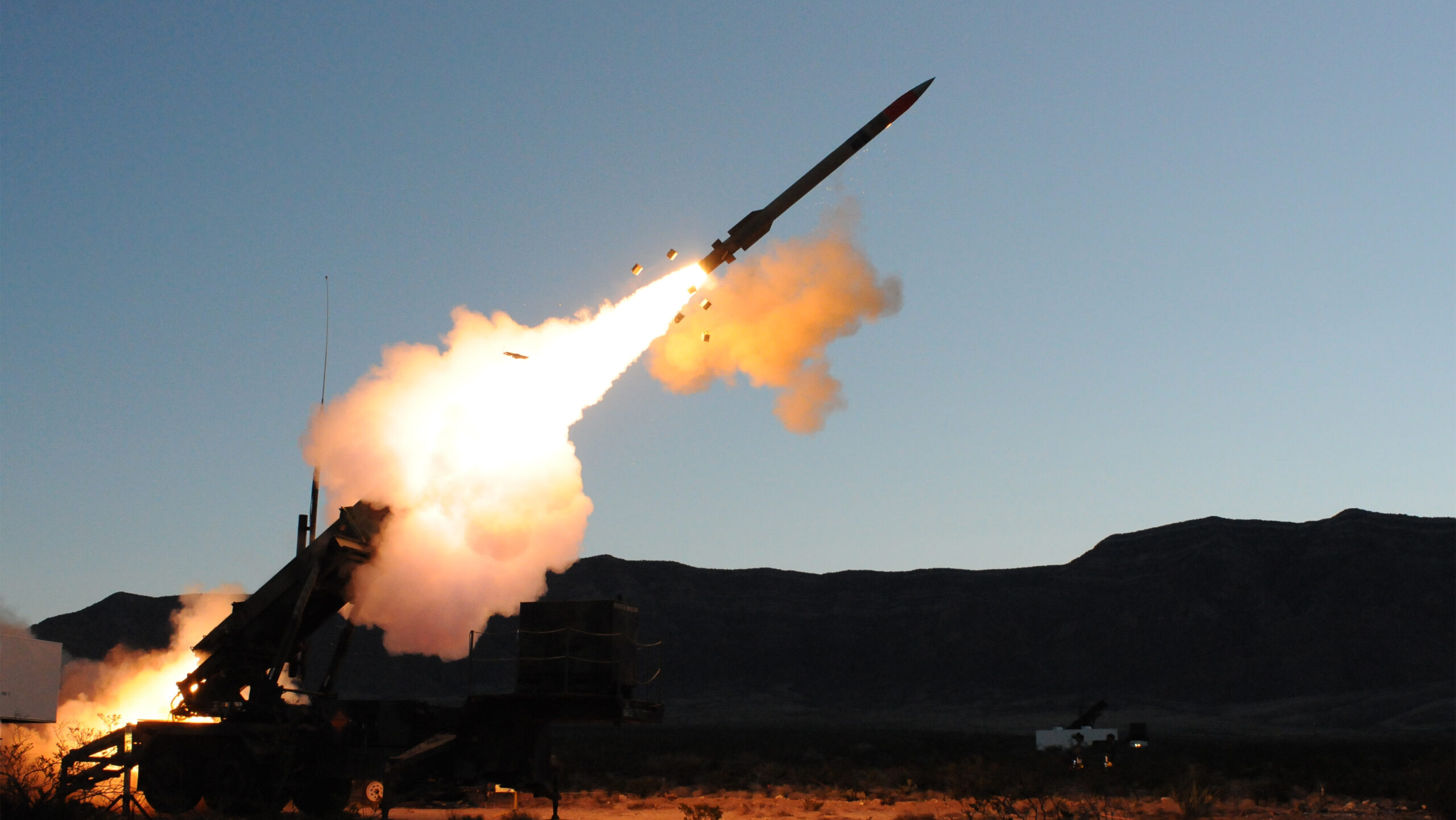


WASHINGTON — The Army has awarded Lockheed Martin an undefined contract action (UCA) modification worth $53.86 billion for PAC-3 Missile Segment Enhancement interceptors, bringing the total value of the seven-year contract to $58.62 billion, the company and the Army announced today.
The contract comes just months after Lockheed was awarded a nearly $5 billion UCA for the interceptors in April.
“Today’s announcement turns concept into reality, providing industry with the long-term demand signals it needs to build a resilient supply chain, scale production, and deliver critical capabilities to our Warfighters at the speed of relevance,” Michael Duffey, the Defense Department’s undersecretary of war for acquisition and sustainment, said in a Lockheed Martin press release today.
The contract is undefinitized, meaning dollar values and quantities could change as negotiations continue. With such contract vehicles, the Pentagon does not have to wait for a final definitized deal and the vendor can get started on production even if there are roadblocks in the congressional appropriations process — notable, as the path forward for key funding around munitions is currently unclear on the Hill.
The UCA “enables a highly resilient, ‘warm’ production line capable of rapidly scaling the delivery of critical PAC-3 MSE interceptors to U.S. and allied forces when and where they are needed most,” the Army stated in its release today.
Lockheed Martin established a deal with the DoD to increase production capacity for the PAC-3 interceptors in January, resulting in the initial $4.7 billion UCA in April. The company inked another deal with the Pentagon to ramp up production for the Precision Strike Missile (PrSM) in March, and late last month, the company signed another massive UCA for nearly $35 billion to increase production of the Terminal High Altitude Area Defense (THAAD) interceptors over a seven-year period.
The additional funding from today’s UCA allows the company to “supercharge” PAC-3 MSE production and triple capacity by the end of 2030, Lockheed Martin’s press release read.
On-demand webinar: Research security in an era of global competition
Watch experts discuss foreign influence risks, evolving DoD policy, and strategies for balancing security with scientific collaboration.
Today’s announcement comes as the Trump administration has been attempting to boost munitions production following the Ukraine-Russia war and as operations in Iran have prompted questions surrounding US munitions levels.
Lockheed Martin’s UCA deal also also falls on the heels of L3Harris’ seven-year framework agreement with the Pentagon to ramp up solid rocket motor production for PAC-3 missiles and THAAD interceptors. As Breaking Defense reported Monday, the deals are the first to center around the critical technology of solid rocket motors, which has long been a bottleneck for missile production as a result of its fractured industrial base.
Orijinal Haberi Görüntüle