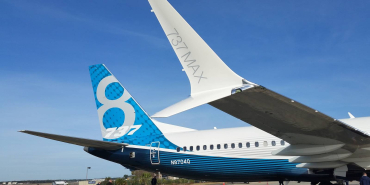




The Boeing 737 MAX aircraft involved in Wednesday's suspected terror incident withstood forces "far beyond" its design, according to US President Donald Trump. The aircraft lost over 14,000 feet in less than 30 seconds after its first officer allegedly stabbed the captain, before an Israeli plumber with no piloting background reportedly grabbed the controls to help level the aircraft.
An analysis of flight tracking data suggests the 737 MAX 8 may have exceeded its maximum operating limits during the dive, and photos taken after landing show a large section of its rudder missing. Initial data shows its ground speed rose from a normal cruise of roughly 400 knots to upwards of 600 knots, before the aircraft stabilized at around 15,000 feet.
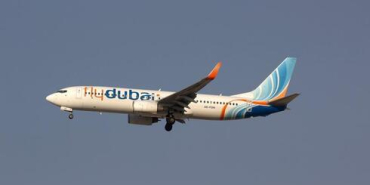
In a social media post early on Thursday, Trump congratulated Boeing and its CEO Kelly Ortberg on the jet's "powerful structural planning and design" after it survived the rapid descent, albeit with significant damage to its rudder. The 737 MAX 8 — operating flight FZ1073 from Dubai International Airport (DXB) to Tel Aviv's Ben Gurion Airport (TLV) — was cruising at around 34,000 feet over Saudi Arabia when the cockpit incident and subsequent plunge began at approximately 05:21 UTC.
According to Flightradar24, between 05:22:07 and 05:22:36 UTC, the 737 MAX dropped from 30,875 feet to 16,750 feet, losing 14,125 feet in just 29 seconds. Its descent rate hit almost 31,000 feet per minute — far steeper than a standard emergency descent — while its ground speed increased from around 400 knots to nearly 600 knots. Following the initial plunge, the aircraft briefly climbed before descending again, eventually stabilizing at around 15,000 feet.
Off-duty flydubai pilots then took over the controls, and the aircraft diverted to Tabuk Airport (TUU) in Saudi Arabia, where it landed safely with all 174 passengers aboard accounted for. Former United Airlines pilot and aviation safety expert Steve Arroyo told The Associated Press he was amazed the jet held together given the extent of its rudder damage. Arroyo said:
"That was a serious descent and strong aerodynamic forces on that rudder for that to happen. I'm just amazed the aircraft didn't come apart."
"That was a serious descent and strong aerodynamic forces on that rudder for that to happen. I'm just amazed the aircraft didn't come apart."
According to Boeing's official specifications, the 737 MAX has a maximum operating speed of Mach 0.82, or around 473 knots, at higher altitudes, while it typically cruises at Mach 0.79, or around 455 knots. Pilots are not permitted to deliberately exceed the maximum operating speed, although commercial jets are designed and tested with a safety margin beyond it.
FAA certification rules require an aircraft's design dive speed to include a margin of at least Mach 0.07 above its maximum speed. Additionally, its structure must also remain free from flutter at speeds up to 15% beyond that limit. These requirements give commercial jets a buffer beyond their normal operating envelope, which can be critical during unexpected events such as Wednesday's rapid descent.
The missing section of its rudder suggests the 737 MAX was pushed beyond its limits during the dive, although it is unclear whether this resulted from excessive speed, the aircraft's extreme maneuvering, or another cause. The aircraft's airspeed data will confirm the full extent of forces that the MAX 8 withstood once the 737's flight data recorder (FDR) is analyzed.
The rule has become a major safeguard for the 737 MAX.
Further accounts of what happened on board have emerged about what was initially reported as an "altercation" in the cockpit. Israeli officials told Reuters that the first officer, an Omani national who had been with flydubai for around nine months, is believed to have stabbed the captain — named as Indian national Smit Machchhar — before passengers and crew rushed the cockpit to regain control.
Machchhar was reportedly lying on the flight deck floor covered in blood when he pressed a cockpit door release button, allowing passengers and crew to enter and overpower his attacker. One of the passengers was plumber Yaniv Hayoun, who first grabbed the controls to level the aircraft before off-duty flydubai pilots took command.
With no reported pilot training, he told Israeli Prime Minister Benjamin Netanyahu that he knew to pull back on the controls after watching the TV show Air Crash Investigation. flydubai has since suspended all flights to Israel as authorities continue their investigation into the suspected terror attack. The carrier typically operates up to ten daily flights between Dubai and Tel Aviv in each direction.