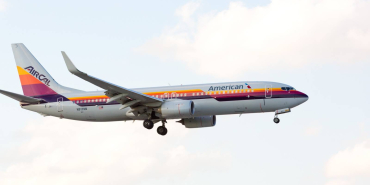

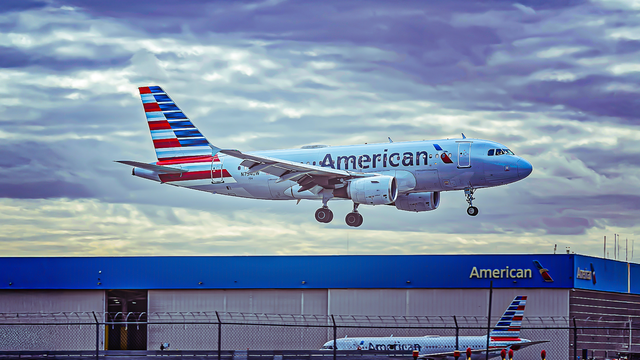


An American AirlinesAirbus A319 bound for Bermuda aborted its takeoff at Miami International Airport(MIA) on Saturday evening June 27, after the flight crew spotted a private aircraft on the same runway shortly after receiving takeoff clearance. The rejected takeoff prevented a potentially serious runway incursion, with the two aircraft coming within approximately one third of a mile, or about 1,760 feet (536 m) of each other before the American jet came to a stop.
The incident involved American Airlines Flight 308, which was scheduled to operate from Miami to L.F. Wade International Airport (BDA) in Bermuda. According to the Federal Aviation Administration (FAA), the crew rejected the takeoff at approximately 6:00 P.M. Eastern Time after observing another aircraft on the runway. No injuries were reported, and the flight later departed safely after the situation was resolved. The FAA has opened an investigation into the incident to determine how the runway conflict occurred.
According to the FAA, Flight 308 had already received authorization to depart when the crew observed a private aircraft occupying the runway ahead, with the callsign Amerijet 461. The pilots immediately initiated a rejected takeoff, bringing the A319 to a safe stop before reaching the other aircraft. Runway incursions are among the aviation industry’s most closely monitored safety events because they involve the incorrect presence of an aircraft, vehicle, or person within the protected area of a runway. Although modern airports rely on multiple layers of air traffic control procedures, cockpit vigilance remains a critical safeguard when unexpected situations arise. The video below is from news stations the night of the event, and shows images of an American Boeing 737. The aircraft involved was an A319.
The FAA said the two aircraft came as close as approximately one third of a mile apart before the American Airlines crew successfully stopped the aircraft. While that distance may appear substantial, it can close rapidly during a takeoff roll, particularly as an airliner accelerates toward rotation speed. The prompt decision by the pilots ensured that normal separation was restored without further incident.
Federal investigators are now working to establish why the private aircraft was on the runway after American Airlines had been cleared for departure. At this stage, authorities have not identified whether the event resulted from a communication error, a misunderstanding of air traffic control instructions, or another operational factor. Runway incursions have received increased attention in recent years following several high-profile close calls at major airports across the United States.
Although such events remain relatively uncommon compared with the millions of aircraft movements handled annually, the FAA and the National Transportation Safety Board continue to prioritize efforts aimed at reducing their frequency through improved technology, controller training, and pilot awareness. The investigation will likely include a review of air traffic control recordings, radar data, cockpit communications, and aircraft movement information to reconstruct the sequence of events.
This Event Highlights The Importance Of Training
While an aborted takeoff can be unsettling for passengers, it is an established safety maneuver that flight crews regularly train for in both simulators and recurrent proficiency checks. Pilots are taught to reject a departure whenever continuing the takeoff would present a greater risk than stopping on the remaining runway. During every departure, crews continuously monitor the runway environment in addition to aircraft performance. If an unexpected hazard appears before reaching the aircraft’s decision speed, known as V1, stopping is generally the safest option.
Training emphasizes rapid decision-making, coordinated crew communication, and maximum braking when circumstances require an immediate halt. The actions of the Flight 308 crew demonstrate the importance of maintaining visual awareness even after receiving takeoff clearance. Although air traffic control provides separation between aircraft, pilots remain responsible for responding to hazards they observe directly from the flight deck.
After the aircraft returned to the taxiway, American Airlines arranged for Flight 308 to continue its journey to Bermuda once it was safe to do so. No passengers or crew members were injured during the rejected takeoff, and the incident concluded without damage to either aircraft. As investigators continue reviewing the circumstances surrounding the runway incursion, the event serves as another reminder that aviation safety relies on multiple independent layers of protection, with well-trained flight crews providing the final barrier when unexpected situations develop.
Orijinal Haberi Görüntüle