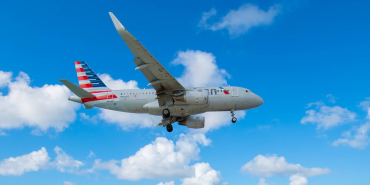



Airbus is moving steadily toward one of the most important aircraft launches in its modern history. In an interview with Aviation Week, CEO Guillaume Faury said the manufacturer is preparing the successor to the A320 family, internally known as eAction, with a view to launching the program in 2030. Entry into service is being targeted for the second half of the next decade, and Faury made clear that Airbus’ timeline has not slipped, saying the company is “very focused, very committed.”
This is far more than a routine product update. The Airbus A320 family is the backbone of Airbus’ commercial aircraft business and one of the most successful jetliner programs ever built. Replacing it will require Airbus to design a new single-aisle aircraft for the world’s largest airline market, even as it continues delivering thousands of Airbus A320neo family aircraft already on order. The company appears to believe it can move first, shape the next narrowbody cycle, and force Boeing to respond.
Airbus Is Already Preparing The A320 Successor
Faury’s comments suggest Airbus is now well beyond the initial discussions about a new narrowbody. The company has been open about the fact that it is studying a next-generation single-aisle aircraft, but the AW interview gave more clarity on the internal momentum behind the program. Faury says that the manufacturer is working through research and technology development, simulations, and multiple pre-project studies:
“We say what we do; we do what we say. We are preparing the successor of the A320. We have a lot of research and development going on, [and] there is work [happening] with partners to review the different options for wings, fuselage, propulsion system and industrial systems. We are moving forward.”
The name currently attached to the project is eAction, with Airbus building toward a formal launch decision in 2030. Faury said the program remains on track for that date, with an entry into service in the second half of the 2030s, giving airlines a rough idea of when the first aircraft could begin replacing today’s A320neo family in fleet plans.
There is also a clear strategic message here. AW put it to Faury that Boeing CEO Kelly Ortberg has suggested his company’s next-aircraft timeline may move to the right because he does not yet see sufficient demand. Faury’s response was simply, “Perfect.” He then elaborated:
“We have a very strong product that will need a very strong successor. We don’t want others to do what we are best placed to do—being strong, being able to invest, having the capacity to put engineering and financial resources into it, attracting appetite from suppliers. We want to be mastering the time. You don’t want to do this reacting to something else.”
In other words, Airbus is perfectly comfortable moving first and fast, particularly if doing so allows it to attract supplier attention, secure engineering resources, and define the next narrowbody cycle before Boeing is ready with its own clean-sheet response.
Replacing The A320 Family Means Replacing A Giant
The challenge for Airbus is that the A320 family does not look like a product in need of urgent replacement. On the contrary, it is still selling in vast numbers, and the larger Airbus A321neo has become one of the most important aircraft in the market. Airbus is therefore trying to manage an unusual transition: it must prepare a successor to a product that remains deeply successful, heavily backlogged, and central to airline fleet strategies around the world for decades to come.
Shows the scale of the program Airbus must eventually replace.
Confirms the aircraft’s long production history and installed base.
Gives Airbus a huge base of future replacement customers.
Airbus still has years of demand for the current-generation aircraft.
Shows how much the market has shifted toward larger narrowbodies
Highlights the scale of current production commitments
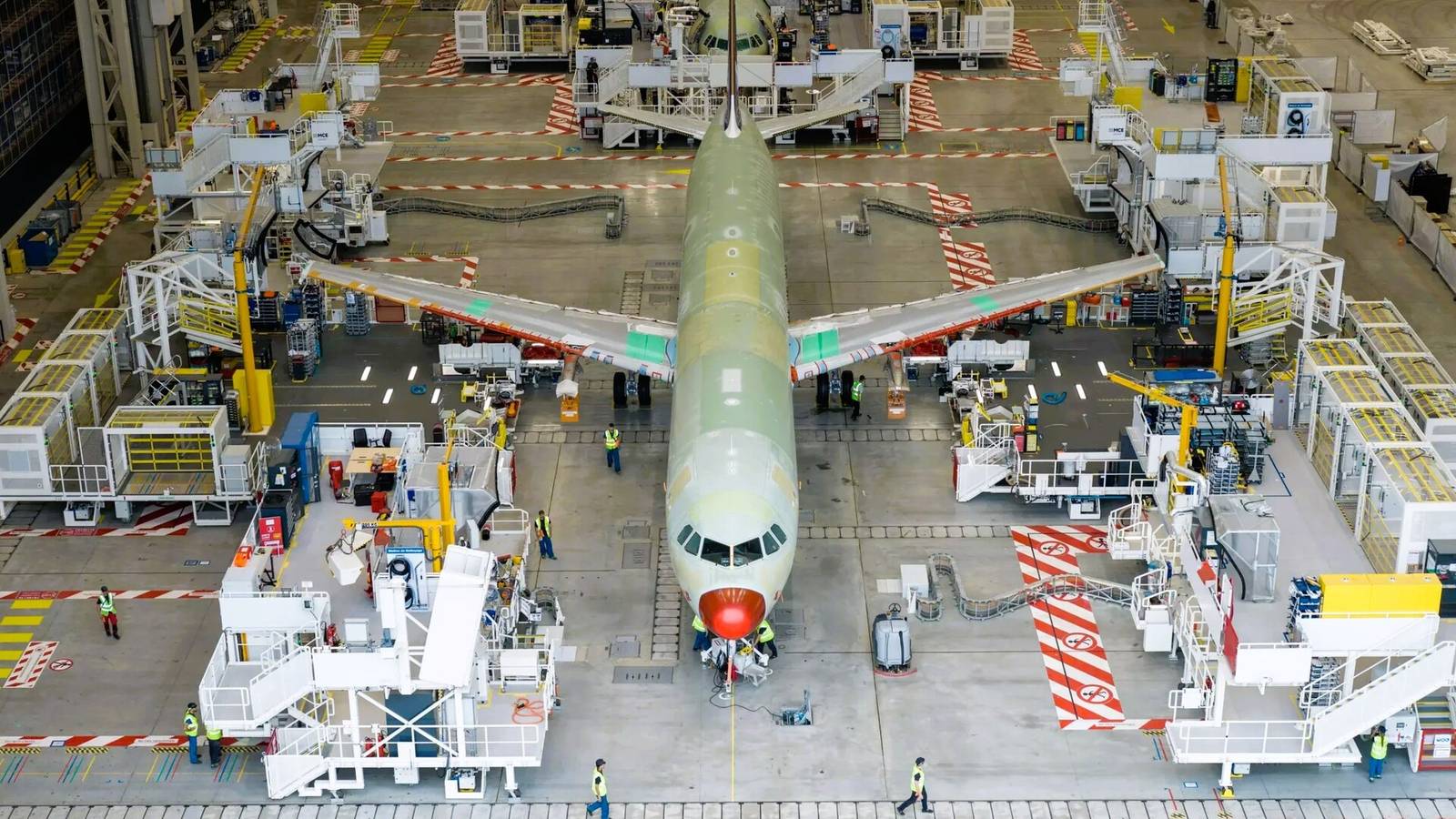
Shows the global industrial system Airbus has built around the program.
Those numbers explain both the opportunity and the risk. Airbus has a vast installed base of A320 family operators that could one day become natural customers for a successor. Airlines that already operate A319s, A320s, A321s, A320neos, and A321neos will eventually need replacement aircraft, and Airbus will want to keep them inside its ecosystem. But the huge backlog, which represents more than 100 months of production even at its goal of a 75 aircraft per month production rate, means Airbus cannot simply switch overnight from one generation to the next.
Faury acknowledged that Airbus expects the A320 family backlog to remain strong when eAction enters service. That means the two aircraft families will almost certainly be built in parallel for a period, much as the A320ceo and A320neo overlapped during the previous transition. As Faury says:
“The A320 will probably remain very popular for a long time. We will have to be flexible in the overlap and the speed of ramp down and ramp up of the two products.”
The difference is that this time, the production system may be more complex with a new, clean-sheet design. Airbus has just expanded its A320 family industrial footprint with ten final assembly lines across Hamburg, Toulouse, Mobile, and Tianjin, and that huge network will eventually have to support a carefully managed generational shift.
Airbus’ A320 family has surpassed 20,000 orders, extending its lead over Boeing.
Engines, Wings And Supply Chain Will Decide The Aircraft
The central question is what kind of aircraft Airbus is actually preparing. The company has previously said a next-generation single-aisle aircraft could deliver a 20–30% improvement in fuel efficiency compared with current-generation aircraft and be capable of operating with up to 100% sustainable aviation fuel. Airbus has also highlighted several key technology areas, including more efficient engines, possible open-fan propulsion, long foldable wings, hybrid-electric architecture, lightweight materials, and more connected aircraft systems.
The engine decision could be one of the most important. Today’s A320neo family is offered with two engine choices: the CFM International LEAP-1A and the Pratt & Whitney PW1100G. Faury said Airbus would notionally prefer to offer two engines on the next aircraft, but he also made clear that a single-source engine model could be acceptable if the performance and risk case is strong enough. That would be a major strategic choice, balancing airline flexibility against simplicity, development cost, certification work, and supply chain exposure.
The wing may be just as important. Longer, more efficient wings can deliver major aerodynamic gains, but they also create airport compatibility questions, particularly for single-aisle aircraft that must operate from crowded short-haul gates. Foldable wingtips, already used on the Boeing 777X, could be one way to reconcile efficiency with airport constraints, while Airbus’ demonstrator programs could feed future wing technology into the eAction design.
Finally, the aircraft will be shaped by lessons from the supply chain problems of the past few years. Faury said Airbus is looking at ways to remove single points of failure, diversify suppliers, and build more resilience into the next program from day one. That may ultimately be the biggest point: Airbus is not just designing a better A320. It is defining the aircraft, engines, wing, factory system, and supplier base that will shape narrowbody flying for the next 30 years.
Orijinal Haberi Görüntüle