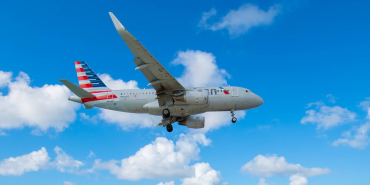




An Air India crew has been removed from flying duties after a Delhi-Amritsar flight briefly entered Pakistani airspace during a holding sequence, turning what began as a routine airport disruption into a sensitive cross-border aviation incident. The aircraft returned safely, but the case has drawn regulatory scrutiny because Pakistan’s airspace remains closed to Indian airlines.
The flight, AI479, was approaching Sri Guru Ram Dass Jee International Airport, Amritsar (ATQ) on June 22 when it infringed into Pakistan airspace. The incident followed a runway inspection triggered by an earlier flight experiencing a bird strike, creating a holding sequence at one of India’s most geographically constrained major airports.
A Busy Border Airport With Little Room For Disruption
Amritsar is a city of more than 2.5 million people in the Punjab region of northern India, and sits approximately 19 miles (30 km) from the India-Pakistan border, and roughly 30 miles (50 km) from the major Pakistani city of Lahore. This makes for a very tight operating environment for the city’s airport when Pakistan closes its airspace to Indian airlines, which is currently the case, the third such closure this century.
ATQ itself is a medium-sized airport, with more than 60 daily flights during this year’s summer schedule. It is notable for having numerous long-haul international services, including Air India’s flights to the United Kingdom, with Boeing 787-8 service to Birmingham International Airport (BHX) and London Gatwick Airport (LGW), as well as multiple connections to Southeast Asia. That level of activity in a confined airspace means that a disruption at Amritsar can have a significant knock-on effect.
Far northern India, close to the Pakistan border
AirAsia X, Air India, IndiGo, Malaysia Airlines, Qatar Airways, Scoot, SpiceJet, Thai Lion Air.
Bangkok, Birmingham, Doha, Dubai, Kuala Lumpur, London, Singapore
This is exactly what happened on June 22. The chain of events began with a late afternoon IndiGo flight from Mumbai Airport (BOM). After Flight 5028 landed at Amritsar, it reported that it had suffered a bird strike, which prompted a runway inspection for any debris. That meant the next arrivals were asked to hold in the constrained airspace above the airport, and Air India AI479 was reportedly fourth in the queue.
Air India AI479 Crossed Into Pakistani Airspace
Air India AI479 was operating from Delhi Indira Gandhi International Airport (DEL) to Amritsar using an Airbus A321. The Times of India reports that it was approaching Amritsar when the runway inspection began, and was part of the hold placed on arriving traffic. India’s aviation regulator, the Directorate General of Civil Aviation (DGCA), says that once the runway was opened and the hold lifted, AI479 infringed about three miles (5 km) across the contentious border with Pakistan:
“After the aircraft commenced approach during radar vectoring, the aircraft briefly entered the Pakistan airspace. The event was coordinated with Pakistan ATC authorities.”
The aircraft later attempted a second approach but was unable to land, and was diverted back to Delhi after the crew reported low fuel. There it landed safely, before eventually returning to Amritsar in the early hours of the following morning. Air India confirmed the incident and said it had been reported to the authorities.
“The crew operating flight AI479 from Delhi to Amritsar on 22 June had marginally infringed into the Pakistan airspace while maneuvering a go-around at Amritsar airport. The incident has been reported to the authorities and is being investigated internally.”
The aircraft ultimately landed safely with no harm to passengers or crew, but the consequences were immediate. The operating crew was removed from flying duties, and an Amritsar ATC official was also reportedly taken off duty over the alleged failure to report the infringement. At this stage, the action appears to be interim rather than a final determination of fault.
Some flights to the United States might take longer than before.
Pakistan’s Airspace Closure Raises The Stakes
The reason this incident is so sensitive is that Pakistan’s airspace has been closed to Indian-owned and operated airlines since April 2025, following a sharp deterioration in India-Pakistan relations after the Pahalgam attack in Kashmir. India later imposed its own restrictions on Pakistani aircraft, adding aviation to the wider diplomatic standoff between the two countries.
For airlines, the closure has usually been discussed in terms of long-haul detours. Indian carriers, especially Air India and IndiGo, have had to adjust routes that would normally use Pakistani airspace, creating longer journey times, higher fuel burn, payload complications, and crew-scheduling challenges. Air India has previously warned that the closure could cost it hundreds of millions of dollars if it continues for a full year.
But Amritsar shows the more tactical side of the issue. At a border-adjacent airport, a closed airspace boundary is not just a line on a long-haul route map. It can sit uncomfortably close to aircraft during arrival, holding, vectoring, and missed-approach procedures. When everything is running normally, that may be manageable. When a runway inspection creates a hold and aircraft need to be resequenced, the margin becomes much tighter.
For passengers, the key point is that the aircraft returned safely. For regulators and airlines, the incident is a reminder that politically closed airspace can have consequences far beyond longer international flight times. At airports such as Amritsar, geopolitics can shape the very practical business of sequencing arrivals, handling go-arounds, and keeping aircraft on the right side of a very sensitive border.
Orijinal Haberi Görüntüle