


NASA’s X-59 Supersonic Aircraft Will Cut London–New York Travel to 4 Hours
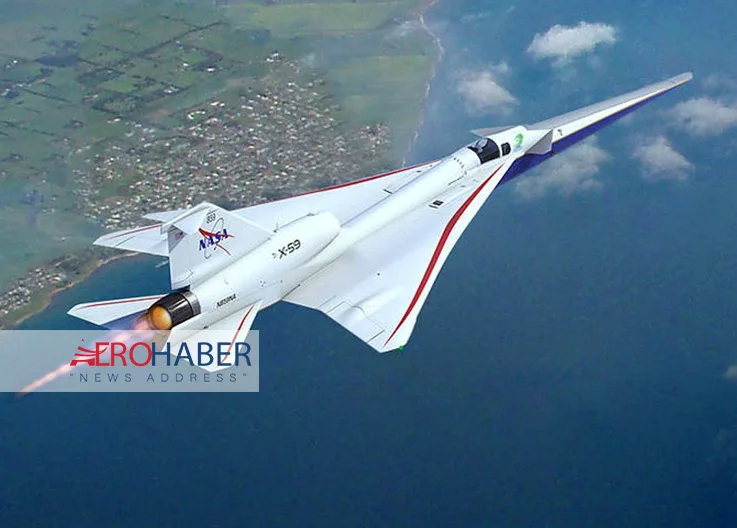
NASA’s X-59 supersonic research aircraft, dubbed “Concorde’s offspring,” is opening a new era for transatlantic travel. The jet will cover the London–New York route in approximately 4 hours, cutting flight time by half.
Developed in collaboration with Lockheed Martin at a cost of $247.5 million, the X-59 will reach 1.5 times the speed of sound. While the London–New York flight usually takes 7–8 hours, the jet aims to reduce it to just 4 hours and is currently undergoing evaluation at the U.S. Air Force’s Test Facility 42 in California.
A Quiet Supersonic Revolution
Described as “quiet supersonic,” the X-59’s unique nose design produces only a soft sound instead of the loud sonic boom typical of conventional supersonic aircraft. This allows the aircraft to fly over populated areas and provides broader operational possibilities.
A NASA Armstrong Test Center spokesperson stated, “Every phase of the X-59, from taxi and takeoff to cruise and landing, is planned with safety as the priority,” while NASA administrator Pam Melroy called the aircraft “a major achievement that will change travel habits.”
Project Details
Launched in 2016 under the Quesst mission, the project is produced by Lockheed Martin. The X-59 measures 29 meters in length and can reach speeds of approximately 1,600 km/h. Initial flights are being tested at low speeds and altitudes, with the goal of demonstrating safe and quiet supersonic flight in later phases.
Concorde’s Legacy
Although the X-59 has been referred to as “Concorde’s offspring,” experts note that the similarity lies mainly in its wing design. The Concorde, in service from 1976 to 2003, was the first passenger aircraft to break the sound barrier and reduced transatlantic flight times to as little as 3.5 hours, becoming an aviation legend.