
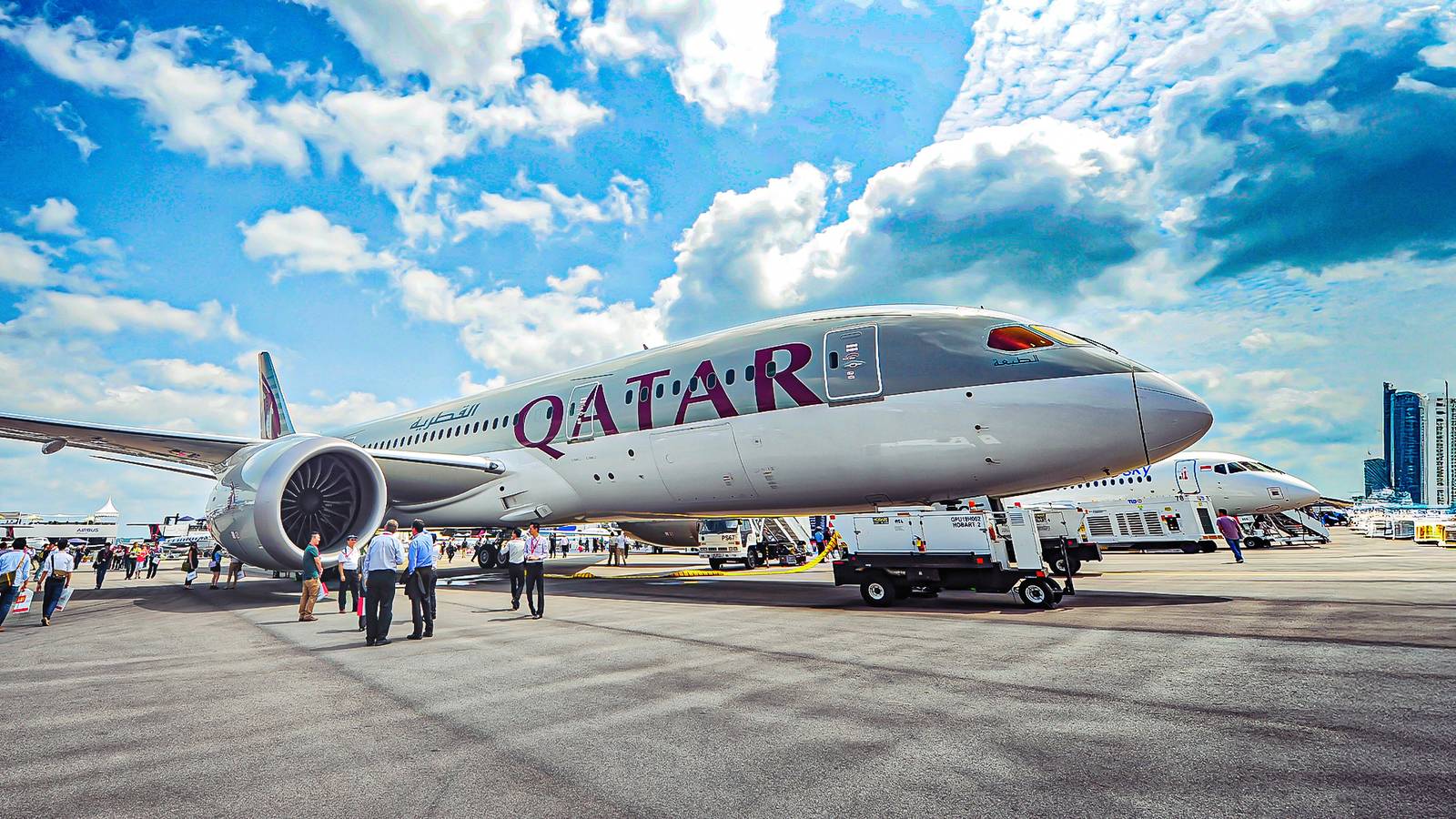


When Qatar Airways launched flights between Doha Hamad International Airport (DOH) and Cardiff International Airport (CWL) in May 2018, many aviation experts questioned the decision. Cardiff was, and remains, a relatively small airport by UK standards, handling far fewer passengers than London’s major airports, Manchester, or even Birmingham. But the Gulf carrier committed to operating the route up to five times weekly with the Boeing 787-8, hoping to tap into underserved demand from Wales while expanding its European network.
The experiment ultimately proved short-lived. The route disappeared during the COVID-19 pandemic in 2020 and has not returned, despite Qatar Airways restoring service to virtually all of its major UK destinations. Today, Cardiff’s only scheduled long-haul service is WestJet’s seasonal route to Toronto Pearson International Airport (YYZ), introduced earlier in 2026, highlighting just how unusual Qatar Airways’ Welsh venture really was.
Qatar Airways’ Welsh Experiment Relied On Financial Support
Qatar Airways inaugurated flights to Cardiff on May 1, 2018, becoming the first Gulf carrier to serve Wales directly. The airline initially operated daily flights before settling into a five-time-weekly schedule using its 254-seat Boeing 787-8 Dreamliner. The service provided one-stop access to dozens of destinations across Asia, Africa, and Australia through Doha’s expanding hub.
However, the route was never about market demand. According to multiple reports at the time, most notably the BBC News, the Welsh Government and Cardiff Airport offered substantial financial incentives to attract Qatar Airways, although the exact value of the support package has never been publicly disclosed. Officials viewed the route as strategically important for improving Wales’ international connectivity, boosting tourism, and attracting inward investment.
Despite the political enthusiasm, passenger numbers never reached the levels needed for long-term commercial success. UK Civil Aviation Authority statistics show that Qatar Airways carried approximately 90,700 round-trip passengers on the Cardiff route during 2019. While that appears respectable for a regional airport, the airline filled only 59% of available seats throughout the year, leaving more than four out of every ten seats empty on average. However, some passengers who frequently used this route were disappointed and even launched a petition on Change.org to restart it. There were also rumors about restarting the flight in 2023, as reported by the BBC, but they didn’t yield a positive outcome.
Passenger Numbers Looked OK, But Not Profitability
The relatively weak load factor helps explain why the route struggled despite carrying nearly 91,000 passengers annually. Gulf carriers typically rely on high aircraft utilization and strong demand for premium cabins to make long-haul routes profitable. Cardiff generated traffic, but not enough to consistently justify operating a widebody aircraft nearly every day.
The pandemic effectively ended the experiment. Qatar Airways suspended Cardiff flights in 2020 as international travel collapsed, but unlike services to bigger airports such as Heathrow, Manchester, Edinburgh, Birmingham, and Gatwick, the Welsh route never returned. With demand concentrating around larger UK gateways following the recovery, Cardiff’s chances of regaining nonstop Doha service became remote.
The airline’s decision also reflected growing competition from nearby English airports. Many passengers from South Wales were already willing to drive to Bristol or London Heathrow, where they could access more frequent international services. That limited Cardiff’s catchment area and made sustaining an intercontinental route significantly more challenging.
Significant government and airport incentives
WestJet to Toronto Pearson (seasonal, launched 2026)
Although the route has become part of Cardiff Airport’s history, it demonstrated how governments sometimes subsidize air services to improve regional connectivity. Similar incentive programs have been used across Europe to attract airlines, although success ultimately depends on sustainable passenger demand rather than financial support alone.
There’s a new number-one link. See all the details here!
Qatar Airways Now Focuses On Britain’s Strongest Markets
Instead of returning to Cardiff, Qatar Airways has continued strengthening its presence at Britain’s largest airports. The carrier now serves five UK airports, offering multiple daily frequencies on its busiest routes and deploying a wide variety of widebody aircraft, including the Airbus A350, Airbus A380, Boeing 777, and Boeing 787 Dreamliner.
London Heathrow remains the airline’s largest UK destination, with seven daily departures offering extensive onward connections via Doha. Manchester has grown into the carrier’s second-largest British operation, while Edinburgh now receives twice-daily Boeing 787-8 service, despite both cities having relatively small populations of about half a million each.
The strategy illustrates how Qatar Airways has shifted toward concentrating capacity in the markets where demand is strongest rather than pursuing smaller regional markets. Cardiff’s brief appearance on the airline’s route map remains an unusual chapter in UK aviation history, but current network planning suggests it is highly unlikely the Welsh capital will once again see Qatar Airways aircraft on scheduled services.
Airbus A350-900, Airbus A350-1000, Airbus A380, Boeing 777-200LR, Boeing 777-300ER
Airbus A350-1000, Boeing 777-300ER, Boeing 787-9
Qatar Airways’ Cardiff service illustrates that launching a long-haul route requires far more than political support or financial incentives. Although the flights gave Wales direct access to one of the world’s leading hubs for two years, consistently low seat occupancy meant the business case was never sustainable. As Qatar Airways continues to expand from larger UK airports, Cardiff’s brief connection to Doha resembles a unique aviation experiment unlikely to be repeated.
Orijinal Haberi Görüntüle