
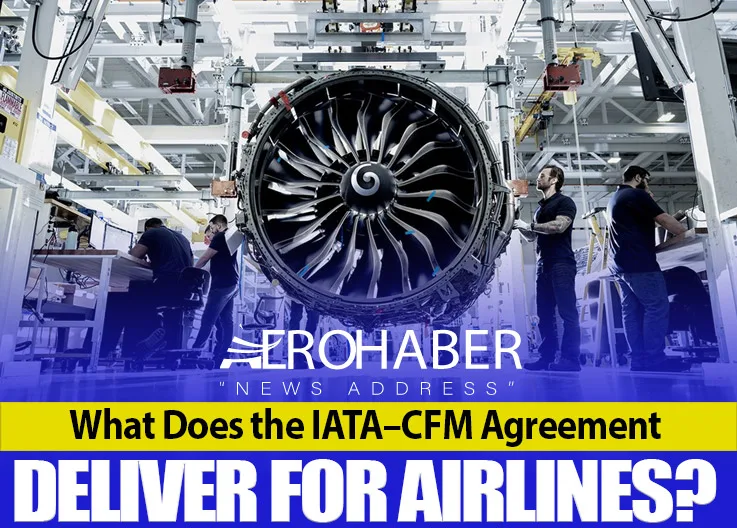


The International Air Transport Association (IATA) has extended the term of its engine maintenance agreement with CFM International—a joint venture between GE Aerospace and Safran Aircraft Engines—until February 2033. The agreement offers a significant balancing mechanism as airlines grapple with rising engine maintenance costs.
The International Air Transport Association (IATA) announced that its agreement with CFM International (CFM), which operates as a 50–50 joint venture between GE Aerospace and Safran Aircraft Engines, concerning the maintenance, repair and overhaul (MRO) market has been renewed until February 2033. The agreement aims to increase competition in the aftermarket for CFM engines and to ease cost pressures on airlines.
According to IATA, airlines have long faced restrictive aftermarket business practices by manufacturers that limit competition and lead to high maintenance costs. Limited maintenance capacity and disruptions in the aviation supply chain further exacerbate this pressure, extending aircraft ground times.
A recent IATA study revealed that engine maintenance- and leasing-related issues have created an additional USD 5.7 billion in costs for the industry. In 2025, engine leasing and maintenance expenses are expected to impose billions of dollars in additional burdens on airlines.
Willie Walsh: “The Timing Is Extremely Appropriate”
Commenting on the renewal of the agreement, IATA Director General Willie Walsh said:
“The renewal of this agreement is extremely well timed. While it is not a cure-all, aftermarket practices that support competition are vital to a healthy aviation sector in the long term. When implemented to their full potential, they will provide short-term cost and capacity relief for airlines struggling with current supply chain challenges. CFM’s leadership role in driving this reform is commendable.”

CFM: Committed to an Open and Competitive MRO Market
In a statement from CFM, it was emphasised that the agreement reaffirms the company’s commitment to an open and competitive aftermarket. The statement noted that the growing MRO ecosystem in engine maintenance now encompasses dozens of third-party organisations, offering airlines lower cost of ownership and greater choice.
CFM International President and CEO Gaël Méheust stated that CFM pioneered the open MRO model with the CFM56 engines and that the same approach is being applied to CFM LEAP engines. For LEAP engines, six Premier MRO providers and more than 12 licensed shops are currently competing.
What Does the Agreement Provide for Airlines?
First signed in 2019 and now extended to 2033, the agreement makes the aftermarket more accessible and competitive under CFM’s Code of Conduct. Under the agreement:
- Maintenance options remain open: Airlines and MROs can use CFM technical documentation even if non-CFM parts or repairs are used on engines.
- Warranty practices are made more flexible: Warranty terms are assessed based on the actual cause of failure, rather than the source of the part.
- Maintenance capacity is expanded: Competition from independent MROs reduces maintenance delays and aircraft ground times.
- Access to non-OEM alternatives is enabled: Third-party parts and repair solutions can be utilised during supply chain constraints.
- Market oversight is strengthened: A CFM liaison officer and the Trustee Board serve as an interface to address industry demands.
Airlines, aircraft leasing companies, independent MRO facilities and parts manufacturers will benefit directly from the agreement.